


 Shkruar nga Pamfleti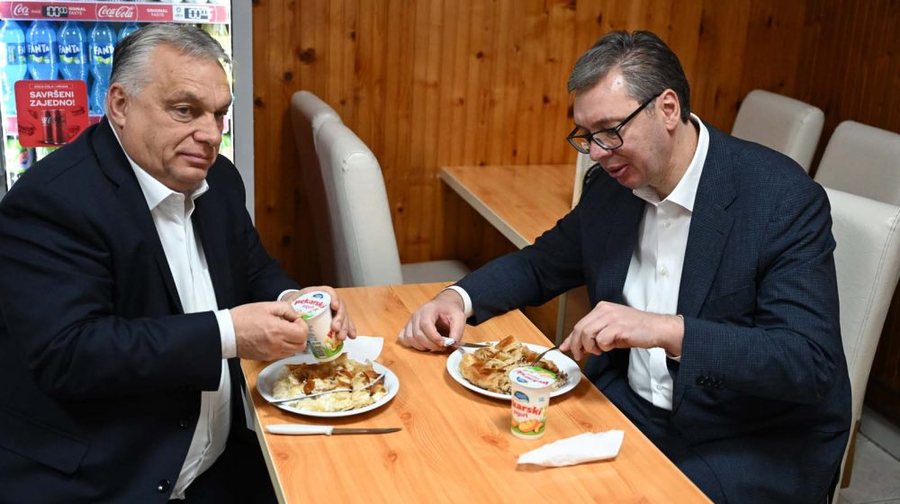
"Take strength from the elections in Hungary", the call that shocks Belgrade and provokes a harsh reaction
The fall of Viktor Orban in Hungary has sent shockwaves through the region, raising obvious concern in Belgrade, where President Aleksandar Vučić is faced with a new political situation and a direct message that touches Serbia's interior.
The new Hungarian leader, Peter Mađar, was not satisfied with the victory, but made a clear appeal to Serbian citizens: “ I tell the Serbian people to draw strength from yesterday’s elections in Hungary .” This statement was immediately interpreted as a signal for political change in Serbia as well, increasing tension in relations between the two countries.
Vučić's reaction was immediate and strong. He rejected any insinuations of questionable political connections and reacted to Mađar's statements. " I would call this statement stupid, but I do not want to spoil relations with Hungary ," the Serbian president said.
At the same time, Vučić openly defended his relationship with Viktor Orbán, emphasizing: " I do not abandon my friends, neither for better nor for worse ," a statement that clearly shows the importance of the alliance with the former Hungarian prime minister to him.
Tensions were further heightened after Mađar announced that his government would investigate a suspicious incident near a gas pipeline in Kanjiža, which he described as a possible staged operation during the election campaign. He directly criticized Orbán's handling of the situation, calling it a propaganda operation.
Vučić also reacted to this issue, emphasizing that Serbia has conducted its own investigations and has discovered important elements that have not been made public. "We have discovered many things, but we did not want to publish them. There were many traps and provocations," he said, also mentioning a phone call from a number in Pristina to an embassy, as part of the investigation.
The Serbian president added that Belgrade will complete the investigation and inform the new Hungarian government, suggesting that Hungary relied on "tabloid stories."
However, beyond the verbal clash, the main development remains political: Orban's defeat is seen as a direct blow to Vučić. For years, the Hungarian leader has been one of Serbia's strongest supporters in Europe, helping to ease pressure from Brussels and maintain a balance between West and East.
Analysts point out that with Orban's departure, Vučić loses an important "political shield" and remains more exposed to international criticism, but also to domestic pressure.
In this context, Mađar's message to Serbian citizens takes on greater political weight. It is seen as a signal that change is possible in other countries in the region, significantly increasing the concern in Belgrade.
Recent developments show that the change in Hungary is not just a power rotation, but a moment that could directly affect the political balance in the Balkans. Vučić's swift and harsh reaction shows that he perceives this development as a real challenge, at a time when the model that supported him for years is being questioned. /Pamphlet




Lini një Përgjigje