


 Shkruar nga Pamfleti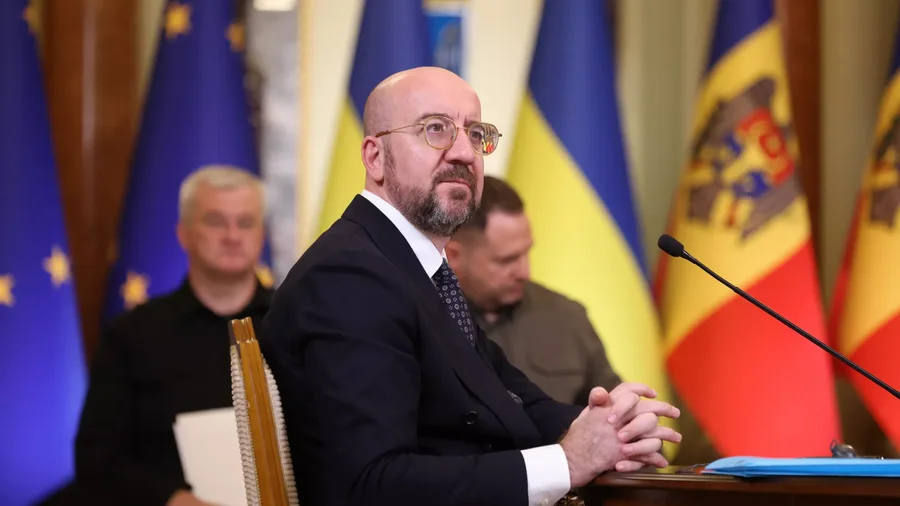
The President of the European Council, Charles Michel, has declared that the EU should be expanded, including Western Balkan countries, as it risks facing an "Iron Curtain". The EU marks the 20th anniversary of the largest membership.
"Enlargement is vital for the future of the EU because without enlargement [there is] a risk of a new iron curtain. It would be extremely dangerous if you had an unstable neighborhood with a lack of prosperity or a lack of economic development. These it is our common interests - of the candidate countries and the EU - to make progress, to speed up," said Michel in an interview today.
His stark warning comes on the anniversary of the so-called Big Bang enlargement of 2004, when ten countries, including seven former Soviet republics, joined the EU.
Had it not been for that historic enlargement, the EU as it stands today would be divided by a "de facto iron curtain", Michel said, meaning that those countries on the eastern side would have been targeted by political and ideological efforts from the Kremlin to conquer them.
Nine countries from Eastern Europe and the Western Balkans are currently waiting in the wings to become full members of the EU. The process of joining the bloc is extremely long and complex, with candidate countries required to meet tough EU requirements, including significant judicial and constitutional reforms.
While Russia's unprovoked invasion of Ukraine has injected new impetus into the EU's dormant enlargement policy, efforts to speed up the membership process risk being thwarted by more skeptical member states. Critics say long delays in the integration of the candidate countries are fueling a sense of anger with Brussels.
Last December, Hungary's Viktor Orbán, whose government will hold the rotating six-month presidency of the EU Council from July, threatened to single-handedly block the opening of accession talks with Ukraine by using his veto.
But Michel dismissed speculation that a Hungarian presidency combined with a more polarized post-election European Parliament could further hamper candidate countries' paths to membership.



Lini një Përgjigje