


 Shkruar nga Gjergj Zefi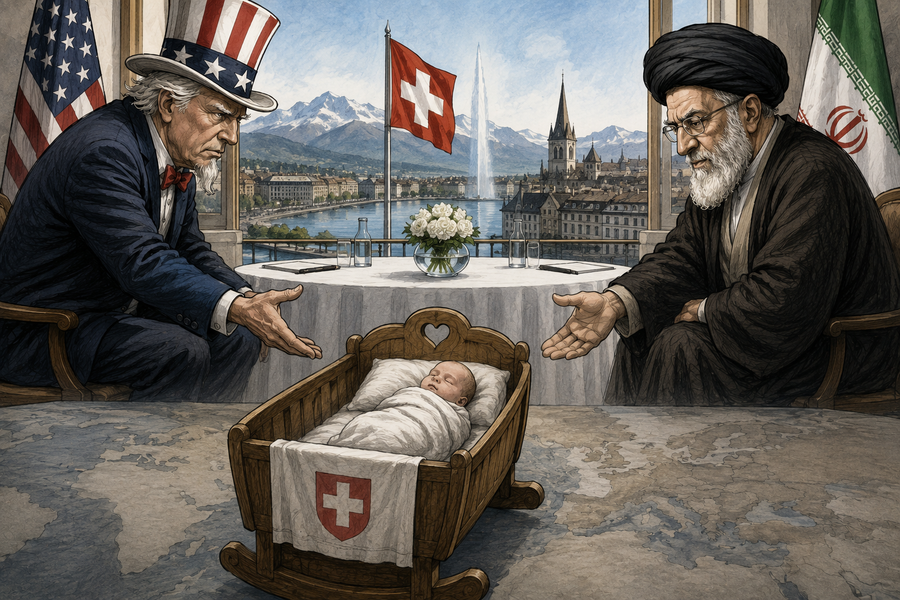
From the postponement of talks in Switzerland to the crisis of confidence between Washington and Tehran, the peace process is facing its first serious test before taking final shape...
Diplomacy has an unwritten rule: the most difficult agreements are not jeopardized the moment they are signed, but in the days that follow. That is precisely where the process between the United States and Iran is today. The postponement of the first technical talks in Switzerland does not yet constitute a failure, but it is the first serious warning that the path to a lasting peace will be much more complicated than reaching the initial memorandum itself.
In diplomacy, there is a big difference between a ceasefire and peace. A ceasefire stops the fire. Peace builds trust. The former can be achieved in a few hours, the latter takes months, sometimes years. The agreement signed between Washington and Tehran created a political framework and a 60-day deadline to negotiate the most difficult issues, from the nuclear program to regional security and navigation in the Strait of Hormuz. But the framework is not yet the building. The foundation has been laid, while the walls are missing.
The real reason for the concern is not the cancellation of JD Vance's trip to Switzerland. The reason lies in the fact that the parties continue to see different realities. Washington wants technical negotiations to begin immediately. Tehran wants concrete signs that American commitments are being implemented. Between these two positions lies the lack of trust, which has always been the greatest enemy of any US-Iranian agreement.
Another factor makes the situation even more delicate. The agreement is not taking place in a peaceful environment. It is struggling to survive in a region where any day could produce a new crisis. The recent clashes in Lebanon and Iranian accusations that Israeli operations are undermining the spirit of the ceasefire have created a climate of uncertainty that could directly affect the diplomatic process. The history of the Middle East is filled with agreements that were not torn down at the negotiating table, but by events that occurred outside it.
However, it would be a mistake to declare the process a failure. In fact, the postponement of the talks could also be interpreted as evidence that both sides understand the gravity of what lies ahead. Major agreements rarely go according to schedule. They progress with delays, crises, misunderstandings, and constant returns to the table. The very fact that neither Washington nor Tehran has declared the process closed shows that the political will still exists to keep it alive.
The real question today is not whether the deal is failing. The question is whether the parties will manage to protect it from the mistrust, domestic political pressures, and regional crises that threaten to erode it before it takes shape. American-Iranian diplomacy is still in the maternity of history. The document has been signed, but peace has not yet been born.
And for this very reason, the biggest challenge for Washington and Tehran is not to win the negotiations. Their challenge is to ensure that the "baby" of peace is not stillborn./ Pamphlet


Lini një Përgjigje