


 Shkruar nga Pamfleti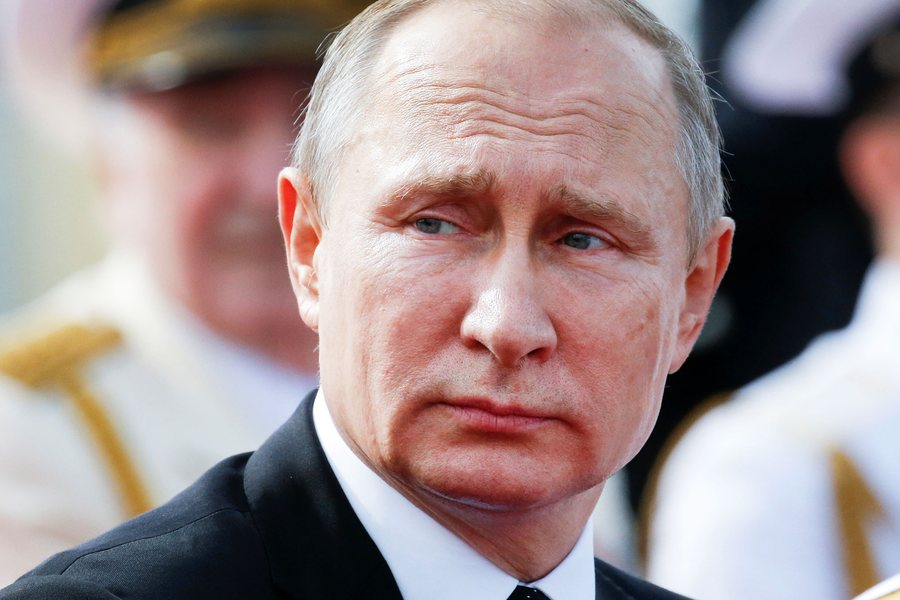
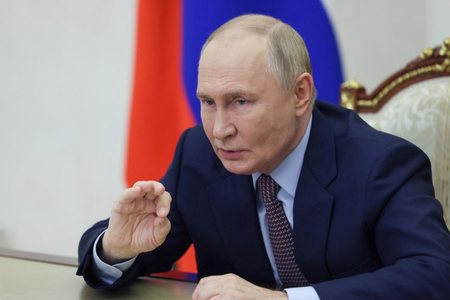
Russian President Vladimir Putin is threatening to limit exports of key raw materials in response to Western sanctions. This would be painful for the US and the EU - because these countries are partly dependent on Russia. "The supply of a number of goods to us is being restricted, and maybe we should think about certain restrictions, for example with uranium, titanium and nickel," Russian President Vladimir Putin said in mid-September and instructed the government to consider export restrictions.
In 2022, the Kremlin tried to put pressure on Europe for gas deliveries. The aim was to undermine Western aid to Ukraine, which is resisting Russia's war of aggression. The new threats are not entirely harmless, as the US and the EU import the aforementioned raw materials in large quantities from Russia.
What role does Russian uranium play?
It is no coincidence that Putin mentioned uranium first. State-owned Rosatom owns over 40 percent of the global market for enriched uranium for nuclear power plants. No one else offers such high-quality, low-enrichment uranium for next-generation reactors. US company Centrus Energy was the first to start enriching uranium on its own late last year, but production volumes will remain modest for a long time. The main business of Centrus Energy is the supply of enriched uranium, which it receives from Rosatom.
In the American market Rosatom owns more than 20 percent, in the EU about 30 percent. As the largest buyer of enriched uranium from Russia, the US brings in half of Rosatom's turnover abroad, about two billion US dollars a year. Rosatom's uranium supplies to the EU amount to about US$500 million. Rosatom also supplies ready-made fuel for Soviet- and Russian-type nuclear power plants, as well as providing various services. According to its information, the company from global sales from Russia, the World, the US, the EU, raw materials, rare metals, uranium, nickel, titanium, dependence on Russia totaled 16.4 billion US dollars over four billion US dollars generated in the countries western in 2023.
Are the sanctions removed?
Canceling the business would be painful for both parties. Until recently, Rosatom was one of the few Russian companies not subject to Western sanctions. At the same time, however, it is clear in the West that dependence on Russia in terms of nuclear energy must be reduced. Only Hungarian President Viktor Orban sees it differently.
In addition to Rosatom, the two European companies Urenco and Orano also enrich uranium in large quantities. Both are expanding their capacity to increase supplies to the important US market. If this succeeds, the US could give up Russian shipments in about five years and the EU a little later, says Dmitry Gorchakov, a nuclear expert at the international environmental organization Bellona.
Recently, US companies have been importing more and more enriched uranium from China. This is probably Russian uranium being resold, as Russia's shipments to its most important trading partner, China, have increased significantly since 2022. This indicates that despite sanctions, Russian raw materials can still reach the US market via China or countries others.
How is the titanium production going?
The production of titanium in Russia is almost entirely in the hands of VSMPO-Avisma, a company based in the city of Verkhnyaya Salda in the Urals, a leader in this field. It owns about 15 percent of global production of titanium sponge, a raw material from which titanium bars are cast. However, more than half of the titanium sponge available worldwide is produced in China, just under a quarter in Japan and almost ten percent in Kazakhstan.
Like Rosatom, VSMPO-Avisma is also affected by US sanctions, but not EU sanctions. Before the war in Ukraine, the main clients of VSMPO-Avisma abroad were the American company Boeing and the European aircraft manufacturer Airbus. The Russian company covered about a third of Boeing's titanium needs and more than half of Airbus' needs. After the start of the war in the spring of 2022, Boeing announced that it will terminate cooperation with VSMPO-Avisma, and Airbus did so in December of that year.
Earlier, the head of Airbus, Guillaume Faury, had spoken out against punitive measures as it would amount to sanctions against him. Given the complex manufacturing processes in the aerospace industry and existing dependencies, it is almost impossible to seamlessly switch to other suppliers.
However, under certain conditions, American companies are allowed to cooperate with VSMPO-Avisma. Canada's sanctions against the Russian company also provide for exceptions, such as for aircraft manufacturers Bombardier and Airbus. Many Boeing suppliers, including French component maker Safran and British engine maker Rolls-Royce, also continue to source titanium from Russia. Airbus did this until at least November 2023, the latest trade data from the ImportGenius database is not available. VSMPO-Avisma's exports to Europe reached $345 million in 2023 compared to $370 million the previous year.
In contrast to the EU, the US can more easily reduce its dependence on Russia because it has companies that process imported titanium sponges, explains Andy Home, a rare metals expert and Reuters columnist. In reality the EU is increasingly dependent on the US for titanium, which conflicts with the EU's critical raw materials law passed this year. But the EU has no other choice at the moment.
Who needs the Russian nickel?
One of the world's largest nickel producers, the Russian company Norilsk Nickel escaped sanctions for a long time. The US and UK imposed restrictions just a month ago, something the EU has yet to do.
But the exports of this company had changed since the beginning of the war. In 2021, over 50 percent of Norilsk Nickel's sales went to Europe and another 16 percent to North and South America. Asia's share was only 27 percent. In 2023, the share of sales for Europe fell to 24 percent and that of North and South America fell to ten percent. While sales in Asia increased to 54 percent.
But the reorientation from West to East is not the only challenge for this Russian company. Demand for nickel has increased significantly in recent years as the raw material is needed to produce lithium-ion batteries for electric vehicles. Price fluctuations occurred not only because of the fear of sanctions against Russian exports. Today the price is lower than it was before the start of Russia's attack on Ukraine. One reason for this is that Indonesia, which has significantly larger nickel reserves than Russia, suddenly entered this market.
For this reason, the prospects of the Russian company Norilsk Nickel in the nickel business are unclear, says Andy Home of Reuters. Putin warned his government to be careful not to do anything to its own detriment when considering possible export restrictions on Russian raw materials. At least as far as nickel is concerned, Russia will not be able to use this raw material as a geopolitical weapon./ DW



Lini një Përgjigje