


 Shkruar nga Pamfleti
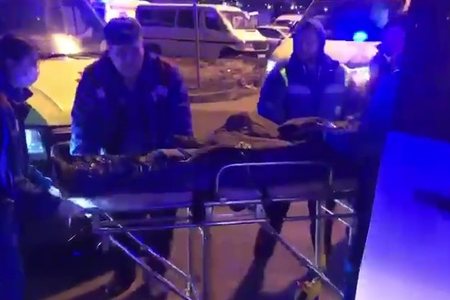
Gunmen at a place of entertainment. Bodies lying on cold concrete. Fear that such a killing could hit the security of the Moscow 'bubble'.
All of them were present in the horrific aftermath of Friday night's brutal attack outside Crocus City Hall, just as they were almost 22 years ago outside the Dubrovka Theater, where armed Chechens took 800 hostages and a standoff ended in a raid. of special forces.
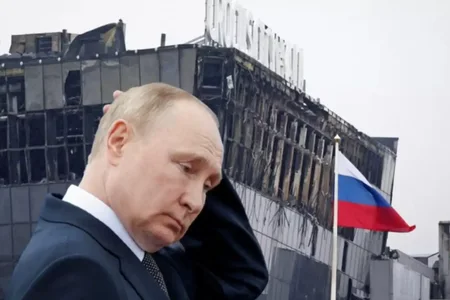
While the 2002 theater attacks marked only one of many horrific high points in Russian President Vladimir Putin's war against Islamic extremism, last night showed that the brutal past has come back to haunt the Kremlin.
However, Putin faces the same kind of Islamic enemy as he did in 2002, in a transformed world. If ISIS-K - the militant group's Afghan branch - was indeed responsible, as their claims and earlier warnings from US officials suggest, it means a new generation of extremists have Russia in their sights after the bloody crackdown. of Islamism from Russia to the south.
Twenty years ago, Dubrovka's gunmen were the troubled product of Russia's brutal anti-terror campaign that summarily executed hundreds of elderly military men in Chechnya in the early 2000s.
Friday's attackers likely stemmed from an ideology born online, after the short-lived Caliphate in Iraq and Syria, and in the furnace of hard-pressed Islamism in Central Asia and Afghanistan.
Two decades of state repression have not denied this new wave of anger its bloody agency. Putin's relentless pursuit of extremism in Russia's own North Caucasus, co-opting the brutal forces of the Kadyrov family to suppress all dissent in Chechnya, seemed to work for several years, but has not ended the problem. In a new but more twisted form, the Islamic threat has returned, seeking to inflict pain on Russia for its misfortunes and brutality in the Middle East.
There is one notable difference from 20 years ago: the response of the Russian state.
According to videos of the attack, the Crocus City gunmen appeared to run unhindered for a considerable period through a crowded mall Friday night, despite public warnings from the US to the Kremlin for weeks about a threat to the spaces. public.
In October 2002, the Kremlin's response was characterized by callous but effective discipline. After days of talks and waiting, an elite unit deployed a gas to disable the entire theater.
No such state control was in evidence on Friday, with the gunmen apparently able to get away at first.
Instead, the Kremlin has blamed a warped combination of Western conscience and Ukrainian aid.
The simple idea, stated by Foreign Ministry spokeswoman Maria Zakharova, that the gunmen sought to flee to Ukraine — across one of the most violent and militarized borders on earth — points to a Kremlin struggling to explain away the horror, even even in their highly controlled information space.
Margarita Simonyan, head of the Russia Today network and a Kremlin spokeswoman, even suggested — without any evidence at all — that ISIS gunmen are actually Ukrainians. A senior MP also hinted that the "Ukrainian footprint" in these attacks should be answered on the battlefield. Ukraine has strongly denied any connection to the attack.
It exposes how far Putin is now. The safety of his quiet, urban electorate in the capital has been entirely sacrificed to his chosen war in Ukraine. The special forces did not react; they are dead, or busy elsewhere. Even some policemen are stationed on the front line.
Instead, a major shopping center fell prey to the same horrors of 2002, the same startling failure of security in the capital. After Dubrovka, critics wondered aloud how a van full of fatigued gunmen could have driven up to a major theater in Moscow and gotten inside? The same thing happened again, 20 years later, despite Putin's control now protected by a system of camera surveillance and facial recognition that he could never have dreamed possible in 2002.
But he has no control over the ways he portrays. As with the short-lived coup by former confidant Yevgeny Prigozhin, Putin's veneer of absolute authority sometimes slips briefly, and what lies beneath is terrifyingly chaotic. There is so much that the Russian system of authoritarianism cannot undo. It relies on patriarchy, loyalty, corruption and a curious sense that the czar, in this case Putin, will step in to right the obvious wrongs. But he doesn't. He doesn't always know how badly his country is doing. And so, four young men can simply roll into a large shopping mall in Moscow with automatic weapons and set it on fire, after shooting dozens dead.
Two things are sure to follow. First, there will be further efforts to suggest that Ukraine and the West are somehow involved in these attacks. Moscow will seek to use this moment to justify its war in Ukraine as a response to an even greater and more urgent threat to the security of its population. It is unclear whether he is able to find a new tool in his kit to get revenge on the imagined culprit; Russia is already operating in full force in Ukraine.
The second is that it is likely to happen again. The attack on Dubrovka was followed two years later by planes being shot out of the sky and the catastrophic nightmare of the school siege in Beslan. Russia was seen as weak in its most sacred spaces, and the most restless Islamic youth were able to take advantage.
The broader change here is in Russia's relationship with the West. In 2002, Dubrovka forced Moscow, reluctantly, even closer to the United States' war on terror. Two decades ago, it was thought that the White House and the Kremlin had a common goal. Now, Moscow finds itself ignoring and politicizing Western intelligence warnings of an attack, then seeking to partially blame the West, simply because it appears to know—and warn—about the possibility of an attack in advance.
Friday night's attacks herald a dark new chapter for Putin, one that is all too familiar to him. An enemy within whom his brutal and merciless tactics cannot completely defeat. A West that must be made a "scapegoat". And a state lacking in the basic resources to protect its citizens. CNN



Lini një Përgjigje