


 Shkruar nga Pamfleti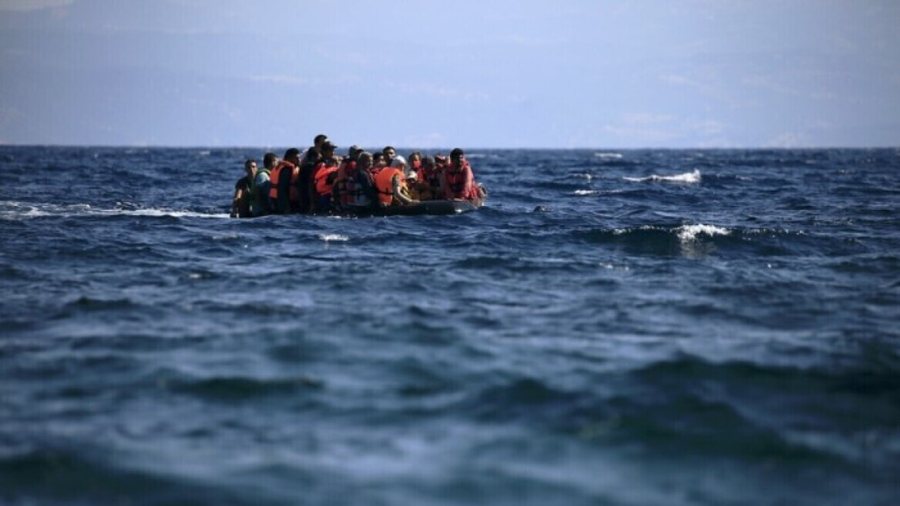
The European Commission proposed new legislation to prevent and combat migrant trafficking. It focuses on both fines and imprisonment if a ship sinks in international territorial waters.
Also, the strengthening of the resources and capacities of the member states is underlined. As the Commission points out, Member States must allocate sufficient resources to their national authorities to ensure the effective prevention, investigation and prosecution of traffickers. In particular, the European Commission focuses on five objectives:
1. Effective pursuit of organized crime networks. A clearer definition of the offense of trafficking has been established to focus on activities that are motivated by financial or material gain or that are highly likely to cause serious harm to an individual. Public solicitation to enter the EU without permission will also become a criminal offence.
2. Harmonized penalties that reflect the seriousness of the offense: Aggravated cases of offenses that cause the death of one or more persons will be punished with a maximum penalty of at least 15 years, up from 8 years under current EU law. of.
3. Improving the scope of jurisdiction: Member States' jurisdiction will also apply, for example, when ships sink in international waters and people die. If at those moments there were ships nearby or planes that did not help them, they will be fined or punished.
4. Strengthening Member States' resources and capacities: Member States should allocate sufficient resources to their national authorities to ensure effective prevention, investigation and prosecution of traffickers. Member States should also work to prevent migrant smuggling, through information and awareness campaigns, research programs and training.
5. Improved data collection and reporting: Member States will be required to collect and report statistical data on an annual basis to improve the rate, detection and response to migrant smuggling.
In addition, the Commission proposes a regulation to strengthen the role of Europol and cooperation between agencies in the fight against migrant smuggling and human trafficking. The role of the Center will now grow to a truly European dimension in strategic areas:
1. Strengthening coordination at EU level: The European Center against Migrant Smuggling will be strengthened and supported by Member States, Eurojust, Frontex and the European Commission.
2. Inter-agency cooperation: The Center will be supported by liaison officers of the Member States, as well as by Eurojust and Frontex liaison officers, who should be posted to Europol.
3. Improving the exchange of information: Member States' obligations to exchange information with Europol on migrant smuggling and human trafficking will be strengthened. The deployment of Europol can now take place in third countries.
4. Reinforcement of resources: Member States should designate specialized services to combat migrant smuggling and human trafficking, link these services to the secure implementation of the Information Exchange Network (SIENA).
5. Stronger support for Europol: This includes advanced coordination and analytical, operational, technical and forensic support tools for Member States, which have already been successfully implemented by Europol.
To meet these objectives, the Commission also proposes to increase Europol's financial and human resources.




Lini një Përgjigje