


 Shkruar nga Pamfleti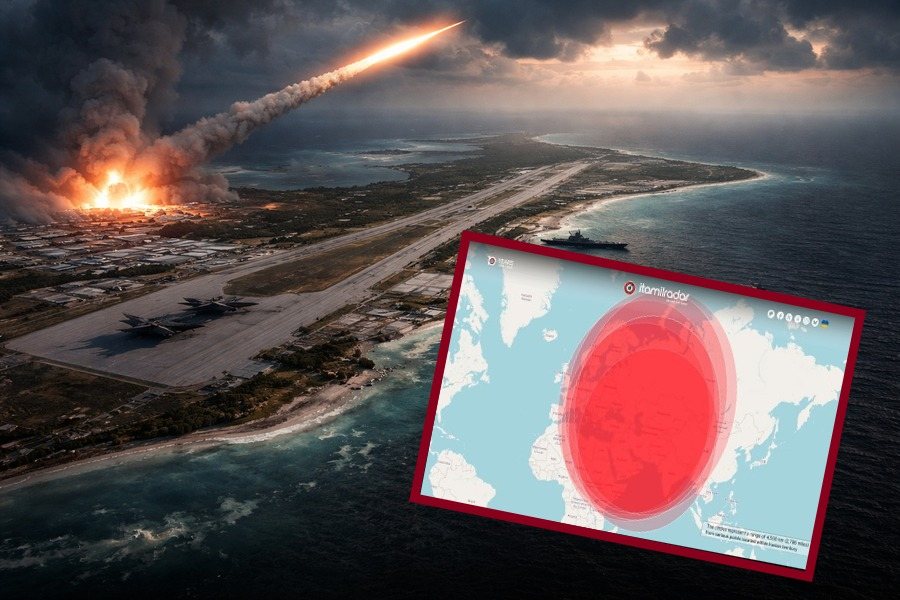
Iran has previously set a self-imposed limit on its ballistic missile program, limiting their range to 1,240 miles (2,000 kilometers). Diego Garcia is well beyond that distance.
Iran has fired missiles towards Diego Garcia, an island in the Indian Ocean that is home to a strategic military base for the United Kingdom and the United States.
Britain condemned Iran's "reckless attacks" after the failed attempt to hit the base. It is not clear how close the missiles came to the island, which is about 2,500 miles (4,000 kilometers) from Iran.
Here's what you need to know about the remote but strategic base:
Center for American operations
The US has described the base on Diego Garcia as "an indispensable platform" for security operations in the Middle East, South Asia and East Africa.
With around 2,500 personnel, mostly American, it has supported US military operations from Vietnam to Iraq and Afghanistan. In 2008, the US also admitted that it had been used for covert rendition flights of terror suspects.
The US deployed several nuclear-capable B-2 Spirit bombers to Diego Garcia last year, during an intensive airstrike campaign against Houthi rebels in Yemen.
Britain initially refused to allow the base to be used for US-Israeli strikes against Iran, but after Iran retaliated against its neighbors, the UK said US bombers could use Diego Garcia and another British base to strike Iranian missile sites. On Friday, the British government said this included sites used to attack ships in the Strait of Hormuz.
The United Kingdom says British bases can only be used for "specific and limited defensive operations."
Iranian Foreign Minister Abbas Araghchi said on X that British Prime Minister Keir Starmer is “putting British lives at risk by allowing UK bases to be used for aggression against Iran.”
Iran has previously set a self-imposed limit on its ballistic missile program, limiting its range to 1,240 miles (2,000 kilometers). Diego Garcia is well beyond that distance. However, U.S. officials have long alleged that Iran's space program could enable it to build intercontinental ballistic missiles.
Justin Bronk, a senior researcher at the Royal United Services Institute, a defence think tank, said the attempt to hit Diego Garcia may have involved the improvised use of Iran's Simorgh space rocket, "which can offer greater range than a ballistic missile", but at the cost of lower accuracy.
A disputed archipelago
Diego Garcia is part of the Chagos Archipelago, a chain of more than 60 islands in the middle of the Indian Ocean, near the tip of India. The islands have been under British control since 1814, when they were ceded to them by France.
In the 1960s and 1970s, Britain expelled up to 2,000 people from Diego Garcia so that the US military could build a base there.
In recent years, criticism has mounted over British control of the archipelago and the way in which the native population was forcibly displaced. The United Nations and the International Court of Justice have called on the United Kingdom to end its “colonial administration” of the islands and transfer sovereignty to Mauritius.
Trump's criticisms
After lengthy negotiations, the British government reached an agreement last year with Mauritius to hand over sovereignty over the islands. Britain will then lease the base on Diego Garcia for at least 99 years.
The British government says this will secure the future of the base, which is vulnerable to legal challenges. But the deal has been criticized by many British opposition politicians, who say handing over the islands exposes them to interference from China and Russia.
Some of the displaced Chagos Islanders and their descendants have also opposed the agreement, saying they were not consulted and that it remains unclear whether they will ever be allowed to return to their homeland.
The US administration initially welcomed the deal, but US President Donald Trump changed his stance in January, calling it "an act of great foolishness" on his Truth Social platform.
The danger for Europe
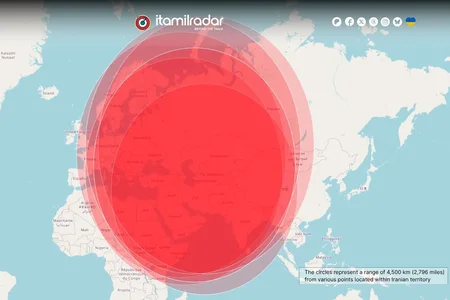
According to recent estimates, Iranian missiles could have a range of up to 4,500 kilometers, higher than previous estimates of around 3,000 kilometers.
If this range is confirmed, missiles launched from western Iran could theoretically reach large areas of Western Europe, as far south as England. So with the new range, Albania is in the "eye of the cyclone."
However, European countries rely on an extensive NATO air defense network, which includes radar systems in Turkey, Aegis Ashore installations in Romania and Poland, as well as allied naval presences in the Mediterranean.
The main defense systems include SM-3 interceptors, which aim to neutralize missiles outside the atmosphere through direct strikes, as well as the THAAD and Patriot systems, which are used for the final stages of interception./ "Pamphlet"






Lini një Përgjigje