


 Shkruar nga Pamfleti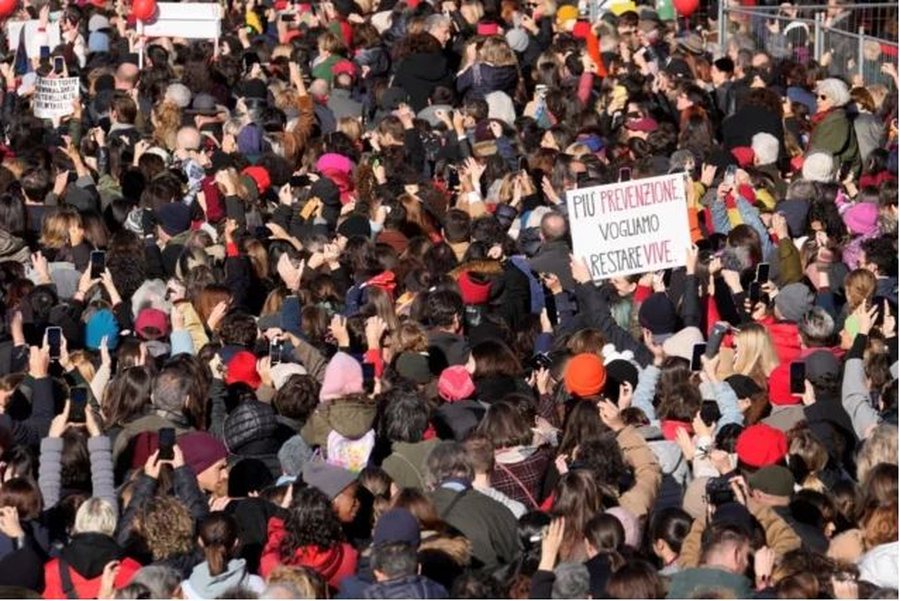
Violence against women and girls remains one of the most common and widespread human rights violations in the world. Globally, an estimated 736 million women, nearly one in three, have experienced physical or sexual violence by a partner, or both, at least once in their lifetime.
This scourge has intensified in various settings, including workplaces, and evidence suggests that it has worsened since the Covid-19 pandemic.
The evidence that shows that 25% of respondents justify the fact that a man can beat his wife is also sad. At the same time, the UN report states that the number of women and girls killed worldwide in 2022 has risen to the highest level in the last 20 years.
An estimated 89,000 women and girls were killed last year, according to UN Women, which covers women's issues and UNODC.
But why November 25?
In 1981, the United Nations chose to designate November 25 as the International Day for the Elimination of Violence against Women. The choice was by no means random.
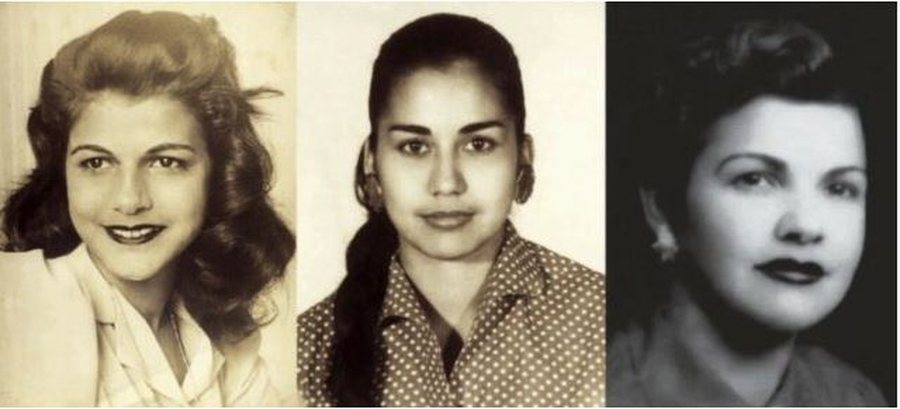
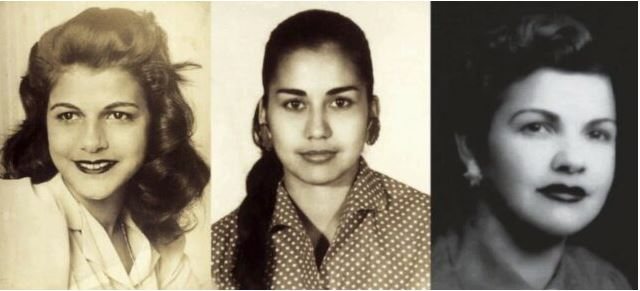
It all began in 1960. Patria, Minerva and María Teresa Mirabal, three sisters from a middle-class family, all married with children might not have looked like revolutionaries, but they lived in the brutal dictatorship of the Dominican Republic Rafael Trujillo.
In 1950, the Mirabal sisters risked their lives to work. During Trujillo's 31 years in power, the regime violently suppressed civil liberties and disobedience.
The Mirabal sisters helped organize and develop the underground movement that challenged the regime and were repeatedly arrested for their activities. Minerva ignored the fears of her allies, saying, "If they kill me, I will stretch out my hands from the grave and be stronger."
She fulfilled her promise. The murder of the three sisters, aged 36, 34 and 25, on November 25, 1960, outraged public opinion and was a key trigger for Trujillo's own assassination six months later by a group of dissidents.
After the transition to democracy in the late 1970s, the Butterflies, as Dominicans call the Mirabal sisters, became symbols of democratic and feminist resistance.
A fourth sister, Dede, who was less involved in the resistance, survived the regime and helped carry on her sisters' legacy until her death in 2014, establishing a foundation and museum in their name.
The UN set the date of their deaths on the International Day for the Elimination of Violence against Women.
Mass protests in Italy
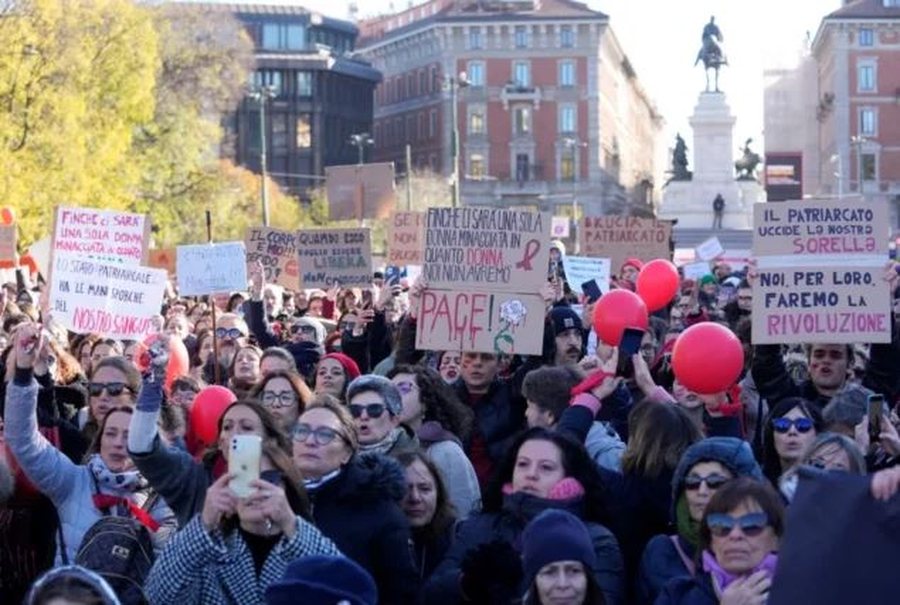
Mobilizations, marches, speeches are planned today throughout Italy, to send a resounding message, on the international day of the fight against violence against women.
Marches have been organized from Parma to Sicily, while the largest mobilization will take place this afternoon, in the Italian capital. Tens of thousands of women will hold placards "no more femicide", after the great wave of emotions and anger caused by the murder of 22-year-old Julia Cechetin by her ex-fiancé, Filippo Tourretta.
Tourretta was arrested in Germany this morning, and then extradited to Italy. He killed the unfortunate girl after not accepting their separation and, according to evidence, he was also jealous of her career.
He is expected to stand trial for kidnapping and premeditated murder.
"Men and women come together to build a better humanity, through diversity and solidarity, with the awareness that there can be no love without respect, without accepting the freedom of the other", emphasized the Italian president of the republic, Sergio Mattarella.
"When a woman is killed, when a girl's thread of life is cut or when humiliating words are used, in the family, in the workplace, in schools, we feel that behind all this is the failure of a society that fails to promote values of real equality between men and women", he added.
Mass protests were also marked in Britain, Spain and France with the slogan "Enough!".






Lini një Përgjigje