


 Shkruar nga James Stavridis
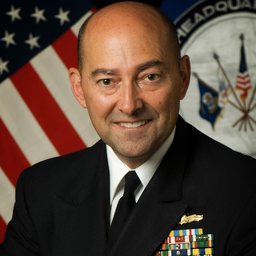
James Stavridis, a columnist for Bloomberg, a retired Admiral of the US Navy, former supreme commander of NATO, has sounded the alarm about the threat posed to the Balkans by Russia...
Throughout Russia's history, tsars sought ways to dominate what they called "the country outside" their empire. In today's world, President Vladimir Putin's illegal occupation of neighboring Ukraine follows this strategic arc. If he wins, logic suggests he will turn his attention to Moldova.
But there is another very attractive target nearby: the Western Balkans. The troubled stretch of territory in southeastern Europe includes four stable members of the North Atlantic Treaty Organization: Croatia, Albania, Montenegro and North Macedonia. But the Kremlin has its eyes on other prizes: Serbia, Kosovo and the ethnically divided nation of Bosnia-Herzegovina. How can Putin seek to expand Russian influence and undermine the commitment of the North Atlantic Treaty Organization and the European Union in this important corner of Europe?
I know this terrain well from my days in NATO and as the US military commander in chief in Europe. Before that, I served in the Balkan wars of the 1990s as a destroyer captain off the coast of the former Yugoslavia, enforcing an arms blockade against its aggressive regime.
Over the years, I have met most of the top leaders in the region, including Serbian President Aleksandar Vučić, former Croatian President Kolinda Grabar-Kitarović and Milorad Dodik, the current leader of Republika Srpska.
In the wake of the breakup of Yugoslavia, the extremely bloody Balkan wars between 1991 and 2001 killed up to 105,000 people, many of them civilians (8,000 Muslim men and boys, for example, were massacred in Srebrenica in July 1995). Tensions remain between Roman Catholics in Croatia, mostly Orthodox Christians in Serbia, and Muslims in Albania, Kosovo and Bosnia.
Putin is looking to take advantage of this unfinished story. He knows that if NATO member states are drawn back into policing a troubled Balkans, they will be distracted from their focus on supporting Ukraine.
There are still several thousand NATO peacekeepers in Kosovo, a former region of Serbia that neither the Serbs nor the Russians recognize as an independent nation. Last year, the Serbian military went on high alert after riots by ethnic Serb protesters inside Kosovo, injuring around 100 NATO soldiers; this forced the alliance to send several hundred additional peacekeepers. Putin is clearly encouraging Serbia to put pressure on the NATO-backed government of Kosovo.
He is also working to destabilize Bosnia-Herzegovina's shaky government, which is divided into an odd tripartite presidency, with a representative from each of the three main ethno-religious areas. The most experienced political actor is Dodik, who is closely connected to Moscow. Even a decade ago, he was telling me about the need to secede Republika Srpska, which would effectively destroy the country. Its rear would align with Serbia itself, creating a larger Serbian state that Putin would gladly approve.
As retired Rear Admiral Mark Montgomery, who was my plans officer at US European Command, put it: “This is the same kind of challenge we faced a decade ago – Putin taking advantage of the 'pressure cooker' elsewhere in Europe, trying to undermine NATO's credibility and alienate support for Ukraine."
Fortunately, the West has options. At the moment, the idea of deploying NATO battalions in Ukraine is unlikely. But increasing the level of troops deployed in Kosovo now, and taking into account the unrest that Putin is trying to foment, is possible and makes strategic sense.
Doing so would be an example of an effective regional division of effort within the alliance: NATO countries in the Balkans and nearby (eg Greece and Italy) could focus on that region. Eastern European and Nordic members can monitor Ukraine. The big countries in the west - France, Germany, Great Britain and the US - have enough resources to be involved in both countries.
Alongside stabilization forces, NATO must be aware of Russia's use of so-called hybrid warfare. Putin is good at using social media, disinformation campaigns and pro-Russian propaganda to create tensions outside his borders. NATO must use its information networks to expose and counter these false narratives. If the Russians decide to act first, they could use cyber attacks against power grids and other vital targets in Kosovo and non-Serb parts of Bosnia. This would create confusion and increase social discontent. NATO can provide better cyber defense systems for Balkan allies and friends.
Finally, there are economic incentives that may counteract Russian engagement. Serbia desperately wants EU membership, as does Bosnia-Herzegovina. Their leaders want to be able to engage with the West and avoid sanctions. The Serbian ambassador to the US recently wrote a letter claiming that Serbia only wants peace. The Serbs can show they are sincere by rejecting Putin's manipulations and allowing the West to stay focused on its biggest challenge: Russia's immoral war in Ukraine. /Adapted "Pamphlet" from "Bloomberg"




Lini një Përgjigje