


 Shkruar nga Pamfleti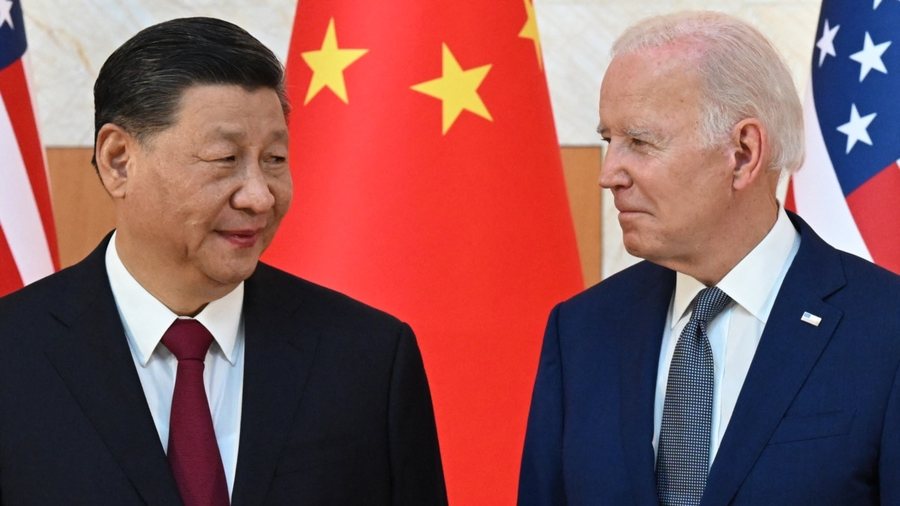
WASHINGTON - President Joe Biden and China's Xi Jinping discussed Taiwan, artificial intelligence and security issues during a phone call Tuesday that was intended to demonstrate a return to regular dialogue between the leaders of the two world powers.
The conversation, which the White House described as "frank and constructive", was the first of its kind since a high-level meeting held in November in California, where ties between the two countries' militaries were renewed and engagement for increased cooperation to stop the introduction into the United States of the dangerous drug fentanyl and its components, which are manufactured in China.
Chinese President Xi told President Biden that the two countries should adhere to the principle of avoiding clashes and confrontations this year.
"We must give priority to stability, not to provoke problems, not to cross the dividing lines and maintain the stability of China-US relations", said Mr. Xi during the conversation, according to the announcement of the Chinese state television CCT (China Central Television).
The talk precedes high-level contacts expected in the coming weeks between the two countries. Treasury Secretary Janet Yellen will travel to China on Thursday and Secretary of State Antony Blinken is also expected to go to China in the following weeks.
President Biden has called for ongoing exchanges between officials at all levels of government, believing that this is vital to prevent escalation into a direct, competitive conflict between the two major economies and, at the same time, two nuclear powers. Although in-person meetings happen perhaps once a year, Washington and Beijing recognize the value of more frequent exchanges between the two leaders.
The two leaders discussed Taiwan as the island's president-elect Lai Ching-te, who has vowed to maintain de-facto independence from China and bring Taiwan closer to other democratic countries, is expected to be inaugurated next month. President Biden reaffirmed America's early "One China" policy and reiterated that the United States opposes efforts to force Taiwan under Beijing's control. China considers Taiwan an internal matter and has strongly protested US support for the island.
Taiwan remains the "first red line that must not be crossed," President Xi told President Biden, stressing that Beijing will not tolerate the activities of Taiwan's pro-independence separatist forces, or foreign support for them, a statement that appears to refers to Washington's support of this island.
President Biden also raised concerns about China's operations in the South China Sea, including efforts last month to cut off supplies to Philippine forces stationed on the disputed island of Second Thomas Shoal. The United States has a treaty in force with the Philippines under which it has an obligation to protect it.
Next week, President Biden will welcome Philippine President Ferdinand Marcos Jr. and Japanese Prime Minister Fumio Kishida, in a joint high-level meeting at the White House, where China's influence in the region is expected to be at the top of the agenda.
During the phone call with Mr. Xi, President Biden urged China to do more to meet its commitments to stop illegal narcotics flows and to include on the list of banned exports more chemical constituents, of which it can to produce drugs. The commitment to this was made last year during the high-level meeting held in Woodside, California, in the framework of the meetings of the Asia-Pacific Economic Cooperation initiative.
During the November meeting, Presidents Biden and Xi also agreed that their governments would hold formal talks about the capabilities and risks of advanced artificial intelligence. These talks are expected to begin in the coming weeks. The two presidents touched on the issue on Tuesday, just two weeks after China and the United States joined more than 120 other countries in backing a United Nations resolution calling for global action on the new technology.
During the call, President Biden again warned President Xi against meddling in the 2024 U.S. election and against continued malicious cyber attacks on critical U.S. infrastructure, according to a senior U.S. administration official who discussed the content of the call on the condition that not to be identified.
He also expressed concern about human rights in China, including Hong Kong's new restrictive national security law and the country's treatment of minorities, as well as the plight of Americans who are detained or banned from leaving. from China.
President Biden also pressed China on its defense relationship with Russia, which is trying to rebuild its industrial base while continuing to attack Ukraine. And he called on Beijing to influence North Korea to contain this isolated and unpredictable nuclear power.
As the leaders of the world's two largest economies, President Biden also expressed his concern to President Xi about China's "unfair economic practices," according to the official, and reiterated that the United States will take steps to safeguard its economic interests. and security, including limiting the provision of certain advanced technologies to China.
Presidenti Xi u ankua për masat që Shtetet e Bashkuara po ndërmarrin muajve të fundit për t’i ndalur hovin ekonomisë, tregtisë dhe teknologjisë kineze dhe se lista e kompanive kineze nën sanksione është rritur edhe më shumë, diçka që nuk po i “ul rreziqet, por po krijon rreziqe”, thuhet në njoftimin e kanalit televiziv kinez.
Thirrja telefonike ndërmjet dy udhëheqësve u bë para vizitës njëjavore të Sekretares Yellen në Guangzhou dhe në Pekin për takime dypalëshe mbi këtë çështje me drejtuesit e sektorit financiar të vendit me ekonominë e dytë më të madhe në botë, përfshirë zëvendëskryeministrin He Lifeng, guvernatorin e Bankës Qendrore Kineze Pan Gongsheng, ish zëvendëskryeministrin Liu He, si dhe drejtues të kompanive amerikane dhe drejtues lokalë.
Në njoftimin për vizitën e Sekretares Yellen thuhet se ajo do “të angazhohet të përkrahë punonjësit dhe bizneset amerikane për t’u siguruar se ata trajtohen drejt, përfshirë duke u bërë trysni homologëve kinezë për praktikat e padrejta tregtare”.
Javën e kaluar Presidenti Xi u takua në Pekin me drejtuesit amerikanë të bizneseve. Gjatë takimit ai vuri theksin tek marrëdhëniet ekonomike nga të cilat përfitojnë dy shtetet dhe nxiti shkëmbime më të mëdha mes njerëzve për t’i mirëmbajtur këto marrëdhënie.
Presidenti Xi u tha amerikanëve se dy shtetet kanë vazhduar komunikimin dhe “kanë bërë përparim” në çështjet siç janë tregtia, luftën kundër narkotikëve dhe ndryshimet klimatike që nga takimi me Presidentin Biden në nëntor. Takimi i nivelit të lartë i javës së shkuar u konsiderua si përpjekje e Pekinit për të stabilizuar marrëdhëniet dypalëshe.
Në prag të vizitës në Kinë, Sekretarja Yellen deklaroi javën e kaluar se Pekini po e mbingarkon tregun me energji të pastër që “shtrembëron çmimet globale”. Ajo tha se synon t’i shprehë qëndrimet e saj në takimet me homologët, se rritja e prodhimit të energjisë diellore, makinave elektrike dhe baterive të litiumit nga Pekini, paraqet rrezik për produktivitetin dhe rritjen e ekonomisë botërore.
Shqetësimet e hershme të ligjvënësve amerikanë rreth aplikacionit të mirënjohur të rrjetit social TikTok, që është në pronësi kineze, kanë nxitur hartimin e ligjeve të reja në Shtetet e Bashkuara, që do të ndalojnë platformën TikTok nëse pronari i saj “ByteDance” nuk i shet aksionet brenda gjashtë muajsh prej hyrjes në fuqi të ligjit.
Si kryesuese e Komisionit për Investimet e Huaja në Shtetet e Bashkuara, që shqyrton pronësinë e huaj të kompanive që zhvillojnë biznesin e tyre në Shtetet e Bashkuara, Sekretarja Yellen ka hapësirë të mjaftueshme për të përcaktuar se si mund të vazhdojë të funksionojë në Shtetet të Bashkuara kjo sipërmarrje.
Meanwhile, China's leaders have set a target of 5 percent economic growth despite the slowdown, which has been further exacerbated by worries in the real estate sector and the effects of austerity measures taken during the COVID-19 pandemic, which disrupted travel, logistics, manufacturing and other industries.
China dominates the electric car battery manufacturing sector and is rapidly expanding the automotive industry, which could challenge the world's leading car manufacturers in the future.
Last year the United States drew up plans to restrict buyers of electric cars that contain battery material from China and other countries considered hostile to the United States. In addition, the Department of Commerce launched an investigation into the potential risks that the export of Chinese cars will have to the national security of the United States. / VOA





Lini një Përgjigje