


 Shkruar nga Pamfleti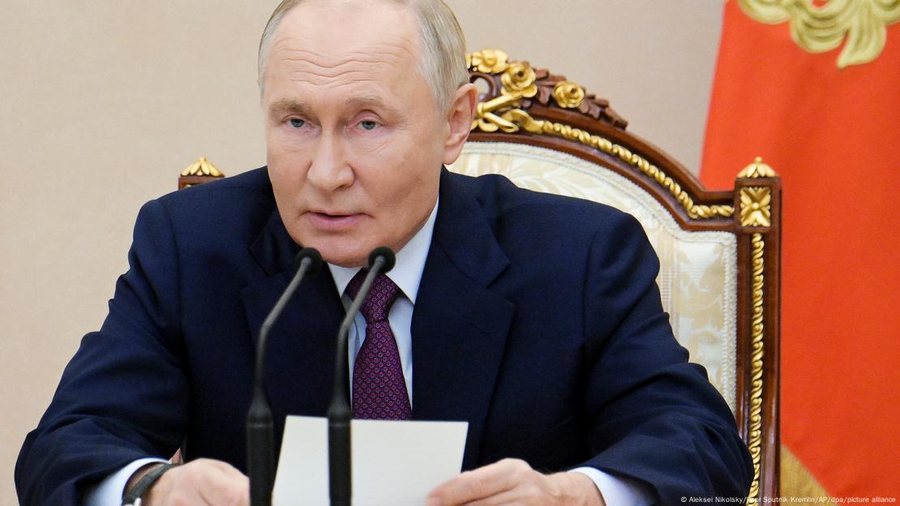
President Vladimir Putin has repeatedly threatened the use of nuclear weapons and has stressed that existing rules must be adapted to "new circumstances".
Volodymyr Zelensky traveled to the US with a "plan for victory", but in Washington he did not receive the expected more effective military support from the West. According to the desire of the Ukrainian leadership, this support should be achieved at the summit of Ukraine and NATO countries on October 12 in Ramstein, the US military base in Germany.
For months, Ukraine has pressured its Western partners to lift restrictions on the use of Western weapons in Russia. However, the main NATO countries are still hesitant, they do not want to approve long-range weapons for targets in the Russian rear. German Chancellor Olaf Scholz justifies the refusal with "the high risk of escalation", but some NATO partners take a different view.
Putin announces new nuclear doctrine
In this context, experts also analyze the expansion of the Russian nuclear doctrine. President Vladimir Putin has repeatedly threatened the use of nuclear weapons and has stressed that existing rules must be adapted to "new circumstances". In late September, Russian state television aired footage from a secret session of the Security Council's Permanent Commission on Nuclear Prevention.
Putin said at the meeting that he had expanded the list of military threats against which nuclear weapons could be used as a deterrent. Moscow can now respond with nuclear weapons - in the event of a major air strike, be it long-range missiles, aircraft, other missiles or large groups of drones. The new rules also apply to the defense of neighboring Belarus, which forms a state union with Russia.
The West targeting Russia?
The updated doctrine contains a direct message to the West. "In the updated version of the document, it is proposed that aggression against Russia by a state without nuclear weapons, but with the participation or support of a nuclear power, will be considered a joint attack on the Russian Federation," Putin said at the hearing.
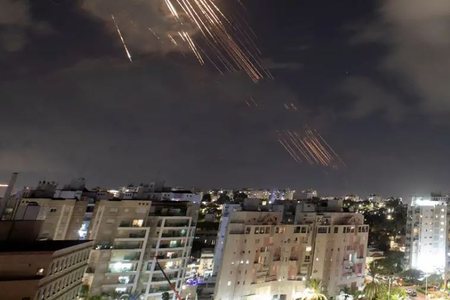
For Western nuclear powers, this new wording could increase the risk of becoming the target of a retaliatory Russian attack. With the adjusted doctrine, Moscow formally lowers the threshold for using nuclear weapons and expands its room for maneuver. This means that Moscow could respond with a nuclear strike to a more massive drone attack on Russia, such as has already been carried out several times.
However, it remains unclear exactly where Russia's nuclear weapons tipping point lies — and whether the Kremlin is even now considering such a possibility. Moscow once labeled Ukraine's missile strikes in Crimea a "red line" - but there was no nuclear escalation.
A signal to the West
Politicians and security experts currently do not see any "revolutionary changes" in the adjusted doctrine and point out, among other things, that pre-emptive nuclear strikes are not envisaged in the doctrine. But Russian propagandists and politicians have repeatedly sought to break this taboo subject in recent months.
At the moment, the new formulations in the doctrine are a "signal to the West", says Lithuanian Defense Minister Laurinas Kashçunas. Putin fears that Ukraine may get the green light from the West for missile strikes deep inside Russian territory.
"Putin actually admits that this would seriously worsen the situation for him. For us, this means that we should give Ukraine long-range weapons, remove geographical restrictions (on attacks), make available Ukraine used equipment or invest in the Ukrainian military industry so that it can produce such equipment itself," Kashçunas told DW.
The Kremlin, meanwhile, responded to criticism from the West about the expanded nuclear doctrine. Fixing the nuclear deterrent was necessary because NATO's infrastructure is moving closer to Russia's borders. The West will have more power to attack Moscow with the new weapons that would be sent to Ukraine, said Putin's spokesman, Dmitry Peskov.
A long ancestor of the new orientation
The new orientation of Russian nuclear policy began in the 2000s, when relations between Russia and NATO deteriorated. Moscow responded by modernizing its strategic and tactical nuclear weapons and changing its deployment strategy. In 2020, President Putin completely updated the nuclear doctrine. The strategy has become much more flexible and aggressive. Russia reserves the right to use nuclear weapons if the country or its allies are threatened by conventional or nuclear attacks.
The role of strategic nuclear weapons, which can destroy entire states, remains a central element of deterrence policy. At the same time, the importance of tactical nuclear weapons, which can be used on the battlefield, is emphasized. Moscow would use tactical nuclear weapons if a military failure would "irreversibly halt the Russian military and put it at risk of major enemy aggression," the Financial Times reported this spring, which claims it had access to the classified documents. Russian from 2008 to 2014./ DW



Lini një Përgjigje