


 Shkruar nga Pamfleti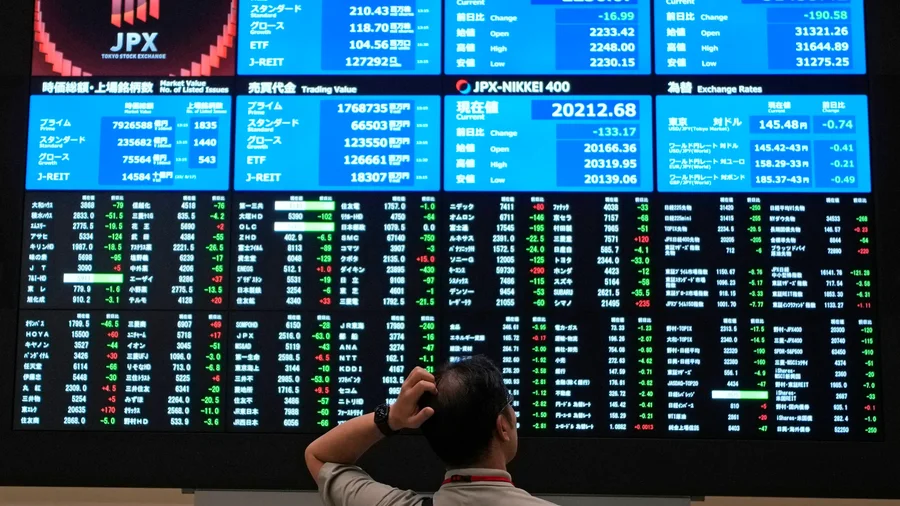
This drastic drop has brought to mind the sudden drop recorded on the day of the attacks on the Twin Towers on September 11, 2001.
The collapse has reached the European markets. American tariffs are weighing on the markets and the last day of the week was very difficult for world stock exchanges. The only one with a positive sign was Moscow. The rest, from East to West, are only with "minus" signs ahead.
The worst is seen in the heart of Europe, more precisely in Milan, where in the "Piazza Affari" the 'FTSE Mib' index suffered a drastic drop of 7.5 percent this morning. This drastic drop has brought to mind the sudden drop recorded on the day of the attacks on the Twin Towers on September 11, 2001.
The index has recorded its ten worst sessions in years: on June 24, 2016, on the occasion of the Brexit referendum, the price list recorded a drop of 12.48%. On October 6, 2008, with the bankruptcy of Lehman Brothers, the drop was 8.24%. The losses are concentrated above all in banking stocks.
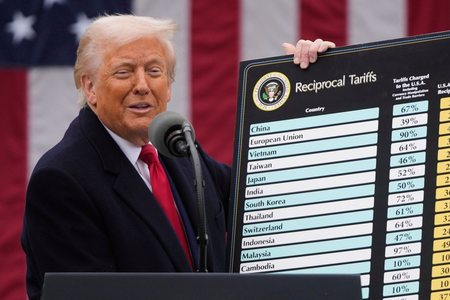
But even Wall Street, which closed yesterday down 4%, is heading for a very difficult opening. Therefore, the consequences have not faded a day after the announcement of the imposition of reciprocal tariffs by US President Donald Trump.
Prime Minister Meloni, criticizing Trump's protectionist policies, called for calm and to suspend the rules of the Grand Agreement for the automotive sector, while the EU prepares responses and negotiations.
" The imposition of US tariffs on EU goods is a "bad choice" but not a "disaster"; we must avoid "alarmism" and deal with the US by having a "sincere discussion", because responding with more tariffs is not the best solution; Furthermore, Italy will ask Europe for a revision of the Stability Pact, which is currently necessary", said Meloni.
After the axe to European goods announced by Donald Trump, Prime Minister Giorgia Meloni canceled all daily engagements and summoned the heads of the relevant departments to Palazzo Chigi for an urgent summit, to study possible actions on American tariffs, which risk hitting the Italian and European economy in general like a tsunami.
The meeting was attended by the Minister of Economy, Giancarlo Giorgetti, the Minister of Business and Made in Italy, Adolfo Urso, the Minister of Agriculture, Francesco Lollobrigida, the head of the Ministry of European Affairs, Tomma, Matteo Salvini, physically present, and Antonio Tajani, connected from Brussels.
The priority for the government remains finding an agreement with the United States. Prime Minister Meloni did not rule out an "adequate response" if necessary, but the executive aims to avoid the effects of a European counteroffensive to American tariffs.
Within the majority, there remain differing positions on how to manage the tariff negotiations. On the one hand, Meloni and Tajani are pushing for a European response to the United States' trade offensive, while on the other, Salvini's League continues to criticize Brussels and insists on a 'one-on-one' negotiation with the White House.
In this situation, a global recession seems inevitable. JPMorgan, the American multinational financial services firm, said it now sees a 60% chance that the global economy will enter a recession by the end of the year, up from 40% previously.
"Disruptive US policies have been identified as the biggest risk to the global outlook throughout the year. The impact ... is likely to be magnified through retaliation (tariffs), a slide in US business sentiment and supply chain disruptions," JPMorgan said, Reuters reports!
US corporation S&P Global also increased its "subjective" probability of a US recession to between 30% and 35%, from 25% in March.
Last week, ahead of the April 2 tariff announcement, Goldman Sachs also raised the probability of a U.S. recession to 35% from 20%, noting that economic fundamentals were not as strong as in previous years.
Other research firms including Barclays, BofA Global Research, Deutsche Bank, RBC Capital Markets and UBS Global Wealth Management also warned that the US economy faces a higher risk of sliding into a recession this year if Trump's new taxes remain in effect.


Lini një Përgjigje