


 Shkruar nga Pamfleti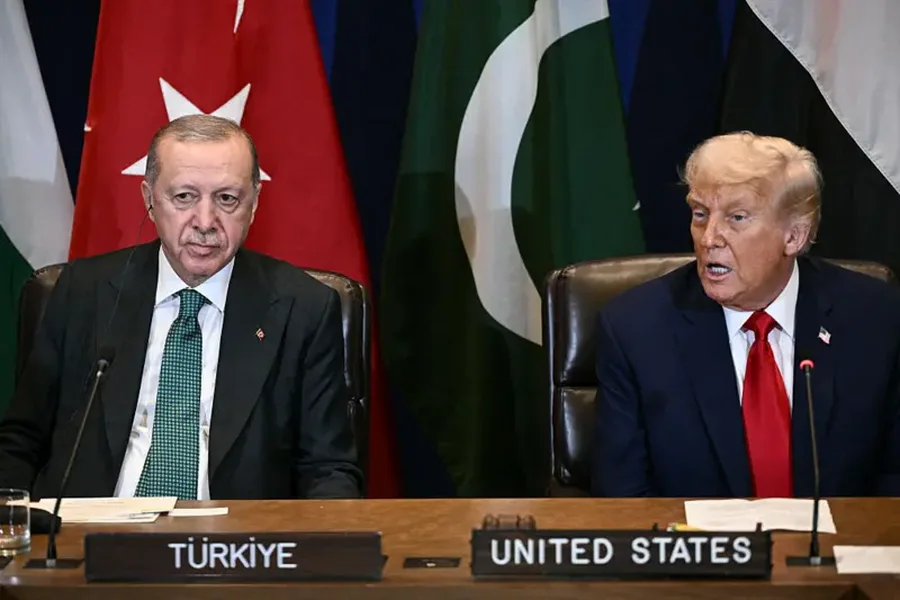
When Turkish President Recep Tayyip Erdogan lands at the White House, he will have scored an important diplomatic milestone: shaking hands with President Donald Trump, the first such high-level contact after more than six years of tensions between Ankara and Washington.
There are three main pillars on Erdogan's agenda: energy, defense, and civil aviation.
Energy: American gas, a strategic priority for Ankara
The Turkish Energy Minister recently announced that state-owned company Botas has signed a 20-year agreement with Mercuria to import liquefied natural gas (LNG) from the US.
The agreement envisages the supply of 70 billion cubic meters of gas over two decades – a major step towards diversifying Turkey's energy sources, reducing dependence on Russia.
In the last two years, Ankara has signed similar agreements with Western giants Exxon Mobil, Shell and TotalEnergies, in a clear strategy to orient itself towards Western energy.
Defense: F-16 and sanctions at the center of talks
Erdogan is expected to push hard for the lifting or easing of military sanctions imposed on Turkey following its purchase of the Russian S-400 air defense system.
These sanctions have led to Turkey's exclusion from the F-35 aircraft program, further straining relations with NATO.
However, another sensitive dossier is expected to be on the table: the purchase of F-16 fighter jets and modernization packages for the existing Turkish air force fleet. Progress in this regard would signal a resumption of military cooperation between the two countries.
Civil Aviation: A mega-deal with Boeing?
In the background, signals are circulating about the finalization of a major deal between Turkish Airlines and Boeing, which would include the purchase of over 200 new aircraft – a giant contract that would strengthen commercial and industrial ties between the two countries.
Hot files: Ukraine, Syria and Gaza
In addition to bilateral issues, the Erdogan-Trump face-to-face meeting is also expected to address developments in the international arena, including:
Prospects for Russia-Ukraine talks;
Israel's increasingly active role in Syria and Gaza;
And positioning Turkey as a potential mediator in Middle East conflicts.


Lini një Përgjigje