


 Shkruar nga Pamfleti
German security agencies have long depended on American intelligence to track terrorist threats, cyberattacks and espionage activities.
The Bundestag's top intelligence experts are calling for a European spy network, warning that Europe cannot rely on intelligence from the United States amid growing uncertainty.
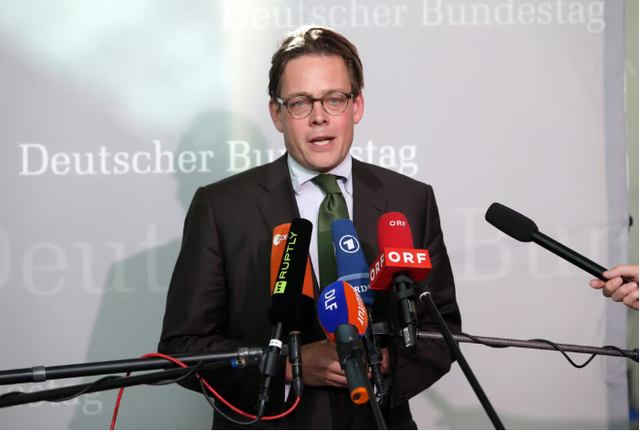
Konstantin von Notz, chairman of the intelligence oversight committee in the German parliament, has called on Germany and its European allies to create their own intelligence-sharing network. "We need a European intelligence cooperation format – let's call it 'Euro Eyes' – to ensure that strong states can exchange information quickly and securely on a clear legal basis," he told POLITICO.
According to him, there is no way to increase our intelligence capabilities in the future.
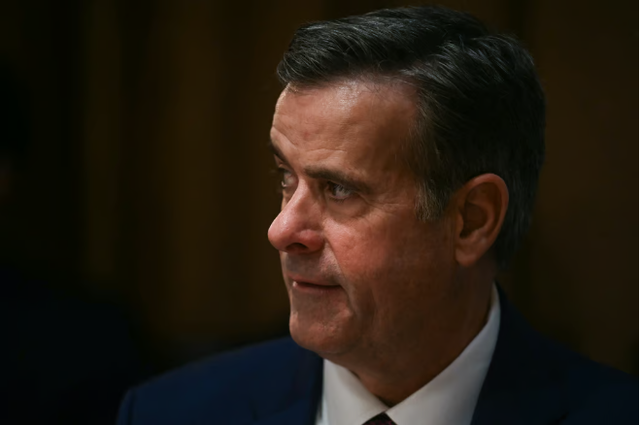
His proposal comes as intelligence sharing between the United States and its allies could come to an end, a situation that has raised alarm in Berlin. The CIA's surprise decision to suspend intelligence sharing with Ukraine - confirmed by Director John Ratcliffe on Wednesday - raised concerns that similar restrictions could be extended to Germany, further jeopardizing European security.
"This is a paradigm shift that would hit us hard," said Roderich Kiesewetter, vice chairman of the Bundestag's intelligence oversight committee.

"We have relied for decades on American intelligence capabilities. If that is taken away from us, we must quickly develop alternative structures," he added.
German security agencies have long relied on American intelligence to track terrorist threats, cyberattacks and espionage activities. Kiesewetter warned that without access to American intelligence, Germany could miss crucial early warnings.
In 2007, the CIA intercepted emails from the “Sauerland Group,” an Islamist cell planning bombs in Germany. U.S. intelligence shared the information with German security officials, enabling German authorities to thwart the attack. In 2023, U.S. agencies informed German authorities of two Iranian-linked suspects in the western town of Castrop-Rauxel who were allegedly preparing a chemical attack.
Von Notz stressed that intelligence cooperation is mutually beneficial. "This has never been a one-way street - Germany, together with other partners, also contributes to intelligence efforts for the US."
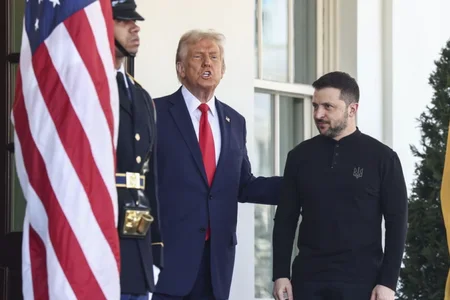
But because of what Kiesewetter describes as the "unpredictability" of US President Donald Trump, German lawmakers are exploring ways to strengthen alternative alliances.
Von Notz suggested deepening ties with the so-called Five Eyes alliance — a long-standing intelligence-sharing partnership between the United Kingdom, Canada, Australia, New Zealand and the United States — but warned that Europe should not be solely dependent on this network. Instead, he argues, European countries should build their own intelligence-sharing system that reflects their specific security needs and vulnerabilities.

"There is no doubt that the Five Eyes partners share the goal of protecting democratic freedoms," von Notz said, adding that Germany and Europe should invest more in intelligence structures and create deeper partnerships based precisely on these shared values.
The Euro Eyes suggestion echoes a broader push within the European Union to create domestic intelligence cooperation. A report by former Finnish President Sauli Niinistö, commissioned by European Commission President Ursula von der Leyen and published in late October last year, proposes the creation of a “full-fledged intelligence cooperation service” at EU level to combat espionage and foreign interference. Niinistö argued that Europe needs its own intelligence-sharing network to reduce reliance on the U.S.
Meanwhile, Ukrainian Defense Minister Rustem Umerov indicated that Kiev is already looking for alternatives to intelligence. “As for intelligence, we have not yet received details on how it will be limited,” he said during a meeting with his German counterpart Boris Pistorius. He added that “we are already working on alternatives, including that - if necessary - we will also seek help from Germany.” / Adapt Pamphlet/




Lini një Përgjigje