


 Shkruar nga Badr Jafar
Faced with geopolitical uncertainty, Gulf states are building new energy corridors and ports outside “dead spots.” This new economic integration aims to create a sustainable network that will carry the weight of global trade for the next half century.
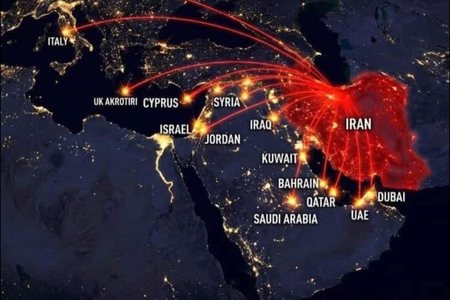
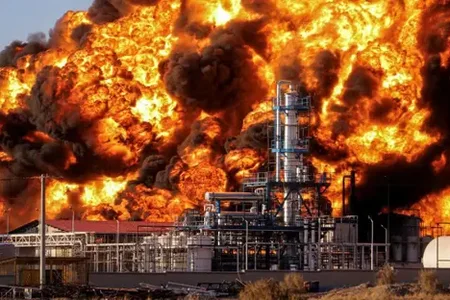
Over the past month, analysts around the world have focused on the devastation being caused by the crisis in the Strait of Hormuz: blocked sea lanes, skyrocketing insurance costs, and sharp fluctuations in the price of oil.
But within the region itself, another story is emerging, one that will outlast any ceasefire or tension that may come. An entire pattern of trade and infrastructure that has stood firm for 50 years is being radically changed in a matter of weeks.
I have spent the last month in discussions with hundreds of business leaders and senior Gulf government officials to talk about the crisis and what lies ahead. The spirit of the conversations has already changed.
The focus is no longer on managing the crisis of the day, but on transforming the systems that make us so fragile and vulnerable to such risks.
The scale of this vulnerability is truly shocking.
About 30 percent of the world’s shipborne oil and a fifth of the liquefied natural gas trade normally pass through a waterway that is only 39 kilometers wide. Not only that, but a third of the world’s chemical fertilizers and almost half of its sulfur depend on this narrow passage, directly affecting the livelihoods of millions of people.
The vast majority of aluminum and helium also pass through there, the latter an element that is vital for the production of electronic devices and the entire Artificial Intelligence chain.
The fact that world trade is concentrated on a single, insecure corridor is an extraordinary situation, one that the world has accepted for decades. But now that patience has come to an end.
Those who are investing today to be sure of a “post-Hormuz era” are actually building the trade infrastructure of the future. Saudi Arabia’s Red Sea ports and expanding pipeline network already provide another route for energy. The east coast of the United Arab Emirates offers deep-sea ports and pipeline routes that connect Gulf producers directly to the Indian Ocean.
Meanwhile, major ports in Oman, such as those at Duqm and Sohar, are completely out of the danger zone. Goods and energy have begun to move through these routes, even through interstate land agreements that would have seemed impossible just a few months ago.
The Middle East also possesses an untapped wealth, a network of pipelines built during past crises and left in limbo for decades. These include road corridors, railways, interstate energy networks, and water systems that extend far beyond current networks.
With a new spirit of cooperation, these assets can strengthen the region's connection to world markets. The current crisis is achieving what numerous diplomatic meetings have failed to do for years. It is creating the conditions for a genuine economic union among the countries of the region.
Countries that had previously had frosty relations are now finding common interests to protect. By removing vital trade from a single point of danger, not only the economies of the region but all supply chains around the world are secured.
For Europe, Asia and Africa, this translates into fewer shocks and a more secure supply of vital resources. For investors and infrastructure builders, this is a rare, once-in-a-generation opportunity to help build the corridors that will carry the weight of global trade for the next 50 years.
Large companies operating in the Gulf clearly see this prospect and are preparing for the big change. Many of them are not only worried about the current blockages, but also want to make sure that they will be part of this great construction that is coming to life.
We in the United Arab Emirates have experienced the price of attacks on our soil firsthand, so we are not looking at this situation with false optimism.
The risks are here, present, and political uncertainty remains a cause for great concern. But the path the region has taken is already set and there is no turning back.
No matter how the current crisis is resolved, no government will ever again accept being held hostage to strategic dependence on a small strait controlled by an unpredictable neighbor. The pipelines will be expanded.
Port capacities will increase. The energy networks, water systems and trade corridors that connect the region's economies will become formal and sustainable. The world is currently watching with anxiety what is being destroyed, but it must turn its eyes with equal attention to what is being built. / Adapted from "Pamphlet", from "Financial Times"


Lini një Përgjigje