


 Shkruar nga Urooj Mukadas
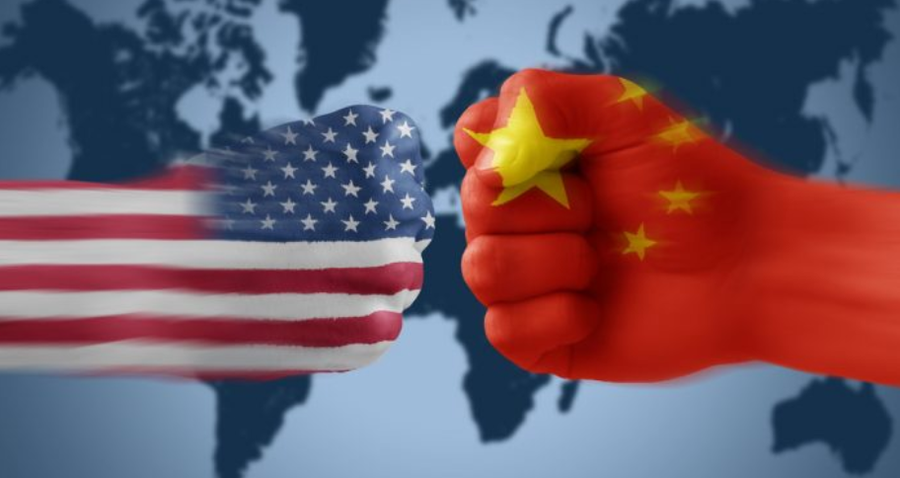
Today between China and the US, not only an economic war is taking place but also a war of ideologies...
In 1904, the famous British geo-strategist Halford Mackinder first introduced the concept of the "core territory" (heartland) and published his work known as "Theory of the core territory". In it he described the main rules for achieving world domination by any power that will manage to control the Eurasian territory.
This includes Central Asia, Eastern Europe and parts of Russia. The most famous quote of this theory was: “Whoever rules Eastern Europe commands the core territory; whoever rules the latter commands the World Island; and whoever rules the latter rules the whole world."
For example, during the Second World War, Nazi Germany under the dictatorship of Adolf Hitler, aimed to conquer the Eurasian territory to dominate the "core territory", to gain power with the ultimate goal of world domination. Meanwhile in 1942, Nicholas Spyman proposed the Rimland Theory, stating that in order to rule the world, it is essential to conquer the main coastal areas. The Rimlands are the borders of the island world, connected by the seas. Spyman believed that in order to dominate the world, a state must dominate the Rimland.
And to dominate the core territory, it is essential to dominate the Rimland as well. For example, during the Cold War era, the US stopped the expansion of the Soviet Union in order to maintain its influence in the world by dominating the Rimland. As a result, the US became the world's only superpower.
On the other hand, Alfred Thayer Mahan, an officer of the US Navy, developed the strategy of sea power, which became one of the most influential in this field. In his book "The Influence of Naval Powers on History", published in 1980, he argued that naval power could make a state a superpower.
This is because 71 percent of the earth's surface is covered by seas, and a country with a strong navy can dominate the world. The Mahan strategy was very important during the First World War. Sea power is essential to becoming a world power as it provides trade routes, enables a state to hide nuclear weapons in submarines, and is difficult to detect.
Above all, naval power is important for maintaining the mechanism of deterrence against the enemy's first attack. During the 19th and 20th centuries, sea power strengthened the great world powers such as the USA, China, Russia, Britain and France. Landlocked and navyless states are usually weak states such as Afghanistan and other small Asian states such as Nepal and Bhutan.
Strategjia e SHBA-së bazohet në konceptin e Mahan, që ka ndihmuar shumë në forcimin e vendit. Vendndodhja gjeografike e SHBA-së, me rrugët e saj të larmishshme detare, e bën të vështirë zbarkimin ose pushtimin nga çdo shtet tjetër. Gjermania u përball me një bllokadë detare nga Britania, dhe India e kërcënoi Pakistanin me një bllokadë detare, e cila mund të çonte në luftë.
Fuqia detare, mund të jetë një faktor me rëndësi në fillimin e luftërave apo konflikteve në të ardhmen. Sipas konceptit të Mahan për fuqinë detare, shndërrimi në një fuqi detare është thelbësor për t’u bërë një superfuqi. Historia na ofron shumë shembuj për të ilustruar këtë ide. Për shembull, Australia po blen aktualisht nëndetëse bërthamore nga SHBA-ja, lëvizje që nxjerr në pah rëndësinë që ka fuqia detare. Po kush do ta sundojë botën në të ardhmen, SHBA-ja apo Kina?
Për ti dhënë përgjigje kësaj pyetje, le të analizojmë pozicionin strategjik dhe gjeopolitik të të dyja shteteve. Nisma e Rrugës dhe Brezit (BRI) që nisi në vitin 2013, synon që të forcojë pozitën ekonomike, politike dhe strategjike të Kinës, duke e ndërlidhur sa më shumë botën.
Ndonëse kjo nismë ka rreziqe në nivel global, ajo ka tërhequr vëmendjen e shumë vendeve nga e gjithë bota për të investuar në projekte dhe për të fituar prej tij. Rreth 70 shtete janë bërë pjesë e saj për të bashkëpunuar me Kinën në krijimin e kësaj infrastrukture globale.
Nisma paraqet kërcënime për SHBA-në në aspektin e hegjemonisë ekonomike, politike dhe strategjike. Kjo sepse ajo e forcon kontrollin e Kinës mbi rrugët detare dhe Zemrën, ku ndodhen shumica e burimeve natyrore të botës. Megjithatë, Amerika mund të bashkëpunojë me aleatët e saj për të krijuar një alternativë dhe për të konkurruar me Kinën për të ruajtur hegjemoninë e saj.
Në të ardhmen, BRI do të ndihmojë Kinën të fitojë kontrollin mbi territorin thelbësor, siç e nënkupton strategjia klasike e Mackinder, dhe kjo mund të çojë në sundimin e Kinës në sistemin botëror ashtu si SHBA. Por Kina ka zgjedhur të luftojë ekonomikisht dhe jo ushtarakisht, dhe do të vazhdojë ta bëjë këtë për një të ardhme të parashikueshme.
Sot midis Kinës dhe SHBA-së, nuk po zhvillohet vetëm një luftë ekonomike por edhe një luftë ideologjish. Ngjashëm me blloqet kapitaliste dhe komuniste gjatë epokës së Luftës së Ftohtë, midis Uashington it dhe Pekinit po shohim një betejë ideologjish.
Kina ka një përzierje të shkëlqyer të shoqërive kapitaliste dhe komuniste, por nuk mund të neglizhohen kultura perëndimore dhe vlerat aziatike. Kina ndjek ideologjinë e relativizmit ndërsa SHBA-ja është në favor të universalizmin. Nuk mund të injorohet as teza e përplasja e qytetërimeve që parashikoi Samuel B.Huntington, dhe kjo sugjeron se luftërat e mëdha mund të nisin bazuar në dallimet kulturore.
Under the current administration of Joe Biden, it seems that the relationship between the US and China may take a new shape. While there may be an increase in economic interdependence, strategic and geopolitical rivalry between the two nations is likely to continue.
China should focus on addressing its weaknesses, including issues such as population, labor force, environmental degradation, economic inequality, and social inequality. In addition to its BRI initiative and other similar programs aimed at increasing global influence, China should prioritize these domestic issues to strengthen its position in the global arena.
The world can be seen as a collection of islands, with the continent at the center where most of the world's resources lie. Nations struggle for power and dominance to protect their national interests in this resource-rich area. In this context, it can be said that the BRI will give China control over Eurasia, while America will retain control over naval power under the influence of the Mahan strategy.
China's control over the landlocked states, including the China-Pakistan Economic Corridor (CPEC), will continue to strengthen, paving the way for its control over Eurasia. This poses a major threat to America's hegemony. During the Cold War, the US used the Containment Policy to prevent the spread of communism, focusing on the Rimland Theory.
The same approach can be applied to China to prevent the expansion of its influence, although the credibility of the US has been greatly questioned after the war in Afghanistan and its chaotic departure from there in 2021. According to the Rimland Theory, the US- it can forge alliances to counter China, such as the current partnership with India and other allies to sabotage CPEC.
Economically, China has invested more in Europe than the US. It also leads the US in cyber and quantum technology. The technological revolution could benefit China in the post-COVID world. After analyzing the strategic, geopolitical and geographical positions of China and the US, we can say that the conditions are favorable for China to become a superpower in the future.
Due to the economic interdependence between the two states, the world may once again experience a bipolar world system. US naval power will strengthen its position, as it has a good geostrategic location. Meanwhile, China's geostrategic location is excellent because of its presence in the Rimland and its access to sea power. But it is difficult to predict who will rule the world, and it is too early to make a clear statement./ Adapted Pamphlet from "Modern Diplomacy"






Lini një Përgjigje