


 Shkruar nga Martin Di Caro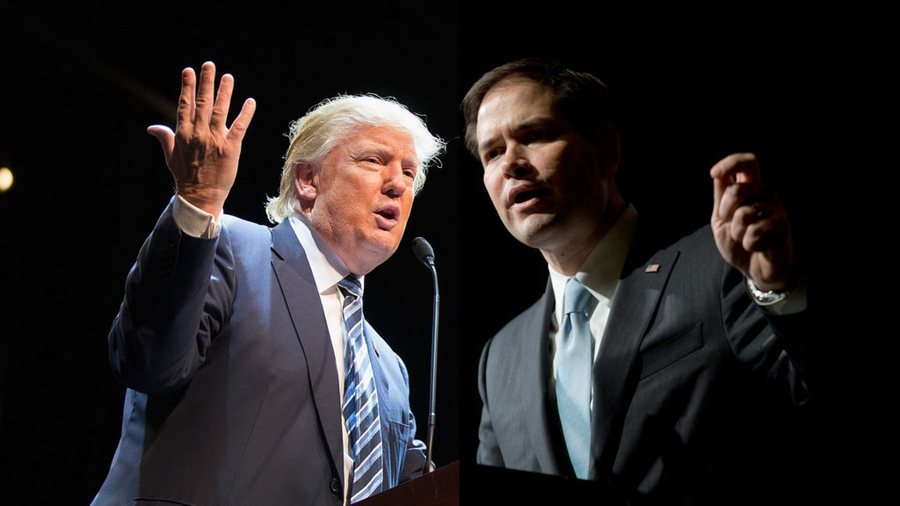
The new world order is becoming a transactional marketplace, where the sovereignty of states and national resources are bought and sold as private goods. This paradigm of the “political market” is replacing international law with the pure logic of gangsterism and financial profit…
"As everyone knows, the oil business in Venezuela has been a total failure for a long period of time... Our giant oil companies in the United States, the largest in the world, are going to come in, spend billions of dollars, fix the badly damaged infrastructure and start generating money for the country," President Donald Trump said, hours after US forces invaded Caracas and ousted the indicted autocrat, Nicolás Maduro.
The January 3 operation did not bring about regime change, but rather a forced agreement. Maduro's subordinates can stay in power as long as they open up the currently ailing oil industry to large American companies. Government repression still prevails, even without Maduro.
In his second inaugural address, Trump claimed to want to be remembered as a peacemaker. Instead, he is practicing what scholar Alex de Waal calls “global mafia politics,” the new rules of an emerging order that renders the familiar debates between realists and idealists somewhat futile.
I spoke with De Waal about his thesis that the “political market” is now dominating international relations. De Waal, executive director of the World Peace Foundation, explains why the sovereignty of poor and weak countries on the periphery of world politics is being “fragmented, cubed, ranked and traded.”
When did you come up with the idea of the "political market" to understand international relations and the exercise of power?
This was taught to me by some very unpleasant but very capable people in Sudan. At the Darfur peace talks 20 years ago, the head of the Sudanese government delegation used two terms in Arabic.
Sandouk al-siyasa is the “political pocket” or political budget, the money he had to buy members of rebel delegations and keep militia commanders on hand. The other term was souq al-siyasa, meaning political bazaar or market.
His public duty was to sign a peace agreement that he could support.
Meanwhile, his real task was to use his political budget in the “political market,” to secure the government’s position by buying enough rebels. This is the most rudimentary form of a market where cash is directly exchanged for loyalty, service, or political office.
When you move from an individual case like Sudan to a regional and global level, the financial tools become much more sophisticated and the “goods” of power themselves more complex. This is where you start to see how the state-based realist system for understanding the world collapses.
Today, the rules-based order is being destroyed on many fronts. Are you saying that it has already been subsumed by the political market, or can they coexist?
The imperial political market, as it manifested itself in the 18th and early 19th centuries, never disappeared. Legal principles were established in the 17th century and matured with European maritime colonialism. The way imperial powers (especially Britain and France) dealt with decolonization was to try to preserve the elements of sovereignty they still valued, especially financial and security sovereignty over their former colonies.
Thus, the era after 1945 always had these two layers. For most of the world outside Europe and North America, the second level (the political market) was a legacy of empire that still mattered.
The political market became the dominant logic in much of the world, stage after stage. This happened when countries broke up, as happened with Sudan in the 1980s. It became a regional phenomenon about 15 years ago with several key developments, including the financial crisis.
This squeezed the public finances of poor countries so much that those in power could no longer promise to implement welfare programs. Also, the withdrawal of American military hegemony from the Middle East led other actors, especially the Gulf States, to fill the void.
Does this mean that the political market thrives in a world where American hegemony is declining?
Now a particular kind of American hegemony is fading. If you look at the way the US ran Afghanistan, it was officially a state-building program. But the CIA had a lot of money and it gave it to any military leader who cooperated in the fight against the Taliban, even though these leaders were deeply corrupt. The US was a very unscrupulous user of this mechanism.
You have also said that kleptocracy is merging with gangsterism. Is this what is happening now in Venezuela?
It has all the makings of a pure example. In the Bush era, regime change meant removing someone the US didn’t like and experimenting with constitutional democracy. In the age of the political market, a regime like Maduro’s is run like a kleptocratic cartel, based on bribery and organized crime.
If you take it over, you'll want to keep the same operators, because they have no loyalty other than profit. Venezuela looks like the new doctrine of "regime change" in the age of kleptocracy: keep the structure intact and put a new "mafia don" at the top.
You have said that “global mafia politics” makes national sovereignty secondary or even irrelevant. What is the new threat to the rule of law?
What we're seeing under President Trump is that the subtext, the dirty deals that are always made behind the scenes, is now the headline. Trump is unfettered. His message is not "we'll follow the rules, but sometimes we'll break them."
His motto is: “There are no rules, it all depends on what we say!” Trump has taken what was implicit in the system and made it explicit.
So geokleptocracy has swallowed geostrategy?
There is certainly overlap. The logic that drives things forward at the moment is geokleptocracy. On a global scale, what matters is the use of money and power to create a system that generates unlimited wealth for those at the top. This does not necessarily involve “countries,” but rather specific political-business enterprises that often own entire countries.
You are describing a rather bleak picture...
Yes, it is a grim picture. The first step towards dealing with this situation is to recognize the situation as it is. We should find solace in those places where the business class and civic groups have come together to say that they cannot allow politics to be conducted on this corrupt basis./ Adapted from "Pamphlet", by "Responsible Statecraft"


Lini një Përgjigje