


 Shkruar nga Pamfleti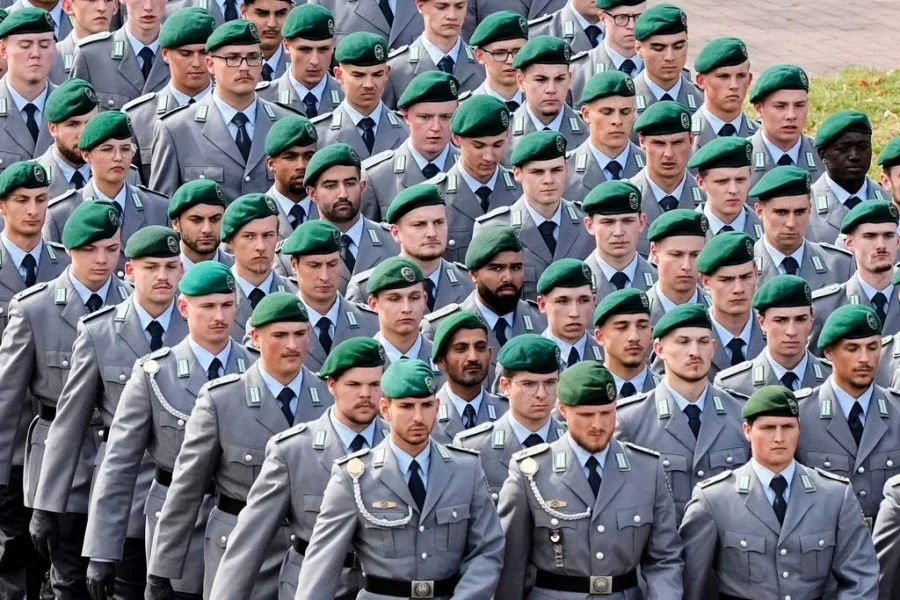
The war in Russia, demilitarization and rearmament
General Carsten Breuer is not a man who moves slowly. As head of Germany's armed forces, he is today considered the most powerful, and perhaps the most defining, military figure in Europe. His mission is clear and ambitious: to transform the German army into the most powerful conventional force on the continent, and to do so at a speed that leaves no room for delay.
He warns that Russia, through intensive recruitment and investment in armaments, could be able to launch a large-scale attack on NATO territory by 2029. “I have never experienced a situation so dangerous and so urgent,” he emphasizes. For a military man, the answer is one: preparation.
Germany's new military ambition
Breuer joined the West German army in 1984, at the height of the Cold War. Today, without overt military rhetoric but with clear objectives, he aims to completely reform the armed forces.
Germany plans to increase military spending from 95 billion euros in 2025 to 162 billion euros by 2029 – a strong increase that enjoys broad public support. This is not a simple boost, but a profound change.
Yet just a few years ago, such a plan would have caused concern across Europe. History continues to weigh heavily. In the 20th century, Germany was responsible for devastating wars and enormous human losses. For decades, the country deliberately limited its military power as a form of historical restraint.
Today, the question returns with force: can Germany once again become a military superpower without inspiring fear? And if so, what role will it choose?
On the front lines of Eastern Europe
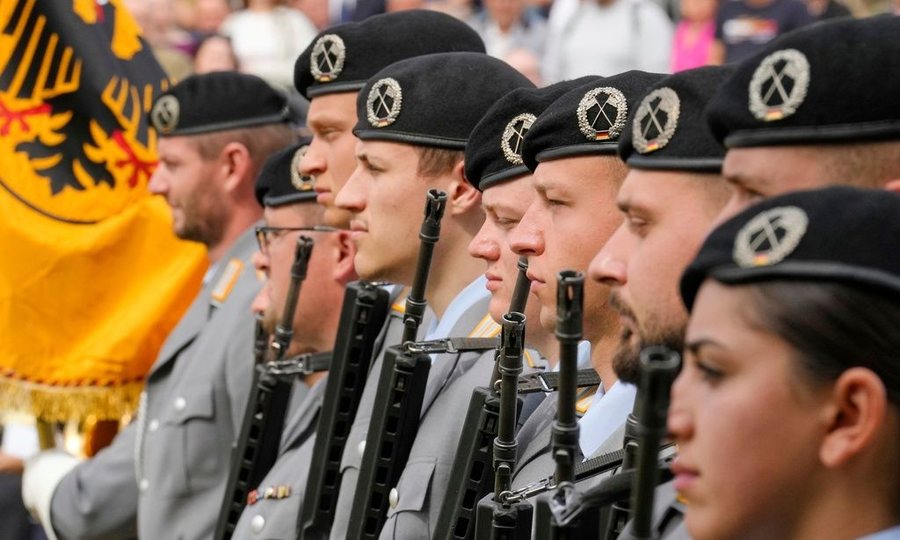
The answer is emerging in Lithuania. For the first time since World War II, German forces have a permanent presence there. About 1,200 soldiers are already in the country, with the goal of reaching 5,000 within the next year.
In exercises near the border with Belarus, German troops are simulating scenarios of an invasion from the east. The area was not chosen by chance. The Great European Plain – without natural obstacles – has historically been a corridor for military campaigns, from Napoleon to Hitler.
The story here is not only past, but also a warning.
From demilitarization to rearmament
After the collapse of the Soviet Union, Germany, like most of Europe, significantly reduced its military capabilities. There were periods when shortages were so severe that soldiers trained with improvised means instead of weapons.
This period is now considered past. The Russian invasion of Ukraine served as a catalyst. In 2025, the German parliament made a historic decision, easing fiscal constraints to finance defense.
For a country still reeling from the hyperinflation of the interwar period, this decision was not only economic but also cultural. Analysts describe it as “a true cultural revolution.”
The role of the US and the search for autonomy
The change in the United States' stance has also played an important role in this turn. Statements about reducing its commitment to European security have caused concern in Berlin.
Postwar Germany had built its security on American support. Today, that security is no longer guaranteed. As a result, Berlin is pursuing a new strategy: increasing “operational autonomy” within NATO.
Germany is investing in its own capabilities, including intelligence, drones, precision strikes, and space technologies. At the same time, it is strengthening its defense industry.
Restoring military power, with caution
Despite the strengthening, the German leadership uses a cautious language of cooperation. The message is clear: the goal is not dominance, but collective security.
The number of troops is an indicator of this direction. From 182,000 soldiers currently, the aim is to reach 200,000 in the short term and 240,000 in the next decade, with a parallel strengthening of the reserves.
If necessary, the reinstatement of compulsory military service is not ruled out.
Europe in a new era
European allies, including countries with sensitive historical memories like Poland, view Germany's strengthening positively. They prefer a strong Germany that acts within alliances to a passive Germany.
However, the balance remains fragile. Europe is struggling to rebuild its security architecture at a time when there is no clear replacement for the US role.
The weight of responsibility
Asked if he feels the weight of his role as the most powerful military leader in Europe, Breuer replied curtly: "I feel the responsibility every day."
This sentence sums up the new German attitude: less show of force, more responsibility. Less rhetoric, more preparation.
The world created after World War II is changing. And with it, so is Germany's role. It is no longer limited, but has returned to the center of developments - equipped, determined and more cautious than ever. /Adapted from BBC /


Lini një Përgjigje