


 Shkruar nga Ulrich Ladurner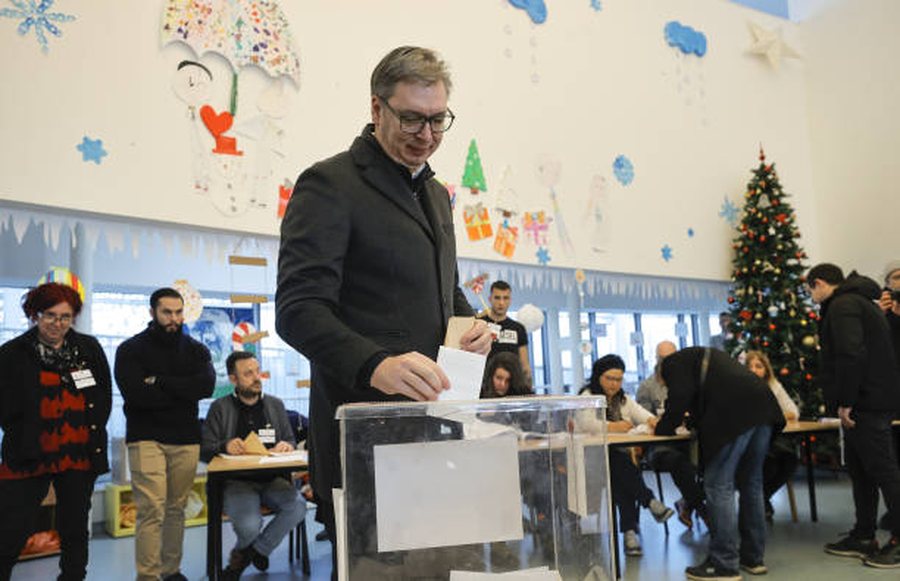
The President of Serbia appears radical; for violence is a legitimate means. However, many voters want it and the EU considers it necessary. Why?
There are many stories about Serbian President Aleksandar Vučić, which say the same thing in different versions: the man has psychological problems. Some claim he is manic-depressive, choleric, unpredictable and vindictive.
Others say he's just crazy.
All these stories should not be taken seriously, you should even reject them, but they should be mentioned. They are more than just slander, they are a consequence of Vucic's long rule. Anyone who spreads it also expresses his helplessness.
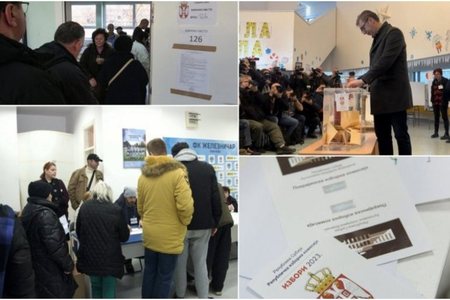
Large parts of Serbian society feel at the mercy of Vučić. Since he first became the country's prime minister in 2012, he has gradually adapted the political system to his own person. He has undermined democracy so much and weakened all control mechanisms so much that he has no reason to fear elections, on the contrary. He likes choices. Since 2012 he has brought it up several times, most recently in April 2022. Serbs are supposed to vote again this Sunday.
Why?
Because the president thinks he has to prove once again to his opponents that he is the most popular politician in the country. In recent months there have been large protests against Vučić, which were sparked by two violent incidents. In May, a 13-year-old killed nine people in a Belgrade school, and two days later a man shot eight people in a village near Belgrade. The two massacres shocked Serbian society and drove thousands into the streets for weeks to demonstrate against the violence.
As widespread as it sounds at first, it hits the critical point of a country in which the language of violence permeates everything: media, society, politics. Vucic often speaks as a hooligan from the environment of Belgrade, with which he has excellent relations even to this day. Hidden threats, drastic intimidation, openly displayed aggressiveness - these are the stylistic tools of the president. He doesn't only use it in domestic politics, but sometimes he lets the cat, who doesn't shy away from a fight, hang out on the international stage as well. This was recently established during the visit of NATO Secretary General Jens Stoltenberg to Belgrade. While Stoltenberg spoke diplomatically at the joint press conference, despite many disagreements, Vucic suddenly thundered. He attacked Kosovo Albanians like a thug who randomly beats up a passerby on the street. Stoltenberg was clearly disturbed by the spectacle that Vucic was making.
War criminals as mentors
In the dark political corner from which Vucic comes, violence is a given and legitimate means to assert one's own interests. In 1993, two years after the start of the bloody breakup of Yugoslavia, Vučić joined the Serbian Radical Party of ultranationalist Vojislav Sešelj, one of the Balkans' worst agitators, who was convicted by a UN tribunal of crimes against humanity. . Vucic sang his master's song. In 1995 he threatened Bosniaks in parliament: "If you kill one Serb, we will kill 100 Muslims". A few weeks later, Serb militias overran the Bosnian enclave of Srebrenica and killed 8,000 Muslim men in a few days. It was the largest massacre on European soil since World War II.
Vucic later said his statement was taken out of context. As prime minister, he described the Srebrenica massacres as a "cruel atrocity", but he did not address Serbia's direct responsibility for this mass crime. From 1998 to 2000 he was minister of information for Serbian President Slobodan Milosevic, who was soon to be tried at the military court in The Hague. Milošević died in custody there. As information minister, Vucic raged against NATO, which bombed Serbia in 1999 to stop the killings in Kosovo.
The fact that war criminals like Seselj and Milosevic were his mentors did not hurt Vucic's career. But why? To find an answer, you need to look at three cities: Belgrade, Berlin and Brussels.
"A Serbian hero"
In Belgrade, you can see with your own eyes that the crimes of the past have not been dealt with. On the walls of houses in the city is the image of the Bosnian Serb general Ratko Mladic with the inscription "a Serbian hero". Mladic is the butcher of Srebrenica, which is why he was sentenced to life imprisonment by the UN court for crimes against humanity. To this day, the burnt ruins of Yugoslavia can still be seen in the cityscape. The present Ministry of Defense, which was bombed by NATO in 1999 became the skeleton of the house in which the state television and which NATO also bombed.
Not far away, in Tašmajdan Park, is a small monument. It is dedicated to children who are victims of "NATO aggression" for victims have fallen. Title: "How were the children?" Innocent like everyone else in Serbia, that's the subtext. No trace of the authors. It is also Vučić's essential tune, which is amplified to its best in the media he controls: We Serbs are victims. I, your President, will see you gain respect in the world again! / Adapted from Die Zeit


Lini një Përgjigje