


 Shkruar nga Pamfleti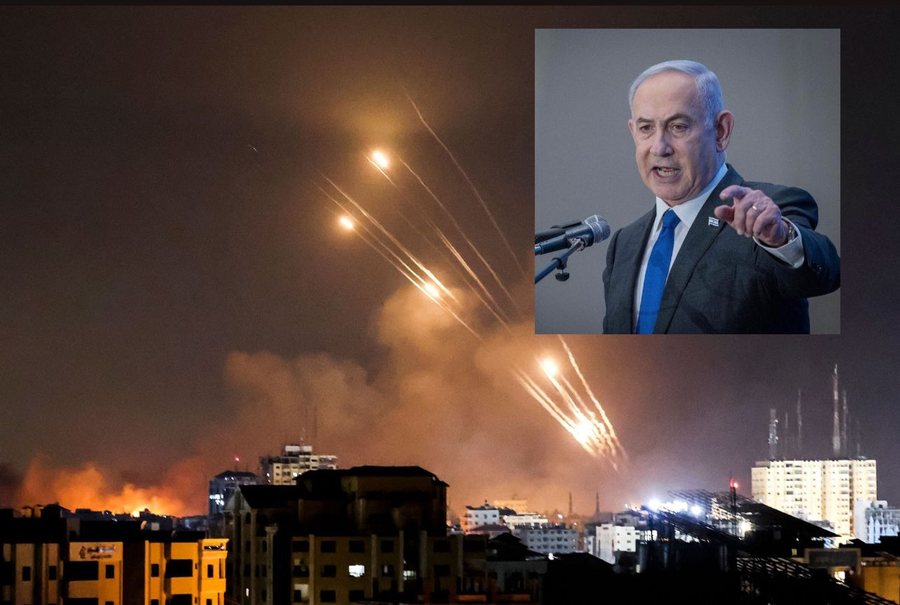
Netanyahu wanted a wider conflict, and Tehran has stepped into his trap. The great powers must immediately stop this...
The rockets and drones that ravaged Israel in the early hours of Sunday morning have given Israeli Prime Minister Benjamin Netanyahu what he always wanted - a mandate and justification to openly attack Iran, a country he has long eyed. as Israel's main and potential enemy.
The pressing question, which could be answered within hours, is what form Israel's promised "significant response" will take and whether Iran, in turn, will strike again.
It is the duty of the US, Britain and Israel's other allies to inform Netanyahu in clear terms that continued military, diplomatic and political support is conditional on a legitimate and proportionate Israeli response. It would be preferable if Israel did not respond at all. Iran failed in its apparent goal of inflicting serious damage. Israel says 99% of its missiles and drones were destroyed. Fortunately, the victims were light. Tehran now says, with little hope, that the episode is "over" but vows to fight back if attacked.
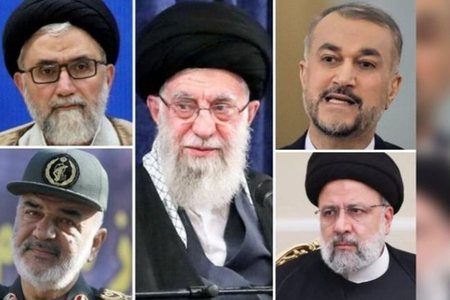
Netanyahu's wisest course would be to hold up the attacks to the world as supposedly irrefutable proof of his enemy view: that Iran is a rogue, malevolent, and dangerous state that violates international law and endangers Israel as well as the states Arabic and Western as well. Instead of attacking blindly — for example, at Iran's nuclear facilities — he should argue that the Islamic republic's hardline leadership and its supreme leader, Ayatollah Ali Khamenei, have shown their true colors and deserve punitive action. international collective.
On past form, it is unrealistic to expect Netanyahu to turn the other page. Tehran's action has provided it with a unique opportunity to divert global attention from its government's horrific devastation in Gaza and its failure to defeat Hamas.
He can say that the fight against Hamas has become an existential fight against his masters in Tehran – and that people of good will, at home and abroad, must rally around his leadership to secure a necessary victory.
That Netanyahu and his inner war cabinet appear to have deliberately and recklessly provoked this showdown should not be forgotten as the crisis unfolds. The Israeli prime minister has been at the forefront of a decades-long covert war of killing and destruction against Iran. The secret, unacknowledged assassination of its nuclear scientists and leaders of its regional armies has become almost routine. But the list of targets has expanded since the atrocities of October 7.
In December, for example, Sayyed Razi Mousavi, a senior Iranian general, was assassinated in Damascus. Iran's reaction then, as in the past, was relatively limited and indirect. But the April 1 bombing of an annex of its embassy in the Syrian capital, which killed several top commanders, fundamentally changed this dynamic. Iran blamed Israel (which as usual has not accepted responsibility) for a direct, blatant attack on sovereign territory. Khamenei said Israel had crossed a red line.
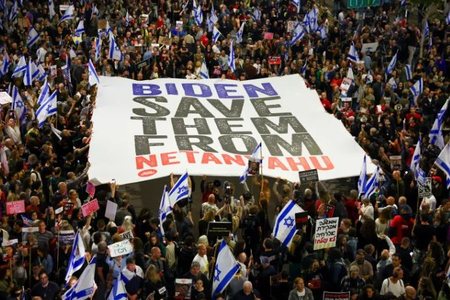
It's hard to disagree. The war had come out of the shadows – and Netanyahu was doing it. He must have known how furious the reaction would be in Tehran. Apparently, he did not inform his American ally in advance, perhaps because the Biden administration would have tried to veto the operation. The attack on the embassy in Damascus looks like a premeditated escalation designed to strengthen Netanyahu's domestic political position, silence criticism from blind Americans, avoid international pressure and stop arms supplies to Israel.
And it has worked. Overnight, criticism in Washington of Gaza dried up. In Britain, too, calls for the government to insist on an effective cease-fire in Gaza and limit support for the Israeli coalition are now likely to be drowned out. Instead, the UK is already involved militarily, in the air over Syria and Iraq, and may pull back even further. Furthermore, the Damascus attack succeeded in driving Iran away. Tehran's leaders could no longer hide behind proxy forces like Hezbollah in Lebanon and the Houthis in Yemen. Netanyahu, in fact, had challenged them, as if to a duel. They clearly felt they had no choice but to respond in kind.
This belief was and is wrong. Like Netanyahu, Khamenei and Iran's hardline president Ebrahim Raisi had elections. It would have been much smarter if Iran, faced with the wrath of the embassy, had taken its complaints to the UN and the international court in The Hague and raised the issue through friends in the G20 and the Brics grouping. Iran could have threatened retaliation and then held back. In this way it could have won sympathy in the global south and from anti-Western allies such as China and Russia.
Instead, Khamenei—a stupid reactionary with almost zero personal experience of the outside world—walked right into the trap Netanyahu had set. Iran, in the eyes of most of the international community, has outlawed itself. And the people of Iran must wait for Israel's response. As bad as this is, the deeply unpopular Islamic regime may face increased internal instability, even a popular uprising.
This unprecedented, direct confrontation between Israel and Iran, which has been building for years, has put the US president, Joe Biden, in a completely impossible position. Biden came to office in 2021 hoping to revive the 2015 US-European nuclear deal with Iran that Donald Trump idiotically scrapped. Now his policy is in ruins. Biden finds himself on the brink of an escalating armed conflict with Iran, fighting alongside an Israeli government whose actions in Gaza he has belatedly but forcefully condemned, and which could cost him dearly in the election. of November in the USA.
Biden cannot abandon Israel, even though he may believe that Netanyahu has played it again (as he thinks was the case in the beginning of the war with Hamas). Yet he cannot credibly ask American voters, long impatient with costly foreign entanglements, to support another war in the Middle East. Trump, Netanyahu's friend, can barely appreciate his luck.
All of this—Netanyahu's cynical machinations, Tehran's violent miscalculations, Biden's acute dilemma—points in only one direction: the need for urgent and concerted international action to stop further fighting and prevent an escalation in throughout the Middle East absorbing into Syria, Lebanon and the Gulf and Red Sea Regions. Of the parties in this conflict, no country or leader is right. In fact they are all, to varying degrees, wrong. Everyone seeks saving from themselves. The alternative is more bloodshed, more endless, senseless, spreading misery.
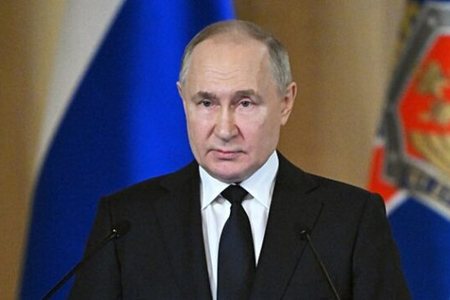
The UN Security Council will meet today in an emergency session. Instead of the usual bickering, its permanent members, especially China and Russia, will have to work constructively together to mitigate a crisis that threatens us all. Together they have the influence and power to do it. They must use it - or suffer the dire, unknown consequences. /Adapted 'Pamphlet' from 'The Guardian'





Lini një Përgjigje