


 Shkruar nga Pamfleti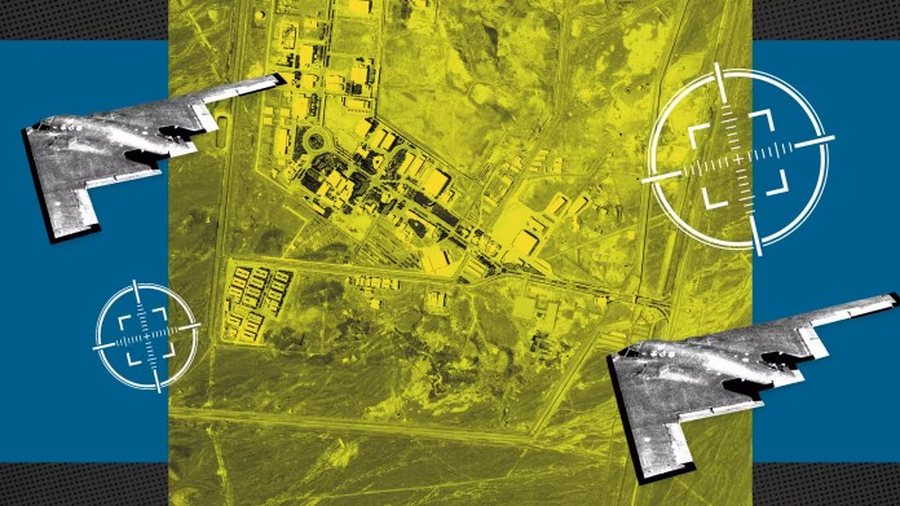
Israel built the program that led to the creation of the atomic bomb (albeit unofficially) with the help of France, since the 1950s: today no one in Israel speaks openly about its use...
Israel, Iran and the atomic bomb: two completely different stories, which over time intertwined into a knot of threats for the Middle East and today are at the center of war chronicles.
Israel built its nuclear program in complete secrecy with the help of France since the early 1950s, with the idea that it would serve to permanently avoid the risk of a "second Holocaust."
David Ben Gurion and the other founders of the state christened it a form of absolute deterrence – the weapon of all weapons, which would leave no chance to the enemy.
It was Shimon Peres, still very young, who negotiated with Paris the secret Sèvres Protocols in 1958, preceded two years earlier by the Israeli-Franco-British alliance during the failed Suez Canal War against Nasser.
These negotiations led to the construction of the reactor at Dimona, in underground bunkers in the northern Negev desert. Washington was completely opposed. President Dwight D. Eisenhower forced Israel to withdraw from Sinai and Gaza, occupied in 1956, as he did not want adventures that would jeopardize the balance of the Cold War with Moscow and was especially against nuclear proliferation.
The American services discovered the Dimona project only in the early 1960s and tried to stop it, sending inspectors from the International Atomic Energy Agency (IAEA). It was not until 1965 that they managed to get a team in, but by then the installations had been camouflaged and the inspection failed.
The issue remained a source of tension in Washington-Jerusalem relations for a long time. Only the Nixon administration later painfully accepted the fait accompli. Meanwhile, the Israeli atomic bomb was already a fact.
In 1967, dozens of nuclear-tipped missiles were believed to be ready for launch. Some sources say that during the Six-Day War, serious consideration was given to detonating one of them in Sinai as a warning to Egypt.
During the Yom Kippur War in 1973, Golda Meir's government ordered the opening of nuclear missile silos in Dimona, which forced the US to launch an airlift of conventional weapons to stop the Syrian-Egyptian offensive.
Meanwhile, pro-Western Iran under the regime of Shah Reza Pahlavi later began a nuclear program openly, under Washington's supervision, as part of the "Atoms for Peace" initiative for scientific research. In the early 1970s, plans were made to build about 20 nuclear power plants for civilian power generation. At the time, Israel and Iran were allies against the Arab world.
Everything changed with Khomeini's Islamic revolution in 1979. The hostage-taking of American diplomats in the Tehran embassy and the anti-Zionist rhetoric changed the whole situation. From that moment on, the fear of a nuclear bomb in the hands of Shiite Islamists became a concern for Israel, the US and Sunni countries, especially Saudi Arabia. Khamenei, Khomeini's successor, has often repeated the need to "wipe out Israel."
The instability brought about by the Iranian revolution highlighted the lack of common rules. Israel has never officially admitted that it has nuclear weapons, and has not signed the Nuclear Non-Proliferation Treaty (NPT), while Iran has signed it but has not recognized it since 1979. This ambiguity has created the conditions for uncontrolled proliferation.
Iran received secret aid from Pakistan and North Korea. The IAEA has always had restrictions on Iran, but it continued to operate. In 2002, the exiled Iranian opposition uncovered the secret uranium enrichment facility at Natanz. Khamenei issued a fatwa banning nuclear weapons as “un-Islamic,” but Israel and the US did not believe him.
During Ahmadinejad's presidency, the nuclear program became a symbol of national pride. In 2006, he officially declared that Iran had begun enriching uranium. The conflict with the IAEA deepened. The reports were alarming.
In 2015, Obama and European partners reached a historic agreement to limit Iran’s nuclear program, which was in effect until 2018 when Trump, following the Mossad’s discovery of a secret nuclear archive in Tehran, canceled the deal and reimposed sanctions. This further radicalized the Iranian regime, which in May 2019 announced that it would restart the program “without restrictions.”
Meanwhile, Mossad launched a series of assassinations against Iranian scientists, including the assassination of Mohsen Fakhrizadeh in 2020. In October 2023, the IAEA stated that Iran's uranium stockpile had increased 22 times compared to 2015 and inspectors were constantly being thwarted. However, there is no evidence that Iran is close to building a bomb.
Today, the Financial Times raises the question: "Was Iran really close to a nuclear bomb?", emphasizing that since 2012 Netanyahu has been trying to convince the world of this danger.
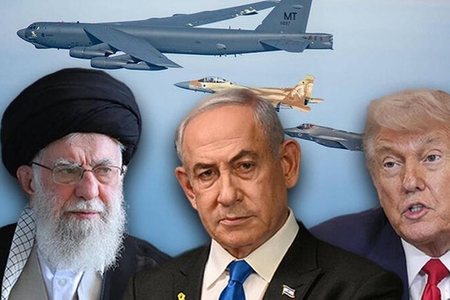
The greatest irony: before the latest Israeli attack on Iran, Trump was close to restoring the 2015 agreement. Netanyahu probably launched the attack precisely to prevent this development. Meanwhile, in Tehran today they ask: “Why can Israel have the bomb and we don’t?”
In Israel, no one speaks publicly about the use of nuclear weapons, and Minister Amichai Eliyahu's statement in November on Gaza was immediately rejected by the government. But international observers believe that recent developments could encourage the Iranian regime to accelerate its nuclear project. / Adapted from "Pamphlet" by "Corriere Della Sera"


Lini një Përgjigje