


 Shkruar nga Pamfleti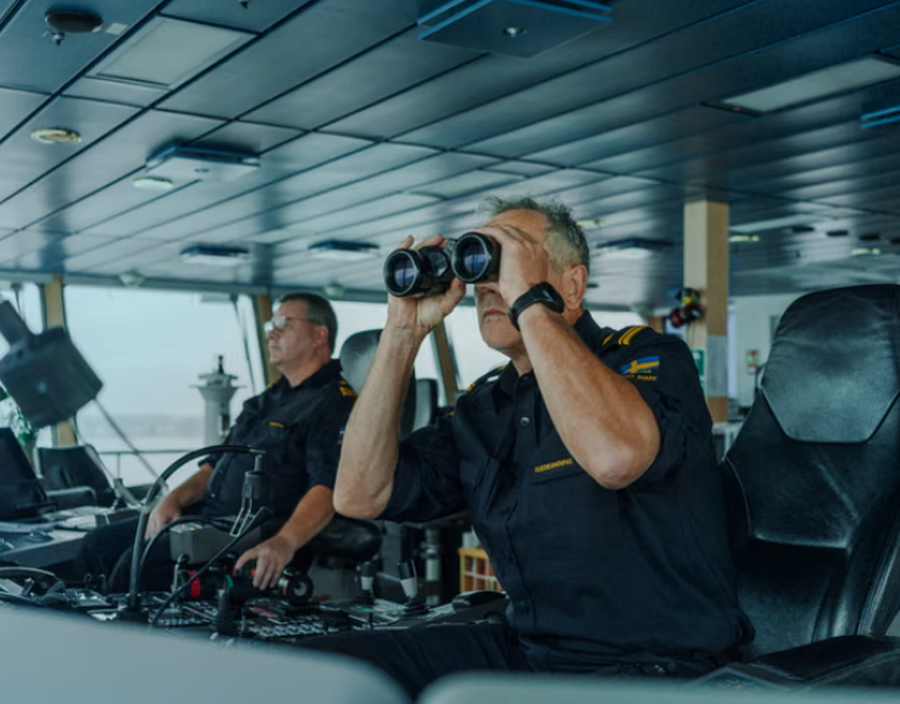
Security in the Baltics has changed dramatically since Russia's full-scale invasion of Ukraine in 2022, says Hakansson. In addition to the growing shadow fleet, there are growing concerns over satellite navigation systems, such as GPS, and Baltic authorities must also keep a close eye on underwater infrastructure...
In front of a series of screens, Swedish Coast Guard officer Jan Erik Antonsson shows on a map on his laptop how many ships of Russia's "shadow fleet" are in the area.
“These green symbols are the shadow fleet,” he says. More than a dozen green triangles representing ships of the shadow fleet appear along the coastline of southern Sweden alone.
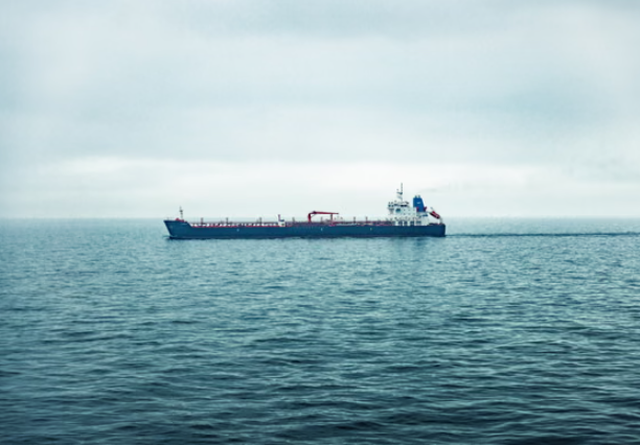
Every day hundreds of shadow fleet ships, old and unregulated tankers from around the world in various states of repair that transport oil from Russia to countries like China and India, are moving through a relatively narrow passage in the Baltic.
What was once hoped to become a de facto “NATO lake” after Finland and Sweden joined NATO has turned into a battleground for hybrid warfare and a shadow fleet, which moves under different identities and changes flags to circumvent Western economic sanctions imposed on Moscow since its full-scale invasion of Ukraine.
Some shadowy ships are understood to be escorted by Russian military vessels, others have aircraft following their path from above to ensure they reach their intended destination.
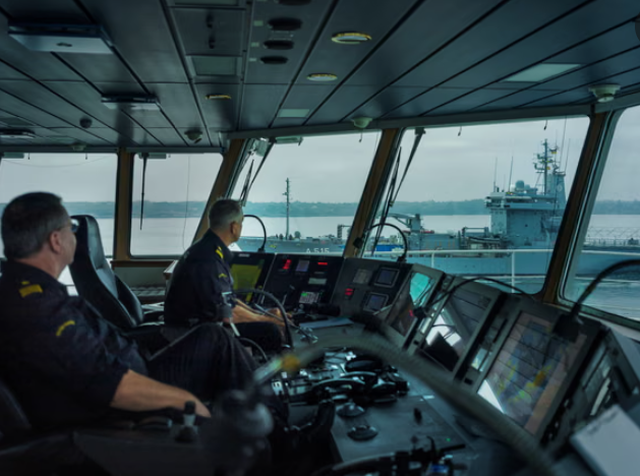
The Guardian newspaper had rare access to coastguard operations, accompanying KBV 003 from the port of Karlskrona on an 8-hour patrol in one of the world's busiest shipping lanes.
“Maritime traffic in the Baltic has increased somewhat with the entire fleet in the shadows, but also with NATO ships, defense ships and the coast guard,” says the ship’s captain, Joakim Hakansson, who adds “so we try to go far and show that we are here.”
In the Bornholm Strait, where maritime traffic is divided like a highway, the ships of the shadow fleet pass less than 10 nautical miles off the Swedish coast. Near the rocky Blekinge archipelago, there are two.
Later, the coast guard tracks one, an oil tanker currently flagged in Malta, which according to online maritime records has also flown to the Marshall Islands under a different name in the past two years. As long as ships are in a country’s exclusive economic zone, as opposed to its narrower territorial sea, a maximum of 12 nautical miles offshore, grounds for intervention are extremely limited, but since July, the coast guard has been allowed to contact the ship to request information about the ship and its security.

A crew member on the oil tanker says on the radio that its last port of call was Primorsk, Russia, and that it is carrying just under 30,000 metric tons of oil. Its next stop, he says, is Aliaga in Turkey. Its final destination is impossible to know, but the Swedish coast guard is certain that this ship is part of the Russian shadow fleet.
The radio call is part of a new government plan to tighten controls on the shadowy fleet amid fears of a serious oil spill. The ships are not required to respond, but so far the coast guard says the vessels have been cooperative.
"There are hundreds of shadowy ships moving in the Baltic all the time. And it's too much for our little sea here," says Hakansson.
"We see ships that have never been seen before in the Baltic, which we encounter now."
They need to build a picture of how seaworthy the ships are, he says, "because if there were an oil accident with these ships, there would be an oil disaster in the Baltic."
Security in the Baltics has changed dramatically since Russia's full-scale invasion of Ukraine in 2022, Hakansson says. In addition to the growing shadow fleet, there are growing concerns about satellite navigation systems such as GPS, and Baltic authorities must also keep a close eye on underwater infrastructure. In the event of an oil spill, the coast guard would be responsible for emergency response and cleanup. There is also a growing physical threat from the Russian military, as its presence has "increased" in the Baltics, Hakansson says.
Hakansson also encounters ships that he strongly suspects are espionage. "They used to have these research ships for espionage. Recently they have been using cargo ships to carry out these operations," he claims.
But unless there is evidence of an environmental crime, a fishing crime or a crime in maritime traffic, the Swedish coast guard’s ability to act on such threats is extremely limited. Under rules from the International Maritime Organization, the UN agency that deals with the safety and security of maritime transport, “the shadow fleet is allowed to move freely throughout the Baltic,” says Jonatan Tholin, a preliminary investigation manager for the Swedish coast guard.

National law can only be applied in a country's territorial waters, while in the country's wider economic zone, the legislation of the country where the flag is flown matters.
The problems caused by the shadow fleet are illustrated by the Eagle S, an oil tanker suspected of damaging five submarine cables while hauling its anchor between Finland and Estonia in December 2024. Finnish authorities have brought charges against the crew members, arguing that although the actions were carried out outside Finland, the effects of the crime materialized in Finland, meaning it falls under its jurisdiction. The crew members deny the charges.
However, Tholin believes the biggest risk to the shadow fleet is its uninsured ships, which in the event of an oil spill could have huge financial and environmental costs. “That means it will be the taxpayer, the state, who will pay,” he says. /The Guardian/






Lini një Përgjigje