


 Shkruar nga Bettina Menzel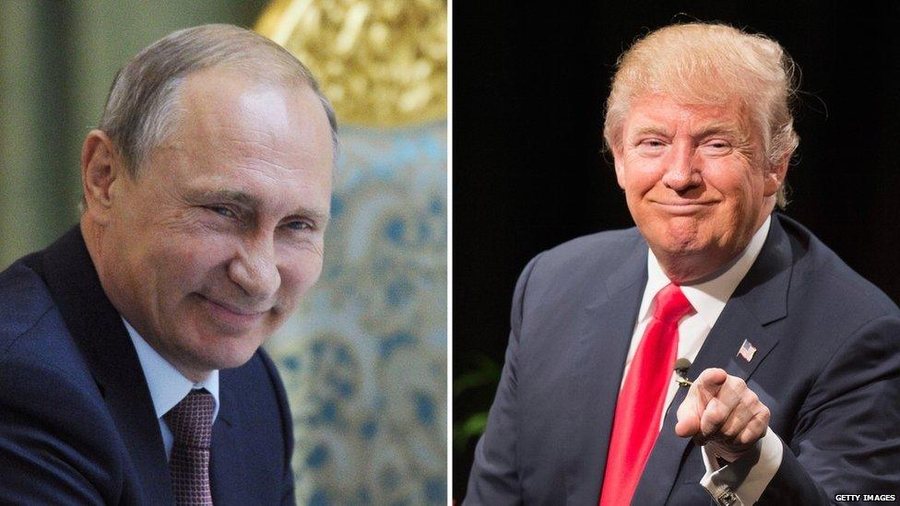
A debate erupted on social media between Trump and Medvedev. The US president threatened to send "two nuclear submarines." Deterrence or dangerous bluff?
US President Donald Trump has described Vladimir Putin in the past as “smart” and a “genius”. Recently, the Republican has apparently realized that the Russian president cannot be trusted and has changed course. His wife, Melania, is said to have played a role in this change. Now the US president has engaged in a verbal spat on social media with Dmitry Medvedev, the former president of Russia.
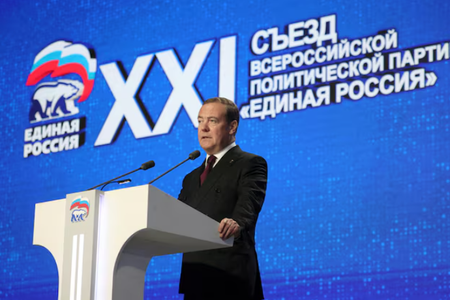
Putin's provocateur had criticized Trump's ultimatum to end Russia's military intervention in Ukraine as dangerous and a "step toward war." Medvedev also referenced the Soviet-era "Dead Hand" nuclear strategy, which could trigger an automatic counterattack in the event of a nuclear attack if the Russian leadership were eliminated.
Trump responded on his Truth Social platform by announcing his decision to deploy “two nuclear submarines” to “the appropriate regions.” “In case these reckless and inflammatory statements prove more than words,” he wrote on Friday (August 1). Words “often lead to unforeseen consequences,” Trump continued. He hoped this would not be one of those cases. In Russia, however, the reaction to the US threats remained muted: an official comment from Moscow is still awaited. Medvedev also made no comment initially.
Many details of the submarine threat remained unclear. That may be one reason for the lack of a strong response so far. It was unclear, for example, whether Trump was referring to nuclear-powered submarines or those with nuclear weapons. Military experts point out that the US could have no interest in revealing the exact location of the submarines. A sufficient number of missiles are already in position, commented former Trump adviser John Bolton. “To say that he wants to move these submarines somewhere shows that he doesn’t understand how they work,” Bolton continued.
Referring to Medvedev, the former US presidential adviser added to CNN: "It is really extremely reckless for the president to react to someone in this way." Russian media outlets took Trump's threat into account but downplayed the risk. Leonid Ivlev, a former general and current Duma deputy, stressed that he did not see this as an immediate threat. The presence of such US weapons systems is well known. Viktor Vodolatsky, another deputy, said it was pointless to try to intimidate Russia, as the nuclear power has a larger and better-equipped nuclear submarine fleet.
Trump's recent shift in stance on Russia may be due to his desire for a quick peace, while Putin is playing for time. Before his re-election, Trump claimed that he could end the war in Ukraine within 24 hours. He is also said to have ambitions for the Nobel Peace Prize. But the Kremlin boss keeps bombing, insisting on his war aims and thus thwarting Trump's plans. Recently, Russia even expanded its military operations in Ukraine.
Peace researchers at the SIPRI Institute have warned against a nuclear arms race, arguing that it is associated with greater risks and uncertainties than in the past. Nuclear weapons are no guarantee of security, as the conflict between Pakistan and India has shown, SIPRI researcher Matt Korda stressed. Russia and the US currently together possess about 90 percent of the world's nuclear arsenal. Regarding Trump's nuclear threats, Russian MP Vodolatsky then raised a point that could also inspire approval in the West: he does not consider it necessary to respond to such statements by the US president, because it is clear to everyone that he constantly changes his mind.
However, from the perspective of some observers, this is precisely part of Trump's tactic: unpredictability. /Adapted from Pamphlet by Fr.de/




Lini një Përgjigje