


 Shkruar nga Pamfleti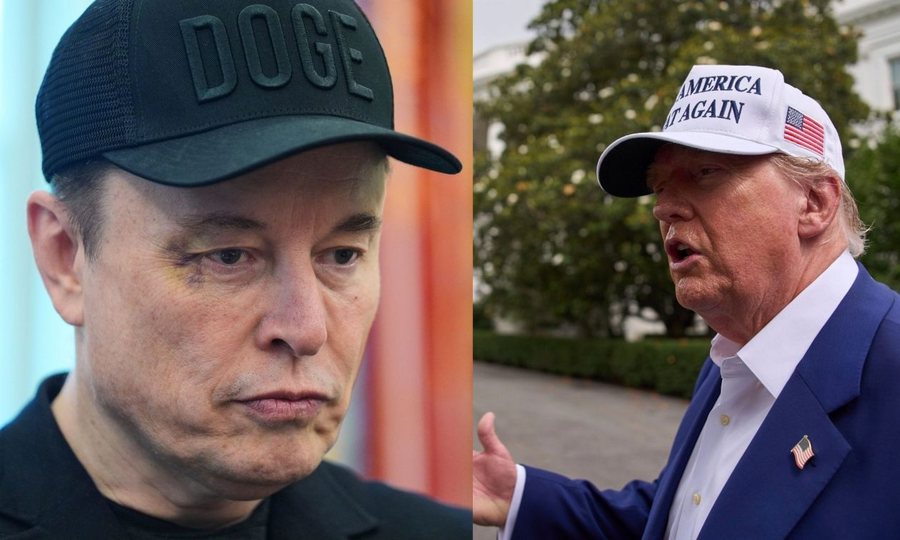
South African billionaire Elon Musk's direct threat this week to create his own party against the two-party Democratic-Republican system was not the first time.
The Tesla billionaire has expressed his frustration with the existing two-party system on more than one occasion in the past.
In 2022, shortly before becoming deeply involved in the Republican Party, Musk considered acting alone politically in a series of social media posts, saying he felt uncomfortable in neither the Democratic nor the Republican party.
“A party more moderate on all issues than the Republicans or Democrats would be ideal,” Musk wrote on X, then known as Twitter, in May 2022.
It was a brief flirtation with the idea. After a heated media backlash, Musk never bought into the idea of a third party and instead began pouring money into right-wing American political groups.
But now, Elon Musk is bringing back the idea of a third party in the US, as he and President Donald Trump clash over the Republican "Big Beautiful" bill that could increase the national debt by $3.3 trillion.
"If this absurd spending bill passes, the American Party will be formed the next day," Musk wrote on X on Monday in a post that had more than 42 million views in one day.
The bill passed the Senate on Tuesday and will be debated in the House of Representatives, where Republican leaders hope to pass it by today, July 4.
Musk has posted at least eight times this week promoting the idea of a new political party. He said his party would focus on reducing the national debt, something he said neither Democrats nor Republicans are capable of doing. He said the two major parties are working together to misappropriate public funds for selfish political ends.
Musk did not provide details on his plans beyond the name "America's Party" and a focus on debt.
The desire to create a political organization independent of the two dominant parties has been widespread, but not dominant, for decades. The number of registered independents and third-party members is also growing, as voters are moving away from the two-party system at an ever-increasing pace, according to an NBC News analysis of voter registration data.
The number of registered independents has increased by 9% since 2000, from 23% to 32%, while Democrats have seen a significant decline, from 44% to 37%, while Republicans maintain the smallest percentage of registered voters, at 31%.
The Democratic and Republican parties have had near-total control of the American political system for decades, and while independents have been elected to Congress, including two current senators (Bernie Sanders of Vermont and Angus King of Maine), they typically run for the major parties and do not act as true third-party candidates. The major parties regularly change state laws or take other measures to prevent third parties from getting on the ballot.
Richard Winger, an early advocate for the third alternative on the ballot, said he wasn't sure how to react to Musk's announcement.
"He's so elusive," he said, adding "he's achieved a lot in his life, but if you see him in politics, he seems so frivolous."
Laws for forming political parties vary by state, but generally require organizers to collect thousands of signatures and meet numerous requirements. In Texas, where Musk lives, a party would need to identify about 81,000 supporters, something experts say is achievable with enough time and money.
"You can hire companies that pay to submit signatures and you can put people on the ballot," Winger said, adding that especially because it's so far away from the next election, there's a lot of time."
But the requirements have become more difficult recently, he added, with some states raising them for third-party or independent candidates to get on the ballot.
“When the country feels good and calm, voting access laws tend to improve. When there’s a lot of anxiety, the laws get worse. This decade has been just awful,” Winger said.






Lini një Përgjigje