


 Shkruar nga Pamfleti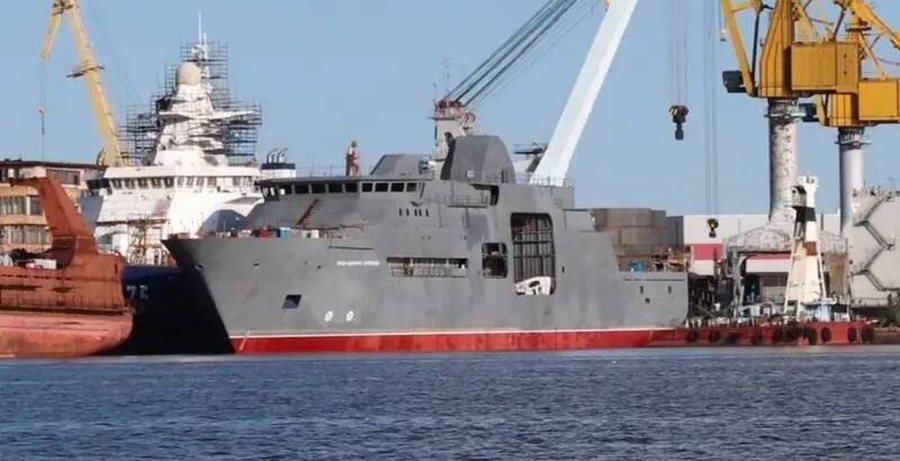
NATO and Western defense analysts generally view these ships as part of a fleet specialized in underwater surveillance, cable mapping, and seabed warfare...
A Kremlin decision to launch the 'Burilichev' into the sea has alarmed Western NATO defense circles.
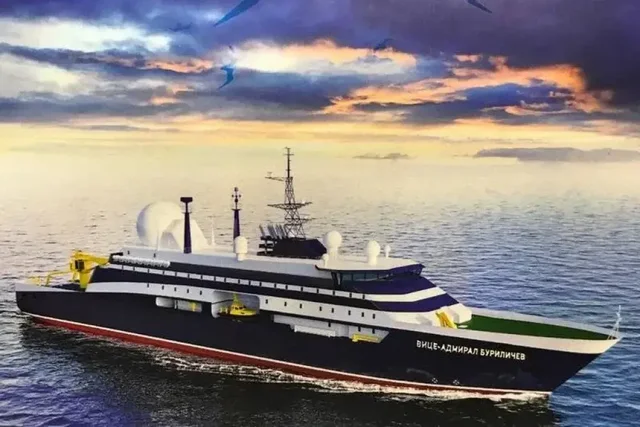
The oceanographic research vessel “Vice-Admiral Burilichev” was launched at the Vyborg shipyard, a facility operating under the United Shipbuilding Corporation (USC).
Although officially described as an oceanographic research vessel designed for scientific and rescue missions, the ship has attracted attention as a potential intelligence-gathering platform due to its affiliation with the Main Directorate of Deep-Sea Research (GUGI), which is under the Russian Ministry of Defense.
GUGI is a specialized military organization, believed to conduct underwater reconnaissance and seabed operations.
"Vice Admiral Burilichev" is equipped with azimuth and bow thrusters to ensure accurate station keeping during seabed operations.
The propulsion system consists of diesel-electric power plants designed for long-range deployment. The ship includes a helicopter platform and support facilities for handling submarines in the deep sea. It is expected to host the autonomous manned underwater vehicles Rus (Project 16810) and Consul (Project 16811), which are capable of diving to depths of 6,000 and 6,270 meters, respectively, and are equipped with video and manipulation systems.
These vehicles are intended for seabed surveys, technical interventions and the extraction of objects up to 200 kilograms. The ship is also expected to carry remotely operated vehicles (ROVs) and sonar systems for cartography, hydrography and geology.

As a Project 22011 unit, Burilichev is expected to enter service with the Baltic Fleet, placing it in direct proximity to numerous critical NATO undersea cable networks, where its intelligence-gathering capabilities, including deep-sea and submarine sensors, can be used to map, monitor, and potentially interfere with communications infrastructure.
According to official statements from the Russian Ministry of Defense, the oceanographic vessels operated by GUGI are intended to conduct ocean research, including deep-sea geological exploration, seabed mapping, and the recovery of sunken objects.
Këto anije janë gjithashtu të pajisura për operacione kërkim-shpëtimi. Megjithatë, analistët e mbrojtjes të NATO-s dhe vendeve perëndimorëve në përgjithësi i vlerësojnë këto anije si pjesë të një flote të specializuar për mbikëqyrje nënujore, hartëzimin e kabllove dhe luftën e shtratit të detit.
Dizajni i tyre, që përmban hangare të mëdha të montuara anash, nëndetëse të thella, ROV dhe grupe sonarësh të tërhequr, sugjeron zbatime të mundshme përtej misioneve shkencore.
Këto anije janë vërejtur shpesh në afërsi të infrastrukturës nënujore të NATO-s, ku prania e tyre ka ngritur shqetësime në lidhje me mbledhjen e inteligjencës, ndërhyrjen e mundshme të kabllove dhe hartëzimin e rrjeteve të komunikimit ushtarak, edhe pse nuk janë raportuar incidente të verifikueshme.
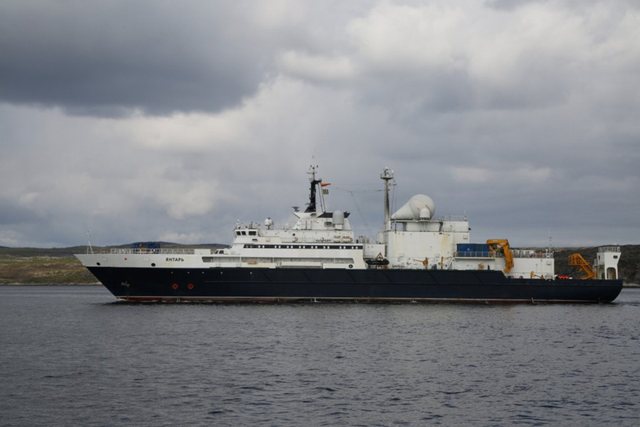
Yantar, anija e parë e Projektit 22010, ka qenë subjekt i vëzhgimit të vazhdueshëm nga shërbimet e inteligjencës së huaja për shkak të aktivitetit të saj pas vënies në punë.
Ajo ka marrë pjesë në disa operacione të profilit të lartë, duke përfshirë kërkimin për nëndetësen e zhdukur të Argjentinës ARA San Juan në vitin 2017, rikuperimin e avionëve ushtarakë rusë të humbur në brigjet siriane në vitin 2016 dhe misione të shumta pranë kabllove nënujore me fibra optike që lidhin Evropën, Lindjen e Mesme dhe Amerikën e Veriut.

Në vitin 2015, Yantar u vu re pranë bazës detare Kings Bay në Xhorxhia, ku ndodhen nëndetëset me raketa balistike të klasit Ohio të Marinës Amerikane, dhe në vitin 2016 pranë brigjeve siriane pranë kabllove nënujore.
Analistët kanë arritur në përfundimin se sjellja e anijes tregon zbulimin e sistemeve të komunikimit nënujor, të mbështetura nga raportet e medias ruse që pretendojnë se anija ka aftësinë të lidhet me kabllot e sigurta për qëllime inteligjence.
Ajo është përdorur gjithashtu për të nxjerrë komponentët në bord nga avionët ushtarakë të rrëzuar, duke përfshirë sistemet e radarit dhe pajisjet e identifikimit. Burimet perëndimore e kanë lidhur anijen me operacionet pranë kabllove Turcyos-2 dhe UGARIT midis Turqisë, Sirisë dhe Qipros, si dhe rrjetet nënujore në Karaibe, Gjirin Persik dhe Detin Norvegjez, duke përfshirë edhe pranë rrënojave të nëndetëses bërthamore K-278 Komsomolets.
Gjatë Luftës së Ftohtë, Bashkimi Sovjetik dhe më vonë Rusia mbajtën një praktikë të vendosjes së anijeve në dukje civile ose kërkimore të pajisura me sisteme mbledhjeje inteligjence, një precedent i qartë për anijet moderne si Yantar dhe Vice-Admiral Burilichev.
Duke filluar nga fundi i viteve 1950, Marina Sovjetike shndërroi dhjetëra tragë peshkimi në anije AGI (Ndihmëse, Inteligjencë e Përgjithshme), duke vendosur afërsisht 60 të tilla për të patrulluar bazat detare perëndimore dhe zonat e testimit të raketave. Këto AGI operonin pranë Bregut Lindor të SHBA-së, pranë bazave të nëndetëseve dhe poligoneve të testimit, duke mbledhur nënshkrime sonare, emetime radarësh dhe inteligjencë të sinjaleve të tjera.
Similarly, the Balzam-class (Project 1826) ships of the 1980s were built specifically for SIGINT, carrying large sensor arrays and dedicated ELINT radomes.
The atomic intelligence ship SS-V-33 "Ural" also entered service in the late Soviet period, conducting oceanic reconnaissance with extensive electronic warfare capabilities.
This historical model shows that ships combining dual-use cover with specialized intelligence equipment have long been part of Soviet and Russian naval strategy.
Officially, ships such as Yantar and Vice-Admiral Burilichev contribute to Russia's maritime domain awareness, oceanographic research, and underwater recovery capacity. Their stated roles support submarine rescue planning, geological surveys, and ocean mapping.
However, based on equipment specifications, deployment history, and mission models, Western defense experts continue to classify them as multi-role platforms capable of supporting seabed warfare, intelligence gathering, and surveillance of NATO infrastructure. These capabilities allow the Russian Navy to operate at strategic depths in underwater environments, not only for search or search-and-rescue, but also for surveillance, mapping, and potentially disrupting global underwater communication systems. /Adapted from armyrecognition pamphlet/







Lini një Përgjigje