


 Shkruar nga Pamfleti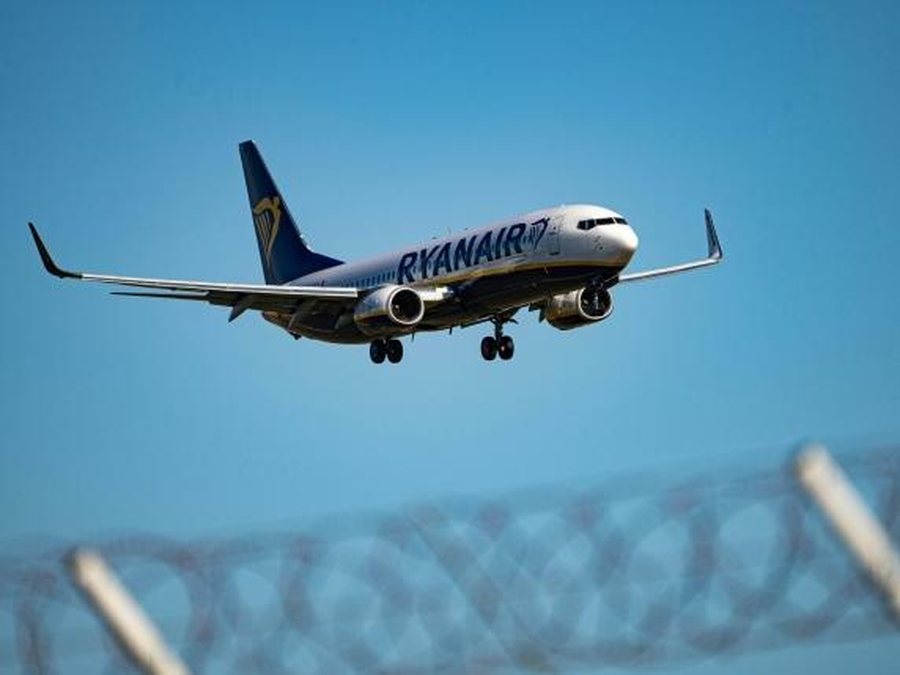
The company could face a fine ranging from 500 million to 1 billion euros, with a decision expected on December 22.
The Italian Competition Authority has launched an investigation into the airline Ryanair, which is accused of abusing its dominant position in the Italian air transport market.
The Italian media outlet "Corriere della Sera" writes that the company could face a fine ranging from 500 million to 1 billion euros, while the decision is expected on December 22.
The authority also requires the immediate change of a significant part of the company's business model, which has so far guaranteed record revenues and profits. The decision is expected on December 22.
inquiry
These are delicate hours at Ryanair's headquarters in Dublin and at the offices of the Italian Competition and Markets Authority (Agcm) in Rome. Following the submission of Ryanair's defence on 30 November and the hearing on 10 December, an investigation launched in September 2023, which also included physical inspections of Irish offices with the seizure of documents and internal emails, is coming to an end.
charges
With the A568 procedure, the Authority accuses Ryanair of abusing its dominant position in the Italian air transport market, by restricting the competitive space of physical and online travel agencies. The Irish company, leader in Italy with a share of between 38% and 50% on domestic and European routes, has imposed "restrictive" measures that have made it increasingly difficult for intermediaries to sell its tickets.
Facial verification and the “Shield” system
Among the contested measures are: facial verification for passengers buying tickets through online agencies, the “Shield” system that automatically blocks bookings considered “anomalous”, as well as distribution contracts with travel agencies that the Agcm considers “unbalanced”. The effect, according to the authority, has been to push consumers towards the company’s official website, limiting price comparison, combined offers and freedom of choice.
Weak competition
Dozens of travel agencies and operators have reported difficulties selling Ryanair flights, which they say has had major economic consequences, especially for the short-haul holiday and package segment. Customers have often been forced to manage check-in, changes and assistance themselves, even when they have purchased through intermediaries.
abuses
According to the Agcm, Ryanair has hindered competition not on the basis of merit, but through artificial restrictions and strategic behaviour aimed at reducing the competitive capacity of online agencies. The combination of market share, extensive network and the irreplaceable role of its flights makes its dominant position “uncontested”.
Ryanair version
Ryanair, on the other hand, denies any accusations. In its 200-page response, which includes a study by a specialist company, it argues that identity verification and booking blocks are security measures against fraud, not barriers to competition. The company emphasizes that no European norm obliges it to conclude agreements with online agencies and that the direct sales model is the basis for the lowest fares.
Ryanair also criticizes the Agcm's definition of the "market", calling it "artificially narrow" to increase the quota from 34% (below the dominance threshold according to European jurisprudence) to 50%, without reflecting real competition at the continental level. Some experts consider this remark to be "somewhat well-founded".
According to Ryanair, the Agcm's communication is based on a "serious misinterpretation of the facts", relying excessively on the positions of the parties that have filed the complaints. The company recalls that the Court of Appeal in Milan in 2024 ruled that reserving the sale of tickets for oneself does not constitute abuse, as it is economically justified and coherent with the business model.
Consequences
If the charges are confirmed, Ryanair could face a fine of up to 10% of its global annual revenue, although in this case it would be calculated on top of its revenue in Italy (an average of €2.7 billion per year over the last three years), with the possibility of further increases. In addition to the fine, corrective measures would also be required.
Unique case in Italy
Experts say there is no precedent for a national or European authority to force a company to change its business model. In this case, the Italian authority could force Ryanair to accept ticket brokerage.
The AGCM has not commented, saying the decision has not yet been made. Ryanair, in financial documents, considers the investigation “unfounded” but acknowledges that it could face a ruling finding abuse of a dominant position and a possible fine, which it would appeal in court.







Lini një Përgjigje