


 Shkruar nga Pamfleti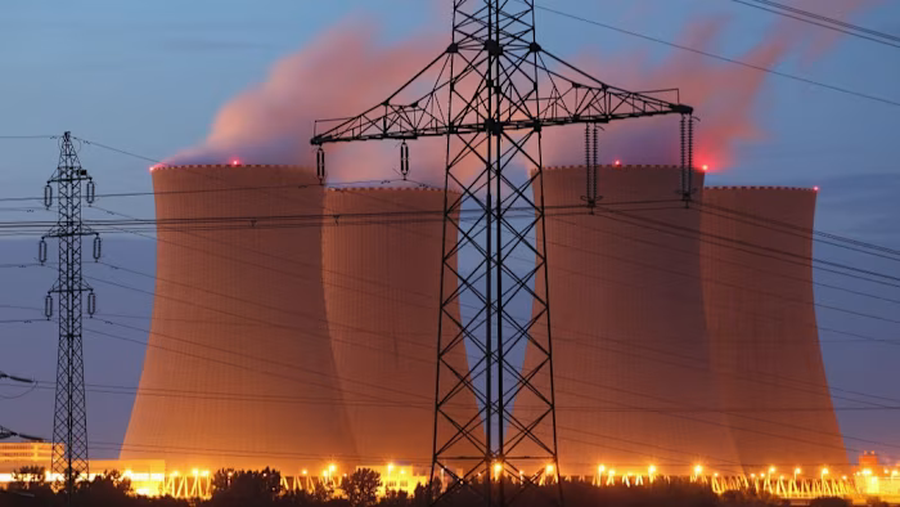
Japan, which marked the 15th anniversary of the Fukushima disaster on Wednesday, is also pushing to speed up the restart of neglected reactors...
The nuclear industry is positioning itself to benefit from Donald Trump's war on Iran, as governments around the world seek more sustainable, low-cost energy sources and redefine previous resistance to atomic energy.
Boris Schucht, chief executive of Urenco, which is partly owned by the UK and Dutch governments, told the FT that a “nuclear renaissance” was already underway and would be accelerated by the shock of oil and gas supply shortages caused by the closure of the Strait of Hormuz. He said the company had compiled a record order book of $21.3 billion for its uranium and fuel products.
“The supply crisis in the Middle East will refocus policymakers and industry on energy security and the need to have a form of baseload energy in countries that is independent of supply threats. This will make the deployment of nuclear power even more important... as countries seek energy independence ,” he said in an interview.
After a decade-long decline in Western reliance on nuclear power following the Fukushima nuclear accident in Japan in 2011, the industry has begun to see a revival as the Russia-Ukraine war threatened oil and gas supplies. The price hikes associated with the current crisis will again push policymakers to reconsider their previous opposition to nuclear power, analysts say.
In a speech on Tuesday, European Commission President Ursula von der Leyen said that reducing Europe's nuclear sector was a "strategic mistake" as the continent faced rising costs while relying on oil and gas generation sources for energy.
Japan, which marked the 15th anniversary of the Fukushima disaster on Wednesday, is also pushing to accelerate the restart of neglected reactors.
The nuclear fuel supply chain was much more stable than that of fossil fuels because the volumes required by utilities were very small, they did not require frequent resupply, and the fuel could be easily stored, Schucht said. He added that utilities typically had about two years of fuel reserves.
Governments are scrambling to find alternative energy supplies to keep their economies running after the US and Israel's war with Iran cut off 20 million barrels a day of oil and other petroleum products. About a fifth of global supplies of liquefied natural gas, a critical energy source for Europe and Asia, have also been cut, creating the worst energy shock the world has seen since the 1970s.
According to analysts, nuclear power may do little to help with the immediate supply crisis, but in the long run, the scale of the crisis in the Middle East is likely to push more countries toward building more nuclear reactors.
" Even if the increases in oil and gas prices are temporary, the closure of the strait raises questions about security of supply. People will now think more about subsidizing nuclear and solar power, which are less dependent on imported fuels ," said Julien Dumoulin-Smith, an analyst at Jefferies.
Seth Grae, chief executive of Lightbridge Corporation, a nuclear fuel supplier, said the Middle East crisis could trigger a similar reassessment of energy security that prompted countries like France to expand their nuclear fleets after the twin oil crises of the 1970s.
"Governments understand that they shouldn't rely on anyone for their energy, and nuclear power offers a way to do that ," he said.
Schucht said the nuclear industry was growing rapidly in response to energy security concerns related to Russia's full-scale invasion of Ukraine and the demand for reliable, always-on power to power artificial intelligence technologies. Political support from U.S. and European governments for nuclear power was building more confidence among stakeholders and customers, he said.
Urenco, a major producer of enriched uranium, a key ingredient in nuclear fuel, has grown strongly in recent years, figures to be released on Thursday show. The company's order book rose 14 percent to 21.3 billion euros in 2025, from 18.7 billion euros in 2024, a fourth consecutive year of sales growth. Revenue rose 11 percent to 2.09 billion euros and net income rose by more than a third to 248.5 million euros.
Urenco, which has operations in the UK, US, Netherlands and Germany, plans to expand its uranium enrichment capacity by 15 percent by 2030. It is also expanding its Capenhurst facility in the UK to enrich uranium to higher-than-normal levels to power a new generation of small modular reactors. It has signed its first deal to supply this type of highly enriched fuel to Radiant, a US reactor company.
Schucht said the industry could further expand uranium enrichment to meet additional demand driven by a faster-than-expected increase in the deployment of nuclear reactors following the Middle East oil crisis./ Adapted from “Pamphlet” by “Financial Times”




Our plasi lufta ne Ukraine ne Britani u alarmuan e ‘me forcat tona’ u be moto e jetes. Perqeshnim atehere kur degjonim për dite ‘me forcat tona’ e ‘ne njeren dore kazmen e ne tjetren pushken’. Kali botes të le ne balte.