


 Shkruar nga Pamfleti
The coalitions will play a key role in determining Germany's next leader and also in helping the country emerge from the major political and economic challenges it faces...
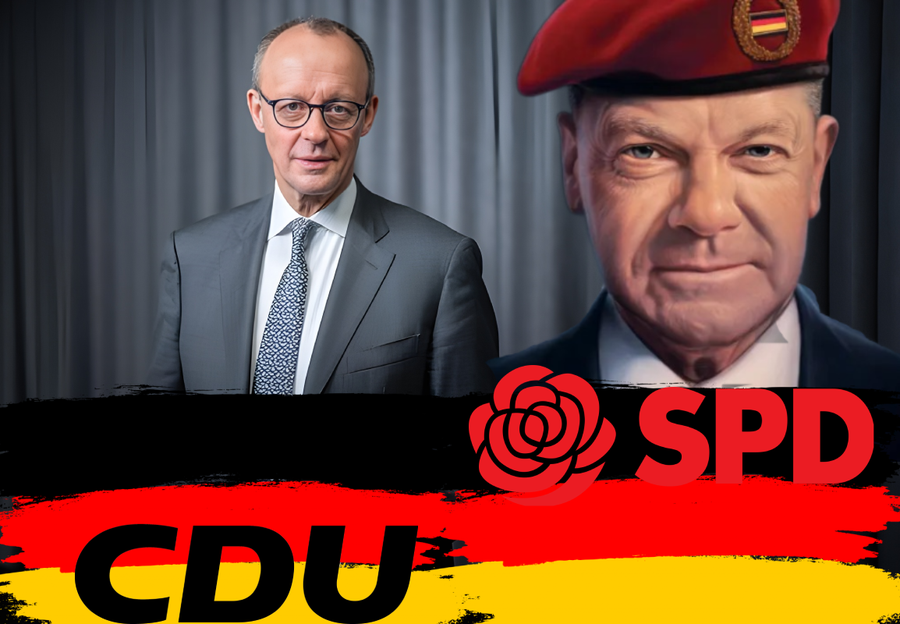
Preparations for early elections in Germany are at their peak, after Chancellor Olaf Scholz's loss of confidence on December 16, 2024. This unexpected development has brought uncertainty to the country's political future, with elections to be held on February 23, 2025. This The historic moment could bring major changes in German politics, including a major opportunity for the creation of new coalitions that will determine the country's future leadership.
Olaf Scholz, the current chancellor and leader of the Social Democratic Party (SPD), has had a difficult period in power, with support from public opinion waning. For this reason, the SPD has re-nominated Scholz as its candidate for chancellor for the upcoming elections, despite many members of the party expressing concerns about this decision. Boris Pistorius, the defense minister, was another possible figure for the chancellor's candidacy, but he has rejected the possibility.
On the other hand, the opposition is moving forward with a powerful candidate, Friedrich Merz, leader of the Christian Democratic Union (CDU), who has become a staunch opponent of Scholz. The CDU currently ranks first in the polls and has a real chance of taking the majority of the country in the next election.
However, another important factor is the far-right parties, such as the Alternative for Germany (AFD), which has enjoyed great support in some regions of Germany, especially in the East. The AFD has managed to attract a part of the electorate that is dissatisfied with current policies, but it has become clear to the main parties that they will not form coalitions with this political force, because of the risks it could bring to the cohesion of German society. .
Another key factor in the upcoming elections is the role of small parties such as the FDP (Liberal Democratic Party) and Die Grünen (The Greens). The Greens are currently part of the "traffic light" governing coalition along with the SPD and FDP, but could have a major influence on the formation of the next government, as they will have to decide whether to cooperate with the CDU/CSU or the SPD.
If the CDU wins the 2025 elections, the possibility of forming a coalition with the FDP and the Greens is a possible option. This coalition is known as the "Jamaica" coalition, due to the similarity with the colors of the German flag (black for the CDU, yellow for the FDP and green for the Greens). This coalition could be possible if the CDU manages to win a majority, but a common program must be negotiated.
On the other hand, an SPD + Greens + FDP coalition is still a possibility, although the SPD is struggling in the polls. This coalition has worked before, and could continue if the SPD secures a stable result.
Another possibility is the formation of a coalition led by the CDU with the Greens as the main partner, without the involvement of the FDP. This could be a realistic option if the CDU and the Greens secure a strong result.
In addition to traditional coalitions, another element that can affect the results of the elections are international relations and domestic issues, such as the economy, refugees and aid to Ukraine. Any coalition will face a number of challenges to address these issues and build a common policy.
If Friedrich Merz and the CDU manage to form a coalition, he could become Germany's new chancellor, replacing Olaf Scholz after a difficult period for the SPD. However, the coalition formation process could be long and complicated, based on negotiations between the parties, after possible early elections.
In this context, coalitions will play a key role in determining Germany's next leader and also in helping the country to overcome the major political and economic challenges ahead. / Pamphlet





Lini një Përgjigje