


 Shkruar nga Timothy Garton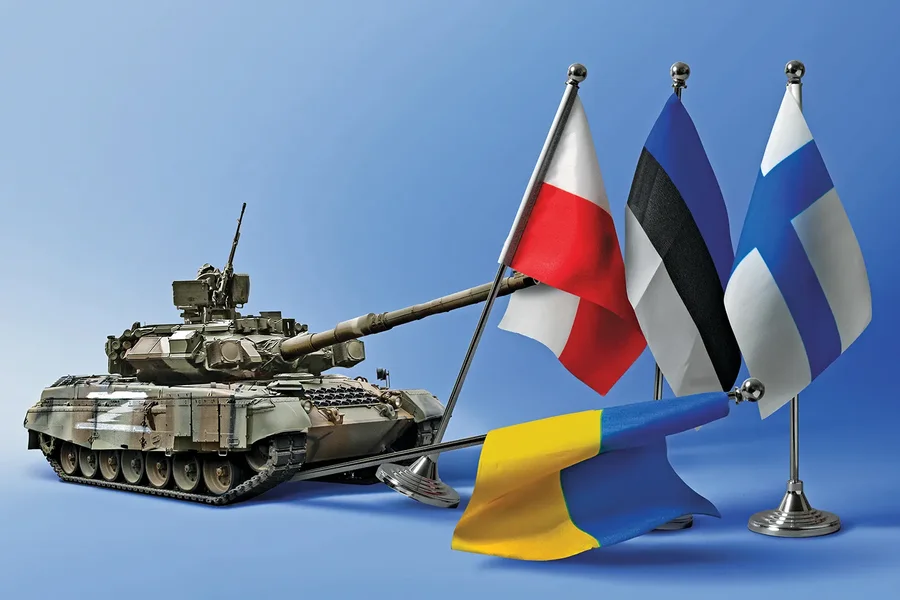
Europe as a whole would experience an escalation of the hybrid war that Russia is already waging against it, still largely unnoticed by most Western Europeans, who are quietly continuing their shopping and Christmas celebrations.
In this world, there are some human activities in which both sides can win. But war is not one of them. Either Ukraine or Russia wins this war. Former Foreign Minister of Ukraine Dmytro Kuleba openly admits that if the current trajectory is not changed "we will lose this war".
To be clear: this scenario is still avoidable. Suppose if the nearly 4/5 of Ukrainian territory still controlled by Kiev were to receive from the West sufficient military support to deter any further Russian advances, large-scale investment in rebuilding the economy and infrastructure.
Or even by encouraging Ukrainians to return from abroad to rebuild their country and promoting sustainable pro-European policies and reforms. Within 5 years, this country enters the EU and then, under a new administration in the USA, begins the NATO membership process. Most of Ukraine becomes a sovereign, independent, free country, firmly anchored in the Western sphere. Certainly, the loss of significant territory, the suffering of at least 3.5 million Ukrainians living under Russian occupation, and the number of dead, maimed and traumatized would amount to a terrible cost.
It would not be the complete victory that the Ukrainians have hoped for and deserve. But still, it would be a victory for Ukraine, and a historic defeat for Russia. Most Ukrainians can see it as such. In the Kyiv International Institute of Sociology (KIIS) survey, Ukrainians were asked whether to end the war, they would accept a combination of economic reconstruction with EU and NATO membership, only on the territory that currently remains free. In just the last 6 months, the percentage of those who say "Yes" has increased from 47 to 64. But to reach this result, and with Donald Trump in the White House, it would take a European coalition willing to take security commitments of a magnitude and boldness never seen before.
Among European leaders there is a growing awareness of this. However, in most European countries, democratic politics is far from empowering them to do so. To convince Europeans to support the necessary policies, but also to understand the consequences if - as seems most likely - they do not do so in time, the question we must ask is: What if Russia wins?
If this happens, we should expect these consequences for Ukraine, Europe, the United States and world peace. Ukraine would be defeated, divided, demoralized and depopulated. No money would be given to rebuild the country; instead another wave of people would abandon it.
Politics in Kiev would have a strong anti-Western trend. New opportunities for disinformation and political destabilization by Russia would appear. The necessary reforms would be stalled, and thus there would be no progress towards EU membership.
Europe as a whole would experience an escalation of the hybrid war that Russia is already waging against it, still largely unnoticed by most Western Europeans, who are quietly continuing their shopping and Christmas celebrations.
And not a week goes by without an incident: a Russian destroyer fires on a German military helicopter; several DHL packages explode, sabotage on French rail lines, arson at a Ukrainian-owned business in east London; rupture of submarine cables in the Baltic Sea.
Also, there is a risk of an assassination attempt on a German arms manufacturer. Not all of them may have originated in Moscow, but most of them did. Full-spectrum hybrid warfare includes interference in electoral processes. In Georgia, parliamentary elections were recently manipulated.
In the referendum on the EU accession process that was held in Moldova, according to President Maia Sandu, about 9 percent of the votes were bought directly by Russia. In Romania, the first round of presidential elections was canceled after a court found many violations of campaign rules through the TikTok platform.
"Well, this is Eastern Europe!" - the self-satisfied Christmas shopper in Madrid, Rome or Dusseldorf will say ironically. However, the head of Germany's internal security service recently warned that Russia will also try to interfere in the German parliamentary elections to be held in the country in February next year, which are hardly insignificant to him. the future of Europe.
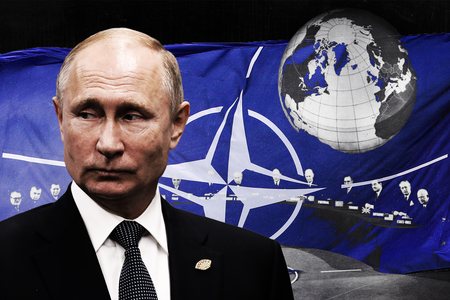
This week, we again saw Vladimir Putin in supreme confidence at his annual press conference and marathon "Call-the-Tsar" phone calls, despite the assassination of his chemical weapons general by Ukraine.
He runs a country with a war economy, dependent on military production for sustainable growth, and through a dictatorship that makes confrontation with the West vital. It would be beyond naive to hope that diplomacy alone can produce a magical moment when Putin's Russia will suddenly be "satisfied" with some kind of outcome in Ukraine, and return to business as usual in peacetime.
When NATO strategists say we must be ready for a possible Russian aggression against NATO territory by 2029, they are not merely scaring us into increasing military budgets. Trump voters in the United States might say, “Well, what does that matter to us? You Europeans take care of yourselves! We have to worry about China."
But now Russia is working more closely than ever with China, North Korea and Iran. Putin is indeed indicted by the International Criminal Court, but he still travels halfway around the world as a welcome guest. He himself has spoken of a "new global majority" and of "the formation of a completely new world order".
In this new order, war and territorial conquest are perfectly acceptable instruments of politics, a continuation of poisoning, sabotage, misinformation and election interference. Russia's victory in Ukraine will encourage China to increase its pressure on Taiwan, but also North Korea on South Korea.
And this brings us to the gravest consequence of all: the further proliferation of nuclear weapons. Remember that Ukraine voluntarily gave up its nuclear weapons in 1994 in exchange for security guarantees from the US, Great Britain and Russia, and was then struck by one of the powers that promised it security.
In the latest KIIS poll, 73 percent of Ukrainians support "the return of nuclear weapons to Ukraine." Even 46 percent of them say that they agree with this even if the West would impose sanctions and cut off aid.
In fact, Ukrainians are telling the West: If you don't protect us, we will protect ourselves. In recent visits to Ukraine, I have been told several times: "Either get us into NATO, or we will be equipped with nuclear weapons!". And this is not only about Ukraine.
Seeing what is happening in the Middle East, vulnerable countries around the world will come to the same conclusion. The more countries—and possibly non-state actors—have nuclear weapons, the more certain it is that they will one day be used.
In the upcoming parliamentary elections, Chancellor Olaf Scholz is unscrupulously trying to use the fear of nuclear war to gain an electoral advantage over his main rival, the Christian Democrat Friedrich Merz.
In fact, it is precisely the consequences of Western restraint out of fear of Russian nuclear escalation in Ukraine, personified by Scholz and skillfully exploited by Putin, that are increasing the likelihood of nuclear proliferation, and thus the long-term risk of nuclear war.
The conclusion is clear and well known: The reluctance of European democracies to pay a high cost now means that the world will pay an even higher price later./ Adapted "Pamphlet" from "Kyiv Post"


Lini një Përgjigje