


 Shkruar nga Paolo Mossetti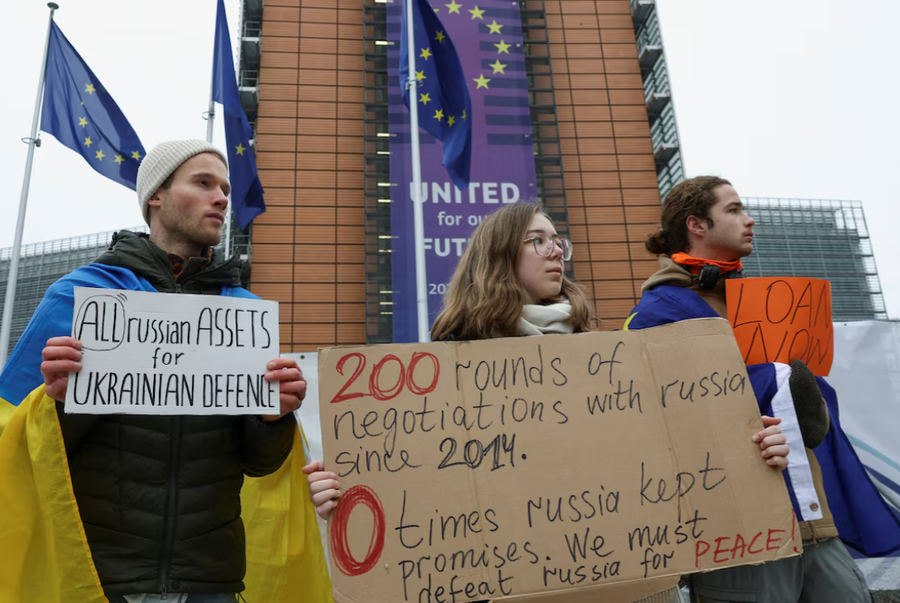
A deficit of around 41 billion euros is expected...
Without US funding and with a budget deficit of 40 to 80 billion euros a year, Kiev’s wartime economy is increasingly dependent on European loans and austerity measures. While the lights of Davos illuminate a West that is increasingly moving away from the slogans and illusions of the 1990s, Ukraine’s fate seems to be sliding along an ever-deepening geopolitical line. On the one hand, there is Donald Trump, who does not mince words when explaining to Europeans that the time for blank checks from Washington is over. On the other, there is a Ukrainian leadership that, sensing that both diplomatic and military ground is slipping under its feet, wants to lean decisively towards Brussels, albeit unexpectedly.
For Ukraine, however, 2026 promises to be a year of financial hardship. For the first time since the invasion, Kiev will have to deal with an almost total lack of financial support from the White House. Whereas in 2025 there were some remnants of the Biden era, today Ukraine depends exclusively on European generosity and international loans. The figures reveal a fragility that optimistic pronouncements barely conceal.
The Ukrainian government has approved a budget for 2026 that is a beacon of optimism. It projects a deficit of around 41 billion euros, equivalent to almost 19% of GDP, with almost all of the shortfall expected to be covered by foreign donors. However, the International Monetary Fund (IMF) estimates are decidedly more severe, suggesting instead a requirement exceeding $54 billion. This creates a huge discrepancy between what Zelensky hopes to get and what experts believe is needed to avoid collapse.
The EU responded with a loan of 90 billion euros for the years 2026-2027. This figure seems impressive, but looking at its structure, the reality is somewhat different. Two-thirds of this amount is intended for military aid, which means that the money will mainly go back to Western defense industries. Only a small part, about 15 billion euros per year, will actually support Ukraine's state budget, a drop in the bucket compared to the 40 or 50 billion euros needed to maintain basic services.
-Zelensky's attacks
Situata u përkeqësua më tej nga sulmi verbal i Volodymyr Zelensky ndaj BE-së të enjten, duke e akuzuar atë se është shumë e brishtë, e përçarë dhe e frikësuar. Sipas Financial Times, ky veprim u konceptua nga shoqëruesit e presidentit ukrainas si një mënyrë për të "nxitur Unionin të veprojë". Ideja ishte gjithashtu të përsëritej efekti i fjalimeve shumë të forta si ai i mbajtur së fundmi nga kryeministri kanadez Mark Carney.
Rezultati ishte një fjalim i konsideruar kontradiktor nga shumë analistë: nga njëra anë, Zelensky bëri thirrje për autonomi më të madhe strategjike evropiane, ndërsa nga ana tjetër, ai argumentoi se pa Trump dhe Uashingtonin, rezultatet nuk mund të arrihen. Ky qëndrim rrezikon të pritet keq si diplomatikisht ashtu edhe nga opinioni publik evropian: sepse erdhi pasi BE kishte miratuar një paketë të konsiderueshme ndihme dhe vetëm disa ditë pas ngacmimit të SHBA-së në Grenlandë, gjithashtu edhe shumë evropianë ndihen të alienuar në mënyrë progresive nga kauza ukrainase, në të cilën Evropa është shtypur.
Zelensky duhet të lundrojë në kufizime specifike politike, thekson korrespondenti Davide Maria De Luca: për rrethin e tij dhe një pjesë të madhe të elitës ukrainase, aleanca me Shtetet e Bashkuara mbetet thelbësore, pavarësisht fyerjeve të vazhdueshme të Trump, ndërsa mbështetja evropiane merret si e mirëqenë. Prandaj vendimi i tij për të zbutur çdo kritikë ndaj Shtëpisë së Bardhë, madje duke shkuar aq larg sa ta paraqesë udhëheqësin që e ka poshtëruar vazhdimisht si më efektiv se Bashkimi Evropian.
FMN-ja është gjithashtu në qafën e Zelensky-t, duke e bërë ndihmën e re të kushtëzuar nga reforma vendase jashtëzakonisht jopopullore, të tilla si futja e TVSH-së për bizneset e vogla dhe shkurtimet e subvencioneve të energjisë. Drejtoresha e Fondit, Kristalina Georgieva, i ka bërë thirrje Ukrainës që të liberalizojë më tej tregun e punës për të nxitur "dinamizmin" e kapitalit privat, duke e shtyrë mesazhin me fraza direkt nga LinkedIn. Një kërkesë pothuajse groteske për një vend që përballet me dimrin më të vështirë në historinë e tij të fundit, me infrastrukturë të shkatërruar dhe një popullsi në fund të litarit të saj.
-Naiviteti i evropianëve
Deklaratat erdhën gjatë një eventi të organizuar nga oligarku ukrainas Viktor Pinchuk në margjinat e WEF, mes kritikave nga intelektualët që mbështesin rezistencën e tij, si dhe nga krahu i djathtë i Trump. Midis tyre është historiani bestseller dhe liberal-konservatori Niall Ferguson , i cili argumentoi se "sa më gjatë të zgjasë kjo luftë, aq më pak ka gjasa që Ukraina të fitojë. Ashtu si Davidi dhe Goliathi, Rusia ka burime, fuqi punëtore dhe PBB shumë më të mëdha se Ukraina, veçanërisht me Kinën që e mbështet Rusinë ekonomikisht në një shkallë të gjerë". Evropianët, thotë Ferguson, nuk ishin veçanërisht cinikë, por më tepër naivë, kur përqafuan idenë e një kundërsulmi ukrainas në vitin 2023, i cili përfundoi në katastrofë.
Overall, from 2022 to the present, the EU has given Kiev approximately 193 billion euros, while the United States has sent approximately 109 billion euros, albeit with the valuable addition of Patriot missiles. The new European spending risks being the maximum that Brussels governments can afford at this stage, both due to internal budgetary constraints and to avoid Trump’s wrath, but it is insufficient both to cover the financing of Ukraine’s social and ordinary expenses, and to truly strengthen Ukraine’s military capabilities in relation to Russia.
The likely outcome is that European aid is unlikely to put Zelensky in a strong enough position to negotiate with Putin in the coming months, while budgetary difficulties could translate into cuts or a reduction in public spending ambitions. The increase in social spending planned by the Zelensky government for 2026 now seems less related to fears of protests and more to possible electoral preparations, which, however, look increasingly uncertain. In this scenario, even the IMF’s concerns about Kiev’s alleged “excessive social generosity” seem vague about the true scale of the crisis.
At the political level, writes the eccentric and very astute military analyst Peter Korotaev, Zelensky has tried to respond to this constraint by surrounding himself with technical and military figures closely linked to the Euro-Atlantic front, who were once sidelined. This is in addition to those aforementioned brutal words against Europe, the effect of which remains to be seen. But unless Europe manages to overcome its anger at Zelensky’s slaps and transform his rhetorical promises into real and structural financial support, Kiev’s “roar” risks being drowned out by cold budgetary calculations, and its “resistance” risks turning into a prolonged military stagnation/ Adapted from “Pamphlet” by “InsideOver”



Lini një Përgjigje