


 Shkruar nga Pamfleti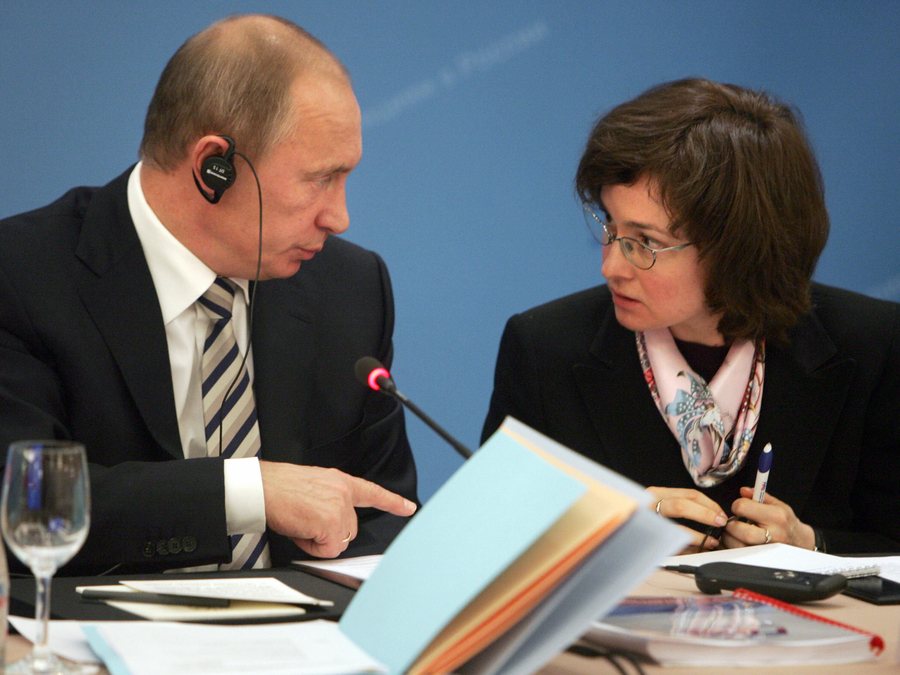
In Russia you can go to jail for much less. However, Putin does not touch Nabiullina, because he needs her expertise...
Now that Vladimir Putin's fifth presidential term has begun, only one step is missing: the resignation of the government, in order to appoint a new executive for the political cycle that is reopening in Russia.
Perhaps it will be a formality, because the reconfirmation of the team of technocrats led by Prime Minister Mikhail Mishustin seems obvious.
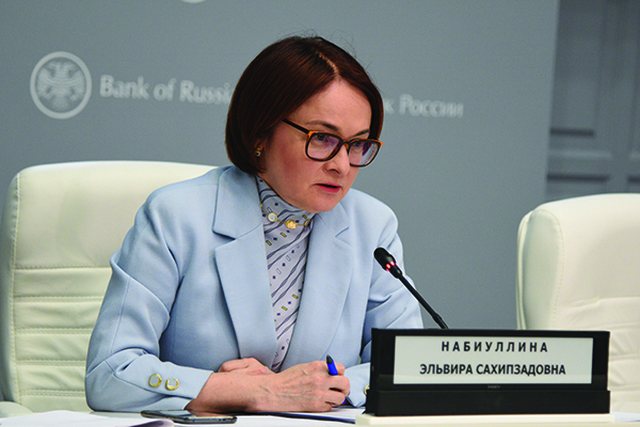
However, there is one seemingly independent figure, strong only in her competence, who is becoming even more essential in Moscow than Mishustin himself: she is called Elvira Nabiullina. She will turn 59 in October and has been governor of the Russian Central Bank for eleven years. Nabiullina brings together several characteristics that make it unique in the Moscow power vertical.
First of all, in an institution populated by men born into the espionage apparatus, the St. Petersburg mafia of the 90s, or by soldiers and business oligarchs, the head of the Bank of Russia stands out for her gender: she is a woman . She is the only one who manages some form of substantial power and can also defend it for a long time (last year she was reconfirmed for a third term).
Second, Nabiullina seems to have an almost unbelievable freedom to criticize the government: with words, with gestures and even with sartorial choices. This makes him an even rarer specimen in human phenomenology in and around the Kremlin.
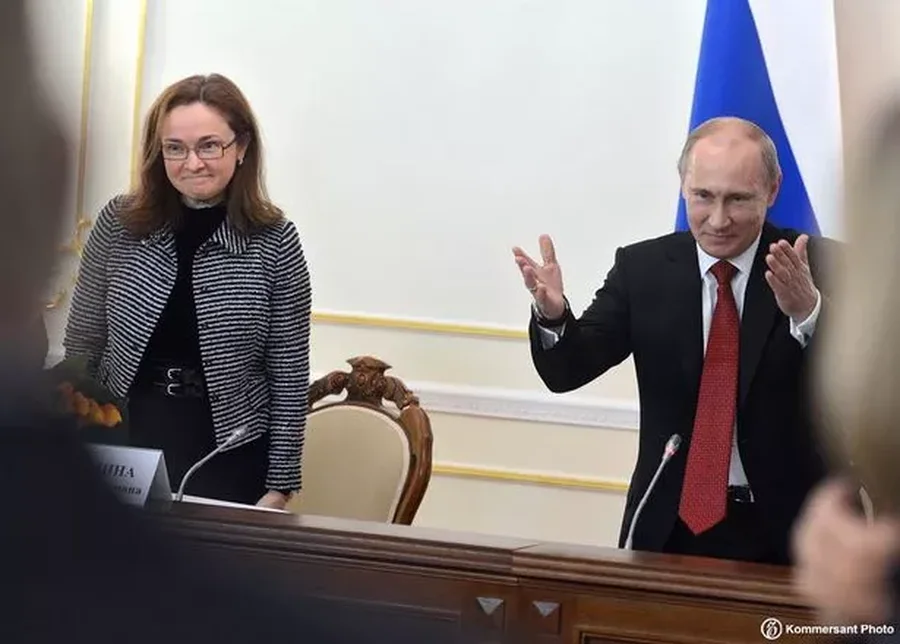
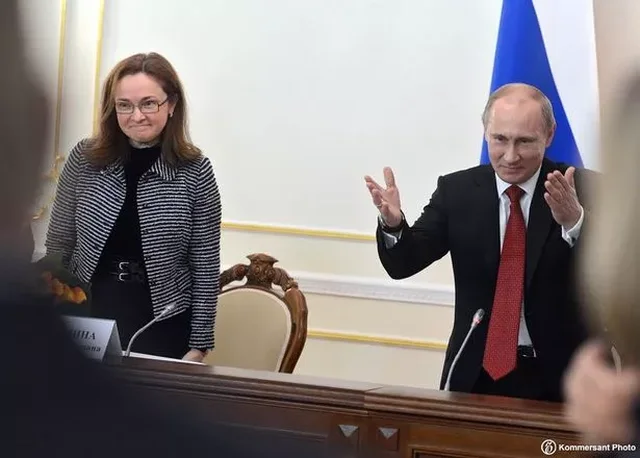
Everyone remembers her appearance at one end of Putin's six-foot table at the beginning of the war, as the ruble collapsed in the markets and three hundred billion euros of Russian reserves were frozen by the G7. Nabiullina sat stunned, a black suit over her shoulder. If it weren't for the language of dissent, everything in her body expressed dismay at the Kremlin's choices. And she knew that the photos of that day would go around the world, maybe she even wanted it. She was counting on the fact that they would arrive under the eyes of her Western colleagues with whom she has always had friendly relations: for example Christine Lagarde, the French president of the European Central Bank who knows Nabiullina's passion for language and literature or the Alps.
However, Nabiullina's actions were different from what she presented in the photo. Not only did she never resign, but her maneuvering on tariffs and her advice to close borders to the free movement of capital in those early days of the war saved the ruble, and thus the Russian economy. In fact, Putin didn't fire him, he reinstated him.
The same deadly ambivalence of Nabiullina continues to return in recent months. Last December 15 it raised interest rates to 16%, very close to a historic level for Russia, adding strong words about Putin's war economy. She did so in a press conference similar, it seems, to those of his democratic colleagues: almost free questions, almost honest answers.
"Think of the economy as a car - said Nabiullina that day - if we try to go faster than we can, sooner or later the engine will burn out and we won't get far. We can go yes, maybe even fast, but not for long ".
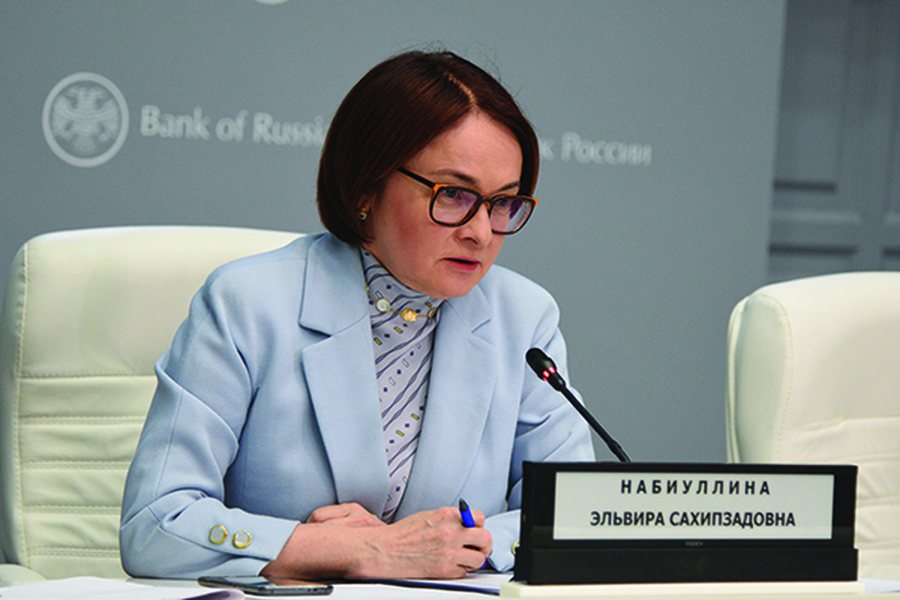
It was the central banker's way of saying that the transformation of the economy in favor of the military-industrial apparatus in Russia would conflict with the country's limits: there are not enough plants, not enough workers can be found, there is a risk of rapid growth , so overheating. However, Nabiullina's restrictive monetary policy actually, once again, helps stabilize Putin's war machine precisely because it curbs inflation. And the dictator implicitly thanked his banker. Putin acknowledged that there is an inflation problem, but that "the Bank of Russia and the government are doing everything necessary."
Nabiullina came even closer to 'burning' by criticizing what in Russia is a kind of "110% bonus" aimed at making the war popular - or at least acceptable - to the population. Various categories of Russian citizens, especially military personnel, are now eligible for subsidies that cut the cost of loans by more than half. If sustained over the next two years, this measure risks costing the equivalent of ten billion euros, and in fact real estate lending in Russia is exploding. But Nabiullina criticized this measure. "Subsidized loans increase housing prices - she said - and such massive programs end up being paid for by taxpayers who don't benefit from them."
In Russia you go to jail for much less. However, Putin does not touch Nabiullina, because he needs her expertise. And it continues not to leave, making it known abroad that it does so only to protect the Russians from the economic consequences of the war. /Adapted "Pamphlet" from "Corriere Della Sera"



Lini një Përgjigje