


 Shkruar nga Pamfleti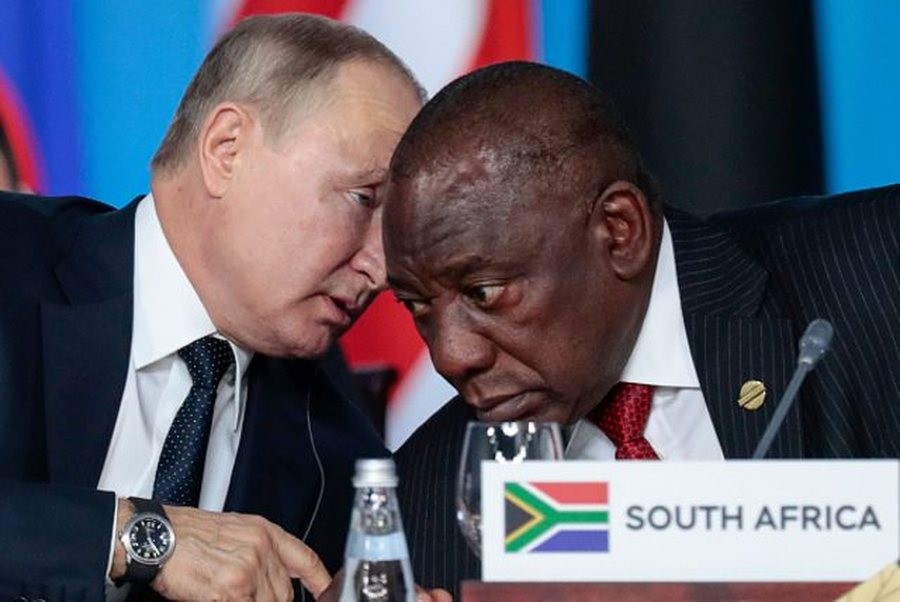
The organization of the BRICS summit by South Africa that will be held next week, has turned the attention to the connections between Pretoria and the Kremlin, which for some are normal, for others mysterious. Moscow and South Africa's African National Congress party strengthened ties during the Cold War, when the Soviet Union supported the Congress's fight against apartheid.
Close ties are still cultivated, despite historical and ideological changes, which – logically – should have resulted in a parting of the ways long ago. In 1991, the Soviet Union dissolved, planting the seeds of nationalism in its main member, Russia, under the leadership of Vladimir Putin.
Meanwhile, in South Africa, the victory over apartheid has brought democracy to the country and resulted in the most liberal Constitution in Africa, dressing the African National Congress party with the image of the liberator. Analysts struggling to make sense of this strange relationship suggest that ideological rifts are cemented through historical and personal connections.
"We can say that their alliance is a friendship made in blood... and bullets," said political analyst Sandile Swana.
Politically, they are "strange partners," said Steven Gruzd, of the South African Institute for International Affairs.
The split in two
The relationship between the two countries was tested last year when Pretoria decided not to condemn Russia's war in Ukraine - a stance that critics saw as support for Moscow. Criticism has been renewed after warnings of holding a summit on August 22-24 in Johannesburg between five major economies such as: Brazil, Russia, India, China and South Africa. Pressure has mounted on South Africa to say it would arrest President Putin, who is wanted by the International Criminal Court on charges related to the war in Ukraine. In a difficult situation, President Cyril Ramaphosa has taken an ambivalent stance, saying that Putin has decided not to attend the summit.
In June, Ramaphosa led an African peacekeeping mission to Ukraine and Russia, which, while unsuccessful, helped him rebuke accusations of bias. The mission has allowed Ramaphosa and other African leaders to "speak directly to the Ukrainian people" and assess the situation themselves, said Dzvinka Kachur from the Ukrainian Association of South Africa.
"emotional connection"
Specialists believe that from an economic point of view, it makes little sense for Pretoria to be so connected to Moscow. The United States is South Africa's second largest trading partner, after China. The value of exports with the USA in the first half of 2023 was 4.2 billion dollars. On the other hand, trade with Russia is "very small", as a South African envoy in Moscow has said, as exports amount to 132 million dollars in the January-June period.
Akuzat se Pretoria e ka furnizuar fshehurazi Kremlinin me armë, i ka nxitur thirrjet e disa ligjvënësve amerikanë që Uashingtoni të shkëpusë paktin tregtar me këtë vend, duke i shqetësuar shumë biznese dhe parti politike. Analisti politik William Gumede, ka thënë se është koha që Pretoria ta kuptojë se kjo lidhje nuk i shërben më shtetit. Është e bazuar në “lidhje emocionale”, të cilën “nuk mund ta përballojmë”, ka thënë ai.
Nevoja të përbashkëta?
Putin e mban afër Afrikën e Jugut për shkak të interesave strategjikë, duke mos e harruar statusin e këtij vendi në kontinentin që është shpesh fushëbetejë në mes të fuqive të mëdha, kanë thënë disa analistë. Mirëpo, nuk ekziston konsensus pse Kongresi Kombëtar Afrikan i Afrikës së Jugut vazhdon të jetë kaq i interesuar në ruajtjen e lidhjeve të ngushta me Putinin.
Disa kritikë sugjerojnë se partia është në lëvizje – pavarësisht mungesës së lidhjeve ideologjike, ajo i kthehet Moskës, partneres historike, për të marrë ide për të ardhmen e vetvetes. Partia politike, Kongresi Kombëtar Afrikan ka qenë në pushtet prej instalimit të demokracisë në Afrikën e Jugut më 1994, mirëpo udhëheqësia e saj është përcjellë nga dyshimet për korrupsion dhe keqmenaxhim. Partia përballet me zgjedhjet e përgjithshme vitin e ardhshëm, në të cilat mund të sigurojë më pak se 50 për qind të votave.
“Partia sheh diçka tjetër në Rusinë e Putinit – diçka më aspiruese”, ka thënë Richard Poplak, kolumnist për të përditshmen Daily Maverick, në muajin e kaluar.
“Rusia është fener që ndriçon nga kodra, autokraci që shndrit rrugën drejt qeverisjes së përjetshme”.
Others believe that money is a factor. Last year, the party accepted more than $800,000 from a manganese mining company linked to a Russian tycoon sanctioned by the United States, which helped finance the party conference.
"The African National Congress is siding with Russia for one reason only: the Russian Federation is funding the party and thereby infiltrating the destabilization of South African democracy," said opposition leader John Steenhuisen in May.
Such insinuations are angrily dismissed by the party. A party official in Johannesburg said that the party also received donations from "American businessmen".
"Work becomes problematic only when Russians support the party. It is unfair", said Tokologo Ngoasheng./REL



Lini një Përgjigje