


 Shkruar nga Pamfleti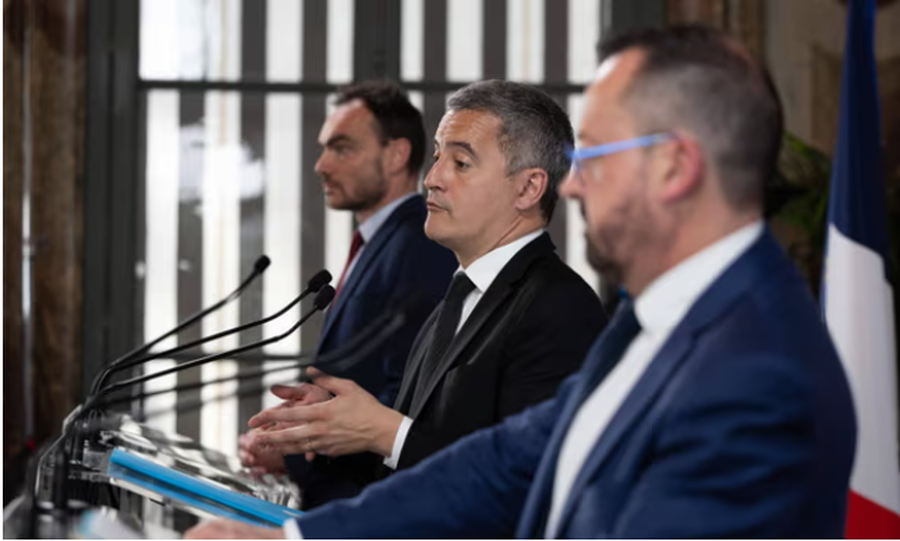
France's national terrorism office has launched an investigation into a wave of coordinated attacks on multiple prisons across the country, believed to be linked to a government crackdown on drug traffickers.
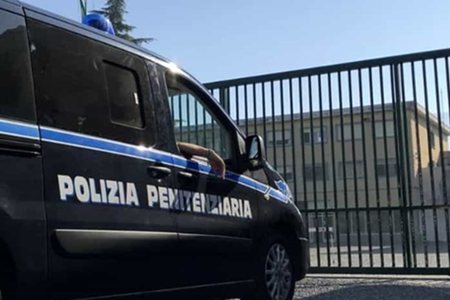
Gunmen with automatic weapons opened fire at the entrance to the Toulon prison in southern France in the early hours of Tuesday, while in recent days cars have been burned outside four other prisons and in Marseille a residential building housing prison guards was attacked.
The attacks came as the French Parliament prepares to pass a new law increasing the power of police investigating drug dealers, toughening prison conditions for convicted traffickers and creating a new prosecutor's office responsible for investigating organized crime.
The surge in cocaine imports from South America to Europe has caused drug-related violence in France, where drug seizures are at a historic high, police say.
Drug gangs traditionally based in cities such as Marseille have expanded into smaller regional towns unused to drug violence.
Justice Minister Gerald Darmanin was due to visit the Toulon prison on Tuesday afternoon in a show of solidarity with the staff. Darmanin said he was determined to eliminate the capacity of drug lords to operate behind bars and had ordered the construction of two new high-security prisons to hold more than 700 inmates.
"Attempts have been made to intimidate staff in several prisons, ranging from burning vehicles to shooting with automatic weapons. The French Republic is confronting the problem of drug trafficking and taking measures that will massively disrupt criminal networks," Darmanin wrote in X.
He added that "the Republic has confronted drug trafficking and is taking measures that will deeply disturb criminal networks, it is being challenged and will be determined and courageous."
Prisons in Marseille, Aix-en-Provence, Valence, Nîmes, Luynes, Villepinte and Nanterre were also targeted. Staff unions said burnt vehicles had been found in prison parking lots for several days in the run-up to Monday night's coordinated attack. Cars were also set alight outside the National School of Prison Administration.
The appointment of the National Anti-Terrorism Prosecution Service (PNAT) to oversee the investigation, as opposed to the organized crime unit, suggests that police believe the attacks may be the work of a militant group. PNAT said it would work with the country's domestic intelligence agency.
Interior Minister Bruno Retailleau said the attacks were "unacceptable" and ordered increased police protection of prisons and staff.
In February – as he announced record cocaine seizures of 47 tonnes in the first 11 months of last year, more than double what was seized in 2023 – Retailleau said France had been hit by a “white tsunami” that had rewritten the rules of the criminal landscape.






Lini një Përgjigje