


 Shkruar nga Pamfleti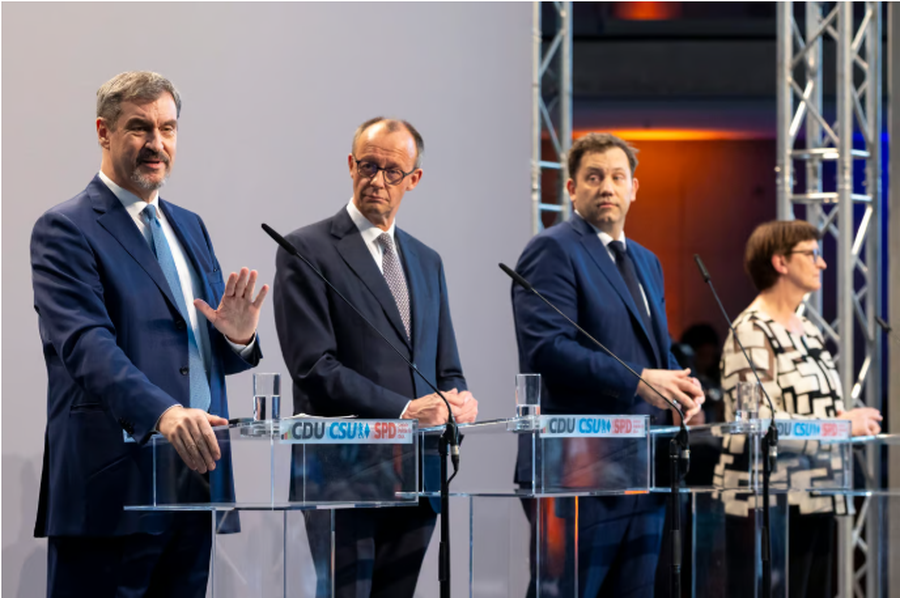
Germany's next coalition is off to a rocky start and has yet to take office.
The conservative Christian Democratic Union (CDU/CSU) and the center-left Social Democratic Party (SPD) finalized a coalition agreement six days ago. But the new alliance is already plagued by confusion and conflict over whether the policies they agreed on are hard commitments or budget-driven.
"We don't make promises we can't keep," Chancellor-designate Friedrich Merz (CDU) said in an interview with German broadcaster ARD, referring to the SPD's key promise of income tax relief for low and middle earners.
While the coalition agreement includes such a measure, Merz stressed that all commitments are conditional on available funds, referring to a clause in the 144-page coalition agreement that states that every policy - from tax relief to infrastructure spending - must be financially sustainable before it can be implemented.
This is fueling confusion within his potential new partner.
SPD co-leader Saskia Esken responded that the tax cut was "a clear deal," arguing that "workers and the economy" needed a signal of confidence. "This is laid down in the coalition contract," she told the Rheinische Post.
Foreign policy is also divisive along party lines. In his television interview, Merz reiterated support for sending long-range Taurus cruise missiles to Ukraine, in coordination with European partners.
But acting Defense Minister Boris Pistorius, a senior SPD figure who is likely to retain his role, responded bluntly: "I have never said I am in favor of this." He warned that there were "many good arguments" against surrender and cast doubt on the feasibility of the European extension.
Meanwhile, the SPD is internally divided.
The party's youth wing, Jusos - which represents around 12% of members - has come out strongly against the deal, particularly opposing its strict migration measures. Jusos leader Philipp Türmer called the deal a "ticking time bomb" and added: "Our vote is a rejection. For Jusos to support it, significant improvements would be needed."
This is a call for renegotiation - a demand that the SPD leadership has categorically rejected.
"There will be no second round," said party chairman Lars Klingbeil, adding that "if this fails, there will be new elections or a minority government."
Around 358,000 SPD members are eligible to vote on the coalition agreement until April 29. If a Bundestag vote to make Merz chancellor is reached, it is likely to take place on May 6.







Lini një Përgjigje