


 Shkruar nga Pamfleti
The assessment of Donald Trump's first confrontation with Iran varies depending on the perspective: military, geoeconomic or domestic politics. On the military front, the balance appears less problematic.
Compared to previous conflicts, the intervention against Iran can still be defined as a “limited military operation,” with a noticeable effect on weakening the Iranian regime’s capabilities and striking at its leadership structures.
This becomes clearer if we imagine the opposite situation: if within a few weeks Iran had eliminated Israel's top political and military leaders and severely damaged its air and naval capabilities, the international perception would be quite different. However, in the current case, the idea of an American failure continues to circulate in the debate.
This is not entirely based on reality, but it raises a fundamental question: why is this perception created? Even at the beginning of the Vietnam War or during the interventions in Afghanistan and Iraq, domestic opposition was not so strong in the early stages.
The crisis of domestic support
The current climate is closely linked to the president's political profile. Trump's figure can be understood in historical context, recalling the anti-Europeanism of Richard Nixon, the protectionist policies of Ronald Reagan, and transatlantic tensions during the wars in the Middle East.
However, Trump stands out for his ability to deeply polarize American public opinion and create distance with allies, especially in Europe.
The low support for intervention in Iran is also linked to the lack of clear communication from the White House about the goals of the war. There are also signs of dissatisfaction within his electoral base.
The recent protests in several American cities, organized under the slogan "No Kings", are not only related to opposition to the war, but also to concerns about the style of governance and the concentration of power.
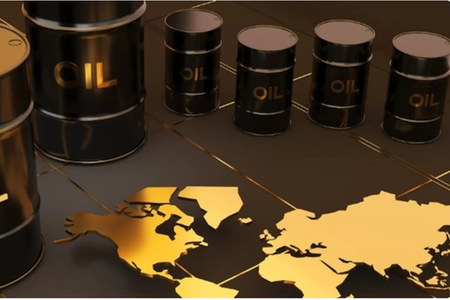
At the same time, Iran is also operating in the public opinion sphere and in the global economic dimension. The conflict cannot be considered successful without the stabilization of key trade routes, especially in the Strait of Hormuz.
Tensions with allies
In relation to allies, the current situation is reminiscent of the 2003 crisis, when France and Germany opposed the intervention in Iraq. However, the context today is more complex: the clashes are taking place in parallel with trade tensions and the war in Ukraine.
This makes the cohesion of Western alliances more fragile and adds to strategic uncertainty.
Strategic assessment
Before his death, Henry Kissinger defined Trump as a figure who marks the transition from one era to another. This assessment remains valid today.
The era that is taking shape is characterized by the return of the logic of force in international relations. In this context, the outcome of the conflict will be measured by a simple criterion: who emerges stronger and who weaker./ Adapted from Corriere della Sera



Lini një Përgjigje