


 Shkruar nga Pamfleti
The legacy of the slain leader's son is seen as a signal of the Islamic republic's defiance of Israel and the United States, and of continuity during the crisis.
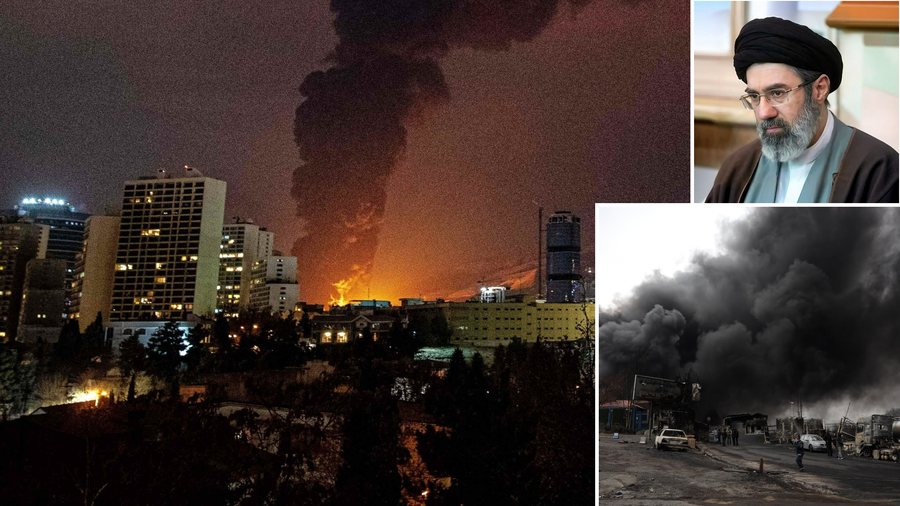
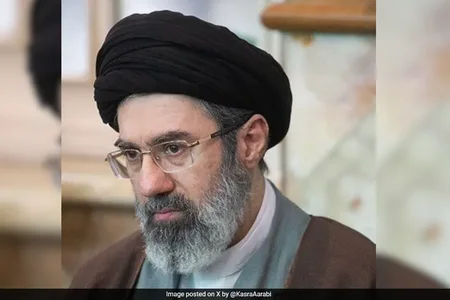
Iran has named Mojtaba Khamenei, the son of the recently assassinated supreme leader, Ayatollah Ali Khamenei, as his father's successor. The decision was made public early Monday local time in a statement by senior clerics carried by state media. The appointment signals a continuation of the country's hardline theocratic stance as Iran faces intensified airstrikes by Israel and the United States.
However, Mojtaba Khamenei himself remains a relatively mysterious figure even within Iran. He is one of the sons of Ayatollah Ali Khamenei and has wielded influence behind the scenes of power for years. In his father's office, he coordinated military and intelligence operations and is known for his very close ties to the Islamic Revolutionary Guard Corps, which considered him its preferred candidate.
Unlike his father, Mojtaba Khamenei, 56, held the full religious title of ayatollah upon assuming office. He was also known for his popular lectures at Shiite seminaries.
However, his character and political stances beyond his father's inner circle are not well known. He rarely appears in public and speaks very little. He now leads not only as Iran's highest religious and political authority, but also as commander-in-chief of the armed forces.
Vali R. Nasr, an expert on Iran and Shiite Islam at Johns Hopkins University, calls this choice unexpected but significant.
“Mojtaba’s election is a choice for continuity with his father’s policy and at the same time shows that he is more willing than other candidates to quickly consolidate power and exercise control over the system,” Nasr said. He added that Mojtaba Khamenei had long been considered a potential successor, although over the past two years he had seemed to withdraw from public attention.
According to three senior Iranian officials familiar with the selection process, Ayatollah Ali Khamenei had previously told his close advisers that he did not want his son to succeed him because he did not want the role to become hereditary. The officials spoke on condition of anonymity because of the sensitivity of the matter.
The 1979 Islamic Revolution overthrew the Iranian monarchy precisely with the promise of ending the inheritance of power within families and returning it to the people.
Megjithatë, ngjitja e Mojtaba Khameneit në këtë post tregon se figurat kryesore të pushtetit në Iran klerikët e lartë, Garda Revolucionare dhe politikanë me ndikim si kreu i Këshillit të Sigurisë Kombëtare, Ali Larijani kanë bashkuar radhët në një moment krize të thellë dhe lufte.
Larijani, një politikan pragmatist me përvojë të gjatë që ka marrë rol qendror në drejtimin e vendit gjatë krizës, është një aleat dhe mik i vjetër i Mojtaba Khameneit. Të dy kanë gjithashtu ndikim të konsiderueshëm në strukturat ushtarake të Iranit.
Garda Revolucionare u krijua si një forcë ideologjike për të mbrojtur Republikën Islamike dhe kufijtë e saj, si dhe për të krijuar një shtresë sigurie në rast rebelimesh ose grushtesh shteti brenda ushtrisë. Me kalimin e viteve ajo është shndërruar në një fuqi të madhe politike, ushtarake dhe ekonomike.
Aktualisht, Garda Revolucionare drejton valët e sulmeve me raketa balistike dhe dronë kundër Izraelit, vendeve arabe të Gjirit Persik dhe bazave e ambasadave amerikane në rajon, ndërsa sulmet ajrore masive nga SHBA dhe Izraeli ndaj Iranit vazhdojnë.
Mojtaba Khamenei u zgjodh nga Asambleja e Ekspertëve, një organ prej 88 klerikësh të lartë shiitë që ka kompetencën për të emëruar udhëheqësin suprem. Ndërsa asambleja po diskutonte për zgjedhjen e saj të martën, Izraeli goditi një ndërtesë në qytetin Qom, një nga qendrat kryesore të islamit shiit, ku tradicionalisht zhvillohen votimet për udhëheqësin e ri.
Sipas agjencisë së lajmeve Fars, e lidhur me Gardën Revolucionare, ndërtesa ishte bosh në momentin e sulmit dhe klerikët po zhvillonin takimin në mënyrë virtuale për arsye sigurie.
Gjatë diskutimeve, shumica e klerikëve të lartë në asamble mbështetën emërimin e Mojtaba Khameneit, duke argumentuar se ai kishte përvojën dhe aftësitë për të drejtuar Iranin në këtë moment kritik. Disa prej tyre theksuan se zgjedhja e djalit të Ajatollah Khameneit do të nderonte trashëgiminë e tij pas vrasjes nga SHBA dhe Izraeli.
Analisti Mehdi Rahmati në Teheran deklaroi se përzgjedhja e tij ishte një vendim pragmatik.
“Mojtaba është zgjedhja më e mençur për momentin sepse ai është shumë i familjarizuar me drejtimin dhe koordinimin e strukturave të sigurisë dhe aparatit ushtarak”, tha ai në një intervistë.
Megjithatë, Rahmati pranoi se ky vendim mund të thellojë ndarjet në shoqërinë iraniane, ku një pjesë e konsiderueshme e popullsisë kundërshton fuqishëm sistemin e Republikës Islamike.
“Një pjesë e publikut do të reagojë negativisht dhe me forcë ndaj këtij vendimi dhe kjo mund të sjellë pasoja politike”, tha ai.
Ajatollah Ali Khamenei kishte fjalën e fundit për të gjitha çështjet kryesore shtetërore gjatë sundimit të tij. Ai tregoi pak fleksibilitet për reforma të brendshme dhe bëri pak lëshime në negociatat bërthamore me Shtetet e Bashkuara.
In January, he ordered a violent crackdown on nationwide protests demanding an end to his rule. According to human rights organizations, security forces killed at least 7,000 people during the operation, although the number could rise after further verification.
Since the start of the war, US and Israeli airstrikes have killed not only Ayatollah Ali Khamenei, but also his wife Zahra Adel, his mother Mansoureh Khojasteh Bagherzadeh, and one of his sons, according to the Iranian government.
Among the other candidates considered for the post of supreme leader were Alireza Arafi, a cleric and jurist who was part of the interim transitional council after Khamenei's assassination, as well as Seyed Hassan Khomeini, the grandson of the founder of the Islamic Revolution, Ayatollah Ruhollah Khomeini.
Both are considered more moderate figures, while Hassan Khomeini has ties to the reformist wing of Iranian politics.
Some analysts believe that Mojtaba Khamenei may show a more pragmatic approach compared to his father. According to them, he belongs to a younger generation of clerics and, because of his background, may face less resistance from conservative factions.
Politician Abdolreza Davari, close to Mojtaba Khamenei, declared from Tehran that if he consolidates power, he could follow a model similar to that of Saudi Prince Mohammed bin Salman, who has undertaken several liberalizing reforms in Saudi Arabia.
"If there is anyone who can move towards a reduction in tensions with the United States, it is Mojtaba Khamenei. Any other figure would face strong opposition from the ruling elite and conservatives," Davari said. "He aims to bring about structural change."
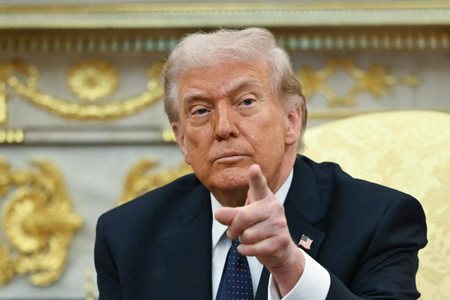
Meanwhile, it remains unclear how Washington will assess Iran's new leader. At a press conference in Washington, US President Donald Trump stated that many of the figures his administration considered as potential leaders of Iran have been killed since the beginning of the conflict.
"Very soon we won't know anyone there anymore," he said.
Asked about the worst-case scenario in Iran, Trump replied: “The worst case would be someone taking over and being just as bad as the previous one. That could happen. We don’t want that to happen.”/ The New York Times


Lini një Përgjigje