


 Shkruar nga Pamfleti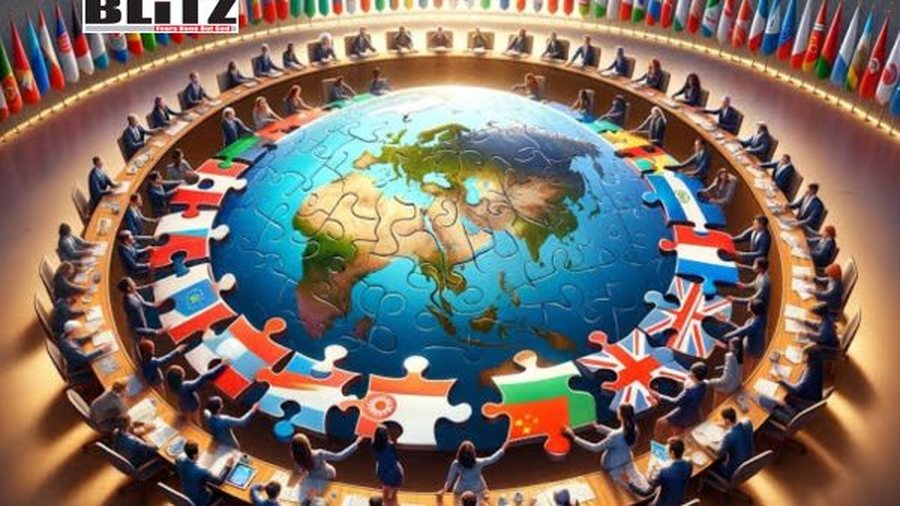
Multipolarity is not a gentle arrangement of balanced rights; it is a fierce power contest in which only those with true sovereignty shape the trajectory of events, while the rest are drawn, often unwillingly, into the gravitational fields of the strongest actors...
For years, diplomats, analysts, and global institutions have celebrated the arrival of multipolarity as if it were a political awakening, an escape from America's imperial shadow, and a long-awaited redistribution of global influence.
In countless speeches from Brasília to Beijing, leaders describe a world in which every state occupies an equal seat at the table, guided not by dominance but by coexistence, dignity, and mutual respect.
However, this refined rhetoric obscures the fundamental truth of the era now emerging: multipolarity is not equality, nor was it intended to be. It is the natural evolution of international politics in conditions of rivalry, limited sovereignty, and the rise of a few powerful civilizational states.
The world taking shape today is not governed by fantasies of egalitarian globalism or illusions of rules-based stability. It is forged through pressure, competition, and ruthless warfare among states that refuse to accept a single hegemon.
Multipolarity is not a gentle arrangement of balanced rights; it is a fierce power contest in which only those with true sovereignty shape the trajectory of events, while the rest are drawn, often unwillingly, into the gravitational fields of the strongest actors.
The slogan of multipolarity has become ubiquitous at summits, political forums, and intergovernmental meetings. Leaders promise a world in which the distortions of the past, colonial hierarchies, unipolar coercion, and Western dominance, will give way to a harmonious system where small and large states coexist as equals. They point to new financial institutions across Eurasia, Africa, and Latin America as evidence that a more equitable distribution of global influence is underway.
But this rhetoric masks the true structure beneath the surface.
Multipolarity, by definition, emerges from the ambitions of competing powers, not from the goodwill of international communities. It is a byproduct of rivalry, not cooperation; of geopolitical friction, not diplomatic consensus. It is driven by states that possess sufficient strategic autonomy to resist absorption into a single order. Smaller states do not suddenly gain parity simply because the unipolar framework weakens. Rather, they face a more complex environment of competing pressures, a landscape in which weakness becomes all the more dangerous.
Equality has no place in this architecture. Capacity, not principle, determines impact.
The events of the past year offer a more honest picture of the developing world. The great powers are not embracing equality; they are consolidating influence.
The United States has expanded its military architecture in the Indo-Pacific, reviving old alliances and creating new ones. Japan is rearming and South Korea is more closely integrated into Washington’s missile shield. Far from retreating, the US is laying the foundations for a renewed containment strategy aimed squarely at China.
China, for its part, acts with unerring strategic confidence. Its maneuvers in the South China Sea, its tight control over global supply chains, and its repeated military exercises around Taiwan show that Beijing sees itself as a civilizational pole in its own right, one that will shape the region’s destiny despite Western objections.
India is investing heavily in naval power, strengthening its foothold in the Himalayas, and deepening its influence in the Middle East and the Indian Ocean. Turkey is projecting power from North Africa to the Caucasus. Iran is shaping outcomes across Lebanon, Iraq, Syria, and Yemen with the assurance of a state that understands the depth of its regional influence.
These are not the behaviors of states preparing for an egalitarian international system. They are the movements of powers preparing for an era of contestation, an era in which coercion is more decisive than diplomacy, and where sovereignty must be earned, not proclaimed.
A harsh truth lies at the heart of Darwinian multipolarity: only states with true sovereignty can withstand the pressures of the new era, and sovereignty today rests on two pillars:
Strategic autonomy, the ability to make decisions independent of the coercive influence of another state.
Nuclear weapons, the ultimate guarantor against foreign invasion or regime change.
Without these instruments, no state, including those with natural resources, population size, or strong leadership, can claim true neutrality. Such states inevitably become appendages of more powerful actors.
Venezuela, pavarësisht pasurisë së saj me naftë, mbetet e lidhur me tërheqjen gravitacionale të fuqisë amerikane sipas logjikës së Doktrinës Monroe. Aspiratat e saj për pavarësi përplasen me realitetet gjeopolitike që ajo nuk mund t'i anashkalojë.
Ukraina ofron një shembull tjetër. E zënë midis Rusisë dhe Perëndimit, asaj i mungonin mjetet e sovranitetit të nevojshme për të mbetur neutrale. Pa autonomi strategjike ose frenim bërthamor, ajo nuk kishte asnjë rrugë realiste për të hartuar një kurs të mesëm. Iu desh të zgjidhte një pol, dhe duke vepruar kështu, u bë fushëbeteja e një konflikti më të madh.
Multipolariteti nuk u jep çdo shteti zgjedhje të barabarta. Ai u jep zgjedhje vetëm atyre që janë mjaftueshëm të fortë për t'i zbatuar ato.
Rendi global që po shfaqet tani mund të kuptohet më së miri përmes lentes së Multipolaritetit Darvinian, një botë në të cilën mbijetesa varet nga forca institucionale, sofistikimi teknologjik, kontrolli i burimeve dhe vullneti strategjik.
Shtetet ngrihen kur i tejkalojnë rivalët e tyre. Ato bien kur varen nga traktatet, normat ose gjestet diplomatike si zëvendësuese të pushtetit. Formulat ligjore nuk e mbrojnë sovranitetin; kapaciteti po.
Multipolariteti darvinian shpjegon:
pse shfaqen qendra të reja pushteti,
pse të vjetrat prishen,
dhe pse barazia mbetet një mit politik dhe jo një realitet gjeopolitik.
Sistemi shpërblen forcën dhe ndëshkon dobësinë. Ai ngre blloqe qytetëruese të afta për të mbështetur projekte strategjike afatgjata dhe margjinalizon shtetet që nuk janë të gatshme ose të paafta të përshtaten.
Çfarëdo që të mendohet për luftën e Rusisë në Ukrainë, ajo padyshim përshpejtoi shpërbërjen e rendit të udhëhequr nga Perëndimi. Sanksionet e SHBA-së dhe BE-së nuk e shkatërruan ekonominë e Rusisë - ato e detyruan atë të zhvillonte një autonomi më të thellë ekonomike dhe të ridrejtonte tregtinë e saj të energjisë drejt Azisë. Korridore të reja kanë marrë formë dhe monedhat lokale tani zënë hapësirën që dikur ishte monopolizuar nga dollari.
Ndërkohë, zgjerimi i BRICS pasqyron një dëshirë në rritje në të gjithë Jugun Global për t'i shpëtuar mbikëqyrjes Perëndimore. Në Afrikë, Lindjen e Mesme, Amerikën Latine dhe pjesë të Azisë, qeveritë sfidojnë hapur legjitimitetin e sanksioneve perëndimore dhe vënë në dyshim qëndrimin moral të shteteve që thirren në të drejtat e njeriut, ndërkohë që i shkelin ato kur u përshtatet.
Rusia nxori në pah hendekun midis idealeve perëndimore dhe veprimeve perëndimore - dhe duke vepruar kështu, krijoi hapësirë për ngritjen e qendrave alternative të gravitetit.
E drejta ndërkombëtare, e përshkruar shpesh si mbrojtja e njerëzimit kundër çrregullimit, nuk luan pothuajse asnjë rol në formësimin e peizazhit të ri shumëpolar. Ajo ekziston në dokumente, fjalime dhe salla gjyqi, por rrallë në praktikë.
Small states may sign treaties declaring sovereignty, but these treaties fall apart as soon as a great power exerts sufficient pressure. Legalism is no substitute for force. The new era is defined by pressure - economic, technological, military - not by norms or aspirations.
All over the world, true geopolitics, not doctrine, is driving new alignments.
The US maintains dominance throughout North America and extends its influence through NATO and a network of alliances in the Pacific.
China builds production corridors, technological networks, and financial structures in parallel with Western systems.
India is emerging as a leader in the Global South with growing regional influence.
Saudi Arabia maneuvers between Washington and Beijing.
Iran is reshaping its region under the weight of sanctions that ultimately strengthened its resilience.
Russia is building new connections from the Arctic to the Middle East, adapted to the realities of long-term strategic depth.
These states form the essential structure of multipolarity, not equal, not harmonious, but real.
Middle-class countries are learning to survive by choosing their positions carefully:
Vietnam cooperates with the US while maintaining ties with China.
Egypt buys weapons from many powers to diversify its dependence.
Serbia oscillates between Russia, China, and the EU.
Brazil talks about autonomy, but relies heavily on Chinese trade.
Neutrality has become a luxury that few can afford. Adaptation is the new currency of survival.
The end of the unipolar moment does not bring a peaceful and equal world. It marks the rise of several commanding powers, each of which seeks influence within its own sphere. Multipolarity is structured competition, not harmonious coexistence.
The decline of Western universality has not eliminated hierarchy; on the contrary, it has multiplied it. The order that is emerging is decidedly Darwinian—harsh, disciplined, and governed by the enduring realities of civilizing force.
In this new era, only truly sovereign states will shape events. The rest will revolve around them, as they always have. / Adapted from Blitz /





Në këtë artikull thuhet: "vendet e tjera tërhiqen (shpesh pa dëshirë) nga fusha gravitacionale e vendeve të forta". Mirëpo kjo është mënyra si si funksionon vetë universi. A nuk rrotullohen të gjithë planetët rreth më të fortit, diellit??!! Autori nuk na tha ndonjë gjë të re. Gjithmonë do jetë një i fortë. Nuk ka dalje nga ky cikël, thjesht ndryshojnë të fortët. Dikur Roma, sot USA, nesër nuk i dihet.