


 Shkruar nga Pamfleti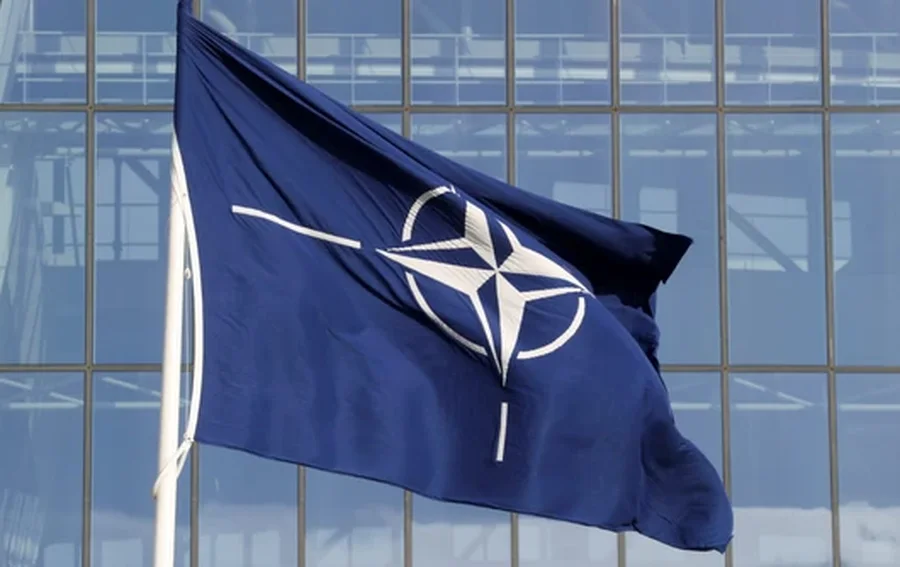
NATO Secretary General Jens Stoltenberg has asked member states to pledge 40 billion euros in annual aid to Ukraine, an alliance source told Reuters news agency on Thursday, as NATO foreign ministers were meeting for talks in Prague.
Mr. Stoltenberg has not previously mentioned a specific amount, but earlier NATO officials had floated the idea of around 100 billion euros over five years, or 20 billion euros a year.
With uncertainty over the future of US support for Ukraine due to the possibility of former President Donald Trump's return to the White House, NATO foreign ministers will discuss on Friday how they can give a more solid future and long-term aid for Ukraine.
The talks will focus on clarifying the details of the aid package for Ukraine, which will be approved at the NATO high-level meeting in Washington on July 9-11, where there will also be changes to the way how the weapons and ammunition being sent will be organized.
"We must maintain the current level of support as a minimum to provide Ukraine with the conditions to anticipate situations for as long as necessary," said a NATO source, adding that the allies had provided about 40 billion euro per year since Russia's frontal attack on Ukraine in February 2022.
German newspaper Handelsblatt said earlier on Thursday that Mr Stoltenberg was seeking a pledge from member states of $40 billion a year.
Mr. Stoltenberg has proposed that NATO take over the coordination of international military assistance to Ukraine, giving the alliance a more direct role in the war against Russia, while this role does not include the engagement of NATO forces in this conflict.
The Kremlin said on Thursday that the United States, NATO and some European countries were encouraging Ukraine to continue what it called Kiev's "senseless war" with Russia and accused them of escalating tensions in recent weeks.
Ukrainian President Volodymyr Zelenskiy has repeatedly said that Western allies are taking longer than necessary to make key decisions on military support for Ukraine.
DONATED ARMS
NATO would take over coordination of donated weapons and supplies from the US-led Ramstein Group, an ad hoc coalition of about 50 participating countries named after a US air base in Germany where it first met first in 2022.
The move is widely seen as an attempt to provide some sort of resistance to the possibility of former President Trump's return to office by placing coordination under a NATO umbrella.
But diplomats admit such a move would have limited effect, as the United States is NATO's dominant power and provides most of Ukraine's weaponry. So if Washington wanted to reduce Western aid to Kiev, it would have the opportunity to do so.
NATO will also have to overcome resistance from Hungarian Prime Minister Viktor Orban, who has made it clear his country will not take part in the new effort, arguing it brings the alliance closer to a war of consequence. disastrous with Russia.
NATO foreign ministers are also expected to address what is seen as the latest shift in Western support for Ukraine, with some allies lifting restrictions barring Kiev from using donated weapons to strike targets inside Russia - a move that Russian President Vladimir Putin has warned the West against.
As the US administration weighs its position, Secretary of State Antony Blinken is sure to be asked by his counterparts in Prague whether Washington will follow suit.
On Wednesday, he became the first administration official to signal that the United States may consider changing its stance.
"I think what you've seen over the last couple of years — as the nature of the battlefield has changed, as the locations, the tools that Russia is using have changed — is that we've changed and we've adapted," Secretary Blinken said in Moldova.
"That's exactly what we're going to do next," he added.
Washington has been by far the biggest financial and military supporter of Kiev since the beginning of the Russian attack on Ukraine, but Washington has repeatedly said that it neither encourages nor enables attacks outside the territory of Ukraine./ VOA



Lini një Përgjigje