


 Shkruar nga Pamfleti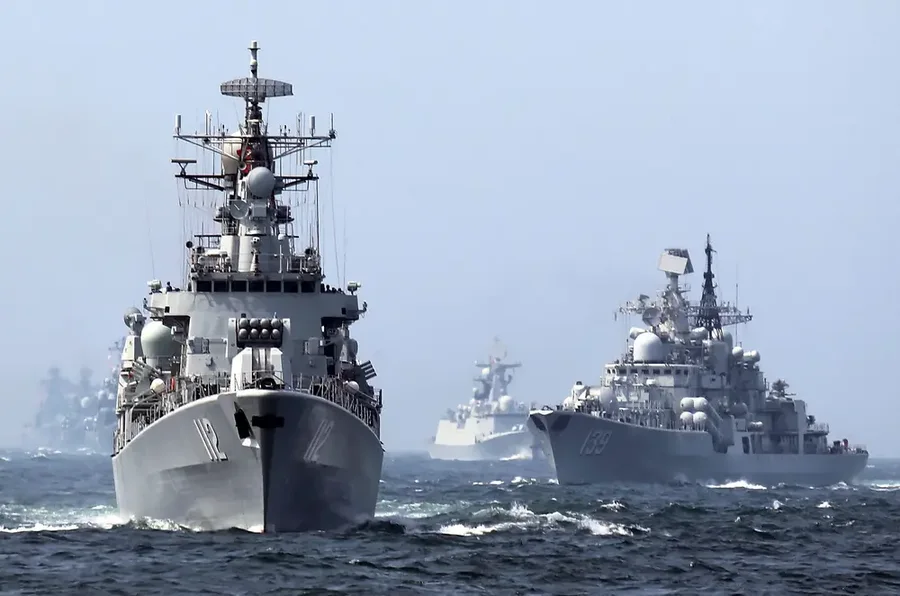
China is fiercely rivaling the US in terms of military power...
The US Department of Defense recently released a lengthy report on the military potential and security developments of the People's Republic of China (PRC). The document is interesting because, in addition to providing a general vision of economic, social conditions and the level of the Chinese armed forces, it highlights the changes in Beijing's "defense system" to achieve the objectives set by the Politburo with the arrival of President Xi Jinping.
Indeed, the PRC seeks to achieve "national rejuvenation" by the centenary of its founding (2049), and leaders of the Chinese Communist Party (CCP) consider a modern, capable and "world-class" military essential to achieve their goals.
The report outlines the course of the PRC's national, economic and military strategy and also provides insight into future modernization goals. In 2023, the PRC continued its efforts to transform the People's Liberation Army (PLA) into an increasingly capable instrument of national power. Throughout the year, the military took more coercive actions in the Indo-Pacific region, accelerating the development of capabilities and concepts to strengthen the PRC's ability to "fight and win wars" against a "strong enemy", against a side intervention third in a conflict along the periphery of the nation and project power globally.
PRC leaders say China's power to shape world events continues to grow, presenting "new strategic opportunities" to create an environment conducive to their interests. Beijing has demonstrated an increasing willingness to use military coercion to achieve its goals (Taiwan, Kashmir and the South China Sea).
It is clear that the strategic objectives of foreign policy require a modern, capable and reliable military instrument, both to express deterrence to potential adversaries and to have an effective coercive role. In this sense, the PRC has invested heavily in new technologies, however, without neglecting the development and expansion of conventional (and unconventional) capabilities and assets already present in Chinese arsenals.
China's armed forces have long been on a path to modernize their capabilities in land, air and naval operations, as well as nuclear, space, ASAT (Anti Satellite), electronic warfare and cyberspace. Despite progress, significant gaps remain, including command expertise, long-range logistics and urban warfare. In 2023, the PRC continued to modernize its military facilities, deploy modern domestically produced systems, build operational readiness, and strengthen the ability to conduct joint operations.
The military is continuing its decades-long effort to modernize equipment and focus on combined operations and joint training activities to become a world-class force by 2049. The People's Liberation Army Navy (PLAN ) is now numerically the largest navy in the world, with a combat force of more than 370 ships and submarines, including more than 140 large surface ships. The PLAN consists primarily of modern multi-mission ships and submarines, and in 2023 it continued to enhance its ability to conduct missions beyond the First Island Chain by conducting the first out-of-area deployment of its new Yushen-class amphibious assault ship. and three deployments with the aircraft carrier Shandong in the Philippine Sea, setting a record for any Chinese aircraft carrier in one year.
The PLAAF (People's Liberation Army Air Force) is rapidly modernizing its aircraft and unmanned aerial systems, with a large increase in domestically built ones to US standards. Images of what appeared to be prototypes, or technology demonstrators, of new manned or unmanned aircraft have recently been released, suggesting sixth-generation or advanced fifth-generation systems. In 2023, parts of the PLAN's ground-based fixed-wing combat aviation units, along with facilities, air defense departments, and radar units were transferred to the PLAAF. Over time, this change will likely allow better command and control over the PRC's air defense systems as well as the national radar network leading to better national air defense integration.
The People's Liberation Army Missile Force ( PLARF ) is advancing its long-term modernization plans to improve strategic deterrence capabilities. The domestic missile industry is developing new intercontinental ballistic missiles (ICBMs) that will significantly increase its nuclear-capable missile forces and require increased production of nuclear warheads. The PRC may also explore developing intercontinental-range conventionally armed missile systems along the lines of the US Global Prompt Strike program. If developed and deployed, such capabilities would allow the PRC to target targets in the United States, Hawaii, and Alaska. /Adapted "Pamphlet" from "Inside Over"







Lini një Përgjigje