


 Shkruar nga Pamfleti
The camp will be used to house Palestinians who want to leave Gaza...
Former Israeli general Amir Avivi has stated that Israel has cleared land in southern Gaza for the construction of a camp for Palestinians, which will potentially be equipped with surveillance and facial recognition technology for anyone who enters there.
Retired reservist Avivi told Reuters in an interview that the camp would be built in an area of Rafah cleared of tunnels built by Hamas, with entrances and exits monitored by Israeli personnel.
Aviv is the founder of the influential Israel Defense and Security Forum, a group representing thousands of Israeli military reservists. He does not speak for the Israeli military, which declined to comment. The Israeli prime minister’s office did not immediately comment on any plans to build a camp in Rafah.
Avivi said the camp will be used to house Palestinians who wish to leave Gaza and cross into Egypt, as well as those who wish to stay.
His comments come as Israel prepares for a "limited reopening" of Gaza's Rafah border crossing with Egypt, a key requirement under US President Donald Trump's plan to end the war in Gaza.
Sources told Reuters this month that Israel wants to ensure that more Palestinians leave Gaza than are allowed in. Israeli officials have spoken in the past about encouraging Gazans to emigrate, although they deny they intend to forcibly displace the population, a highly sensitive issue for Palestinians.
"There are almost no Gazans in Rafah ," Avivi said.
The area fell under full Israeli military control after a ceasefire between Israel and Hamas in October, and most Palestinians fled to Hamas-held areas.
"Infrastructure needs to be built in Rafah that can accommodate them, and then they can choose whether they want to go or not ," Avivi said.
He added that the structure is likely to be "a large and organized camp" capable of housing hundreds of thousands of people who could implement identity checks, including facial recognition.
In July, Israeli Defense Minister Israel Katz told Israeli media that he had ordered troops to prepare a camp in Rafah to house Gaza's population. Officials have not spoken publicly about such plans since. Ismail Al-Thawabta, head of the media office of the Hamas-run Gaza government, told Reuters in a statement that the idea amounted to cover for "forced displacement."
-Possible return to war
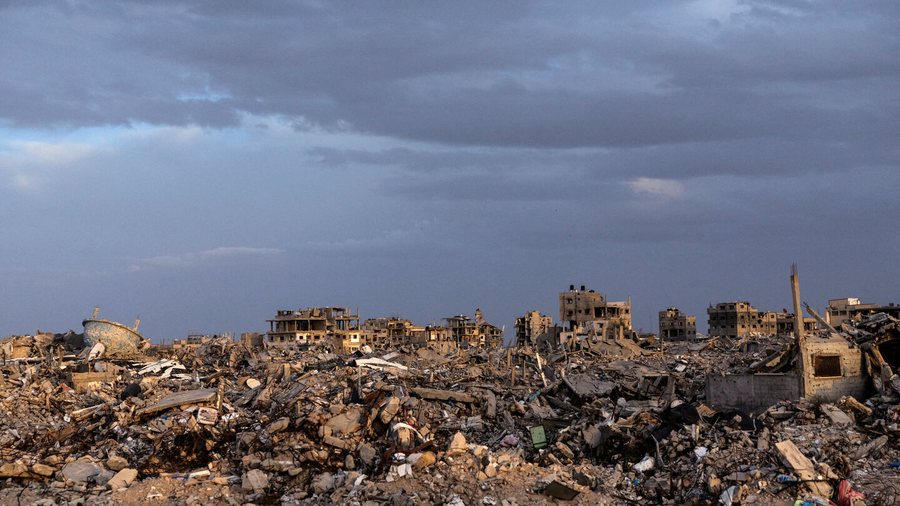
Palestinians in Gaza, devastated by two years of Israeli attacks on the enclave, have long faced restrictions on their movement and monitoring of their internet activity and phone calls by Israeli surveillance agencies.
Almost all of Gaza's 2 million residents have been forced to relocate to a narrow coastal strip from which Israeli forces withdrew under the ceasefire and where Hamas has retained control.
Trump's plan for Gaza, now in its second phase, calls for the reconstruction of Gaza to begin in Rafah and for Hamas to hand over its weapons in exchange for a further withdrawal of Israeli troops from the territory.
Aviv said the Israeli military was preparing for a new offensive against Hamas if it refuses to surrender its weapons. This could include resuming attacks on Gaza City, its largest enclave.
"The camp in Gaza could be used to shelter Palestinians fleeing a renewed Israeli attack. Plans have been set. The army is ready to take command from the government, from the cabinet, to renew its maneuvers in Gaza ," Avivi said.
The Israeli military says it has continued to carry out operations in Gaza since the ceasefire to thwart what it describes as planned attacks by militants and to destroy Hamas' network of tunnels under Gaza.
Israeli attacks since the ceasefire have killed more than 480 Palestinians in Gaza, health authorities there say, while the army says four soldiers have been killed in militant attacks.
Avi Dichter, a minister in Israeli Prime Minister Benjamin Netanyahu's cabinet and former head of Israel's domestic intelligence service, said that disagreements over disarmament could lead Israel back to war in Gaza.
-The goal of demilitarization
Hamas has publicly refused to hand over its weapons. Two Hamas officials told Reuters this week that neither Washington nor the mediators had presented the group with any detailed or concrete proposals for disarmament.
According to a document shared by the White House last week, the Trump administration wants to see heavy weapons deactivated immediately, with personal weapons registered and deactivated by sector, while police under an interim technocratic administration in Gaza become capable of guaranteeing personal security.
Trump has repeatedly warned Hamas that it will pay “hell” if it does not surrender its weapons. A U.S. official said Tuesday that the disarmament could be accompanied by some kind of amnesty for Hamas members. Speaking before Israel’s parliament on Monday evening, Netanyahu said the next phase of the ceasefire would not include the reconstruction of Gaza. / Adapted from “Pamphlet” by “Al-Monitor”






Lini një Përgjigje