


 Shkruar nga Pamfleti
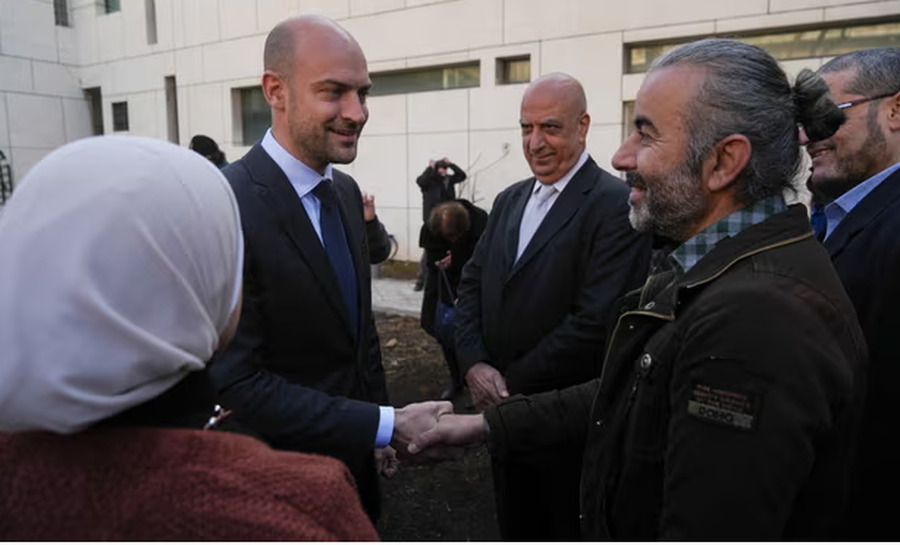
The foreign ministers of France and Germany will meet Syria's de facto leader Ahmed al-Sharaa in Damascus in the highest-level visit by a major Western power since rebels toppled the regime of President Bashar al-Assad last month. .
Jean-Noël Barrot and Annalena Baerbock, who arrived separately in the Syrian capital on Friday, will hold talks with the head of the Islamist group Hayat Tahrir al-Sham (HTS) on behalf of the EU, their ministries said.
Diplomats toured Syria's notorious Sednaya prison complex in the morning and also planned to meet representatives of Syrian civil society as Western allies cautiously establish contacts with Syria's new rulers after 13 years of civil war.
Baerbock said that "my trip today - together with my French counterpart and on behalf of the EU - is a clear signal to Syrians: a new political beginning between Europe and Syria, between Germany and Syria, is possible."
She said in a ministry statement that Germany wants to help Syria become a "safe home" for all its people and a "functional state with full control over its territory," adding that despite skepticism about HTS "We must not miss this opportunity to support the Syrian people".
Baerbock urged the new rulers to avoid any "acts of revenge against groups within the population", to avoid a long delay before holding elections, and to avoid attempts to Islamize the judicial and educational systems.
In a post on social media, Barrot said the two EU countries "stand together alongside the Syrian people in all their diversity" and want a "peaceful transition".
In Damascus, he called for a "sovereign, stable and peaceful" Syria.
HTS, a Sunni Muslim group formerly linked to al-Qaeda and Islamic State, is still designated a terrorist organization by many national governments, but has assured the international community that it intends to govern on behalf of all Syrians.
Leading the offensive that overthrew the brutal rule of the Assad family, the group's senior figures, who dominate Syria's interim authorities, face the task of rebuilding the country's shattered state institutions.
Key questions remain over whether the rights of minorities in Syria's multi-ethnic society will be properly guaranteed, as well as over continued foreign influence in a country where states, including Turkey and Russia, have strong and competing interests.
French diplomatic sources said Barrot visited the French embassy, which has been closed since 2012. He met Syrian staff guarding the facilities and reaffirmed the need to work towards restoring diplomatic representation.
Baerbock said she went to Syria with an "outstretched hand" as well as "clear expectations" of the new rulers, who she said would be judged by their actions. "We know where HTS is coming from ideologically, what it has done in the past," she said, adding "we also hear and see the desire for moderation and understanding."





Lini një Përgjigje