


 Shkruar nga Pamfleti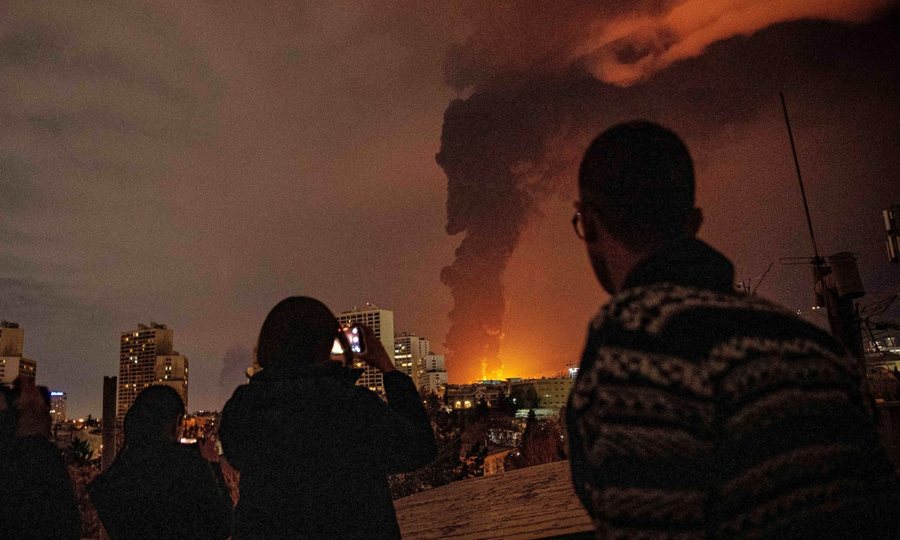
US officials express concern that the sight of burning deposits could spook international energy markets.
One of the first major disagreements between the United States and Israel over the strategy of airstrikes against Iran has been recorded. According to international media outlets, including Axios, the attacks launched by the Israel Defense Forces (IDF) on several fuel depots in Iran on Saturday were much more extensive than US officials had expected.
This development has caused concern in Washington, where some officials have expressed dissatisfaction with the manner and scope of the operation. According to reports, the US administration fears that striking infrastructure that is also used for civilian supplies could have the opposite effect than intended, increasing support for the regime in Tehran among the Iranian population.
Large fires in Tehran
Israeli airstrikes caused massive fires in the Iranian capital. Flames were visible from miles away, while thick smoke covered large parts of Tehran, according to reports and images shared on social media.
The Israeli military stated that the hit fuel depots are used by the Iranian regime to supply various customers, including military structures.
An Israeli military official said the attacks were also intended as a warning, to send a message to Iran to stop attacking Israeli civilian infrastructure.
Washington surprised by scale of attacks
According to US and Israeli officials, the Israeli military had informed their American counterparts in advance of the operation. However, a US official said the Pentagon was surprised by the scale of the attacks.
“We don’t believe it was a good idea,” a senior US official was quoted as saying by Axios. On the other hand, an Israeli official suggested that Washington’s reaction was harsh and communicated directly.
Fears about the impact on energy markets
Although the targets struck were not directly oil production facilities, US officials express concern that the sight of burning deposits could spook international energy markets.
As a result of rising tensions in the Middle East, the price of oil on international markets has increased significantly, reflecting fears of a wider escalation of the conflict and possible disruption of energy supplies.
An adviser to former President Donald Trump told Axios that the US president does not support this type of attack. "The president does not like this strike. He wants to preserve the oil, not destroy it, because it reminds people of high fuel prices," he said.
Iran's warning
On the other hand, Iran warned of consequences if attacks on its energy infrastructure continue.
The spokesman for the Iranian Khatam al-Anbiya General Staff, which oversees military operations, stated that if Iranian energy targets continue to be hit, Tehran may respond with similar attacks in the region.
According to him, Iran has not yet targeted regional energy infrastructure, but if this happens, the price of oil on global markets could reach up to $200 per barrel. /Pamphlet





Tralala zura nje gale iken shoqet e s'ma pane.