


 Shkruar nga Pamfleti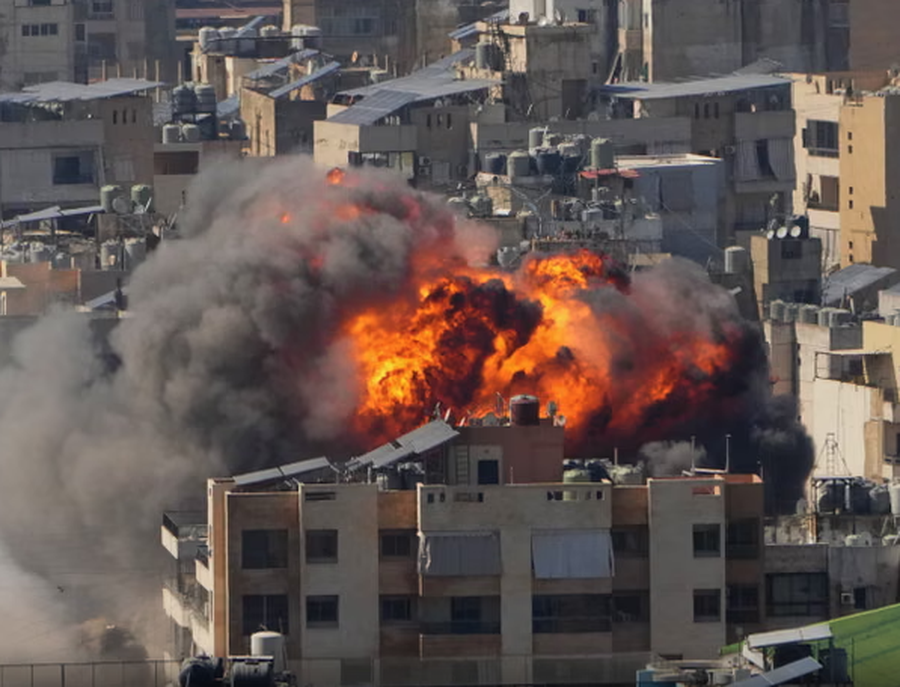
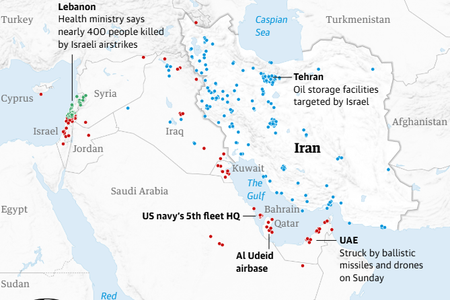
The Israeli military announced on Monday that it had launched a "broad wave of attacks against the infrastructure of the Iranian terrorist regime" across Tehran, Isfahan and southern Iran.
The announcement came shortly after one man was killed and several others were injured in an airstrike targeting central Israel. It is not clear who launched the attack.
Meanwhile, Turkey's Defense Ministry said on Monday that a ballistic missile launched by Iran was intercepted in Turkish airspace by NATO defense systems, in the second such incident in five days.
"A ballistic missile launched by Iran and entering Turkish airspace was neutralized by NATO air and missile defense assets in the eastern Mediterranean," it said in a statement.
Some fragments from the weapon fell in open territory in the southern Gaziantep area, causing no injuries, the ministry added.
Meanwhile, G7 finance ministers are preparing to discuss releasing emergency oil reserves, The Guardian reports, after the US-Israeli war with Iran pushed the price of crude oil above $100 (£75) for the first time since 2022.
Ministers will discuss the release of reserves in a call coordinated by the International Energy Agency (IEA), according to a report in the Financial Times.
The emergency meeting will take place at 8:30 a.m. New York time to discuss the impact of the Iran war, the FT reported, citing unidentified people familiar with the matter.
Three G7 countries, including the US, have so far reportedly expressed support for releasing emergency reserves, which are held by the IEA's 32 member countries across the globe.
The IEA maintains strategic oil reserves as part of an emergency system designed to help countries weather oil price crises. U.S. officials believe a joint release in the range of 300 million to 400 million barrels would be appropriate, which would reportedly represent 25% to 35% of the 1.2 billion barrels in the reserve.




Lini një Përgjigje