


 Shkruar nga Giuseppe Sarcina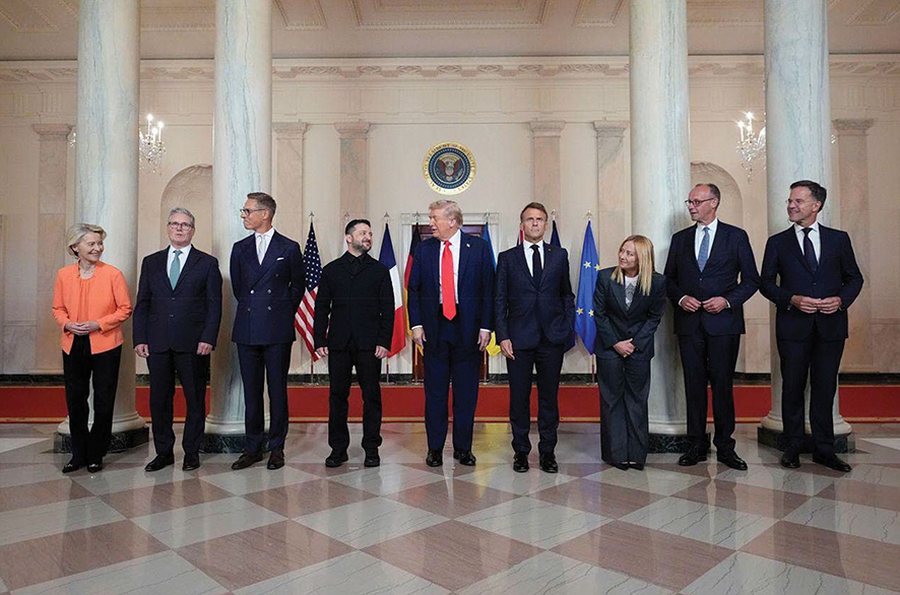
Europeans are now called to act...
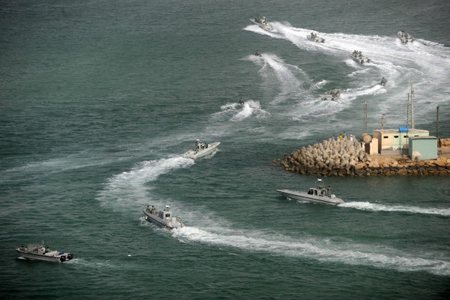
European governments are facing two conflicting messages from the United States. The one that, in theory, should be the most important is the post published on Friday afternoon by Donald Trump on his “Truth” platform. In essence, the American president writes that he intends to end the war quickly, but intends to leave the task of guaranteeing freedom of navigation in the Strait of Hormuz, the sea route through which about a fifth of the world's oil needs pass, to other countries. The other, more worrying signal has remained in the background for several days.
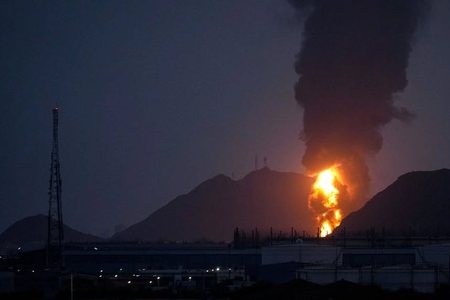
Two weeks ago, Centcom, the US Central Command based in Tampa, Florida, had confidentially asked the Pentagon for funding to sustain another 100 days of war. So far, the attack on the ayatollahs has cost two billion dollars a day. The news became official last Friday, when Defense Secretary Pete Hegseth said he would ask Congress for funds, saying $200 billion, two billion for 100 days, is needed to eliminate the enemy.
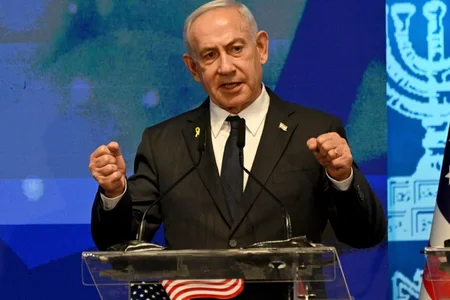
The Trump administration's style is familiar. However, the Europeans are now being called upon to act. First, what is the most likely scenario? The prevailing idea is the one that is least harmful to much of the world and, at this point, the most rational for Trump himself: the conflict will drag on for a few more weeks. Many think that even Benjamin Netanyahu will be forced to stop the bombing, content with the results achieved. It remains to be seen whether this will actually happen. In any case, it would be up to the European and Asian partners to deal with Hormuz.
It is true that the United Kingdom, Germany, France, Italy, the Netherlands and Japan have recently signed a document committing themselves to considering a possible mission in the Strait. In reality, all are convinced that the conditions are currently lacking to give concrete follow-up to this declaration of intent. It even turns out that in recent days European military commands, including the Italian one, have been concerned not with strengthening, but with reducing the contingents of soldiers stationed in bases in the Middle East.
The most cautious leaders are Emmanuel Macron, Giorgia Meloni and Friedrich Merz. In particular, the Italian government hopes for the involvement of the UN, which means the possibility of China and Russia voting in favor of the mission, or at least abstaining, in the Security Council. However, there have been no signals of readiness from Beijing and Moscow. China remains the most exposed country, since 45% of its oil consumption passes through Hormuz. However, Xi Jinping's representatives are negotiating more with the Iranians than with the Europeans to ensure the passage of their tankers. The results are starting to appear. Therefore, relying on Beijing's cooperation may turn out to be another illusion: China is known for its rhetoric in favor of multilateralism and UN values, but these often remain declarations, as was also seen in the case of Ukraine.
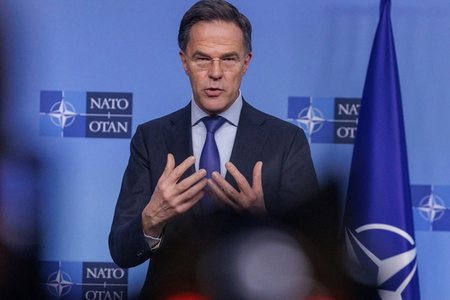
Once again, the main problem remains Donald Trump. In recent days, NATO Secretary General Mark Rutte has tried to mediate between Washington's pressure and the widespread hesitation in Europe. British Prime Minister Keir Starmer has supported this effort. According to sources, Rutte has been straightforward in private conversations with European leaders: something must be done, a signal of openness to the White House, otherwise Trump may leave the Europeans alone in the face of Russia in Ukraine. Meanwhile, the NATO summit, scheduled for July 7-8 in Ankara, is approaching. Rutte fears that Trump could turn it into a public spectacle to embarrass allies and the organization itself.
In short, Europeans are facing the consequences of a war they did not want and continue to oppose. They do not want to participate in a high-risk military mission in the Persian Gulf, in the absence of a ceasefire. They also fear Trump's harsh reaction, which could have consequences for Ukraine and for NATO itself. Is the situation hopeless? In fact, there is a possibility, fragile but obvious. It has to do with Turkey, which currently represents the only mediation effort. On Friday, March 20, during the celebrations for the end of Ramadan, President Recep Tayyip Erdogan used very harsh tones towards Netanyahu. At the same time, Turkish Foreign Minister Hakan Fidan is in constant contact with his Iranian counterpart, Abbas Araghchi. Moreover, at recent meetings of the North Atlantic Council, Turkish Ambassador Basat Ozturk has been among the few who have opposed the American attack on Iran.
Other countries are also trying to revive dialogue with Tehran. In this context, Europeans could consider supporting the effort of Turkey, a NATO member, or promoting a separate initiative if they want to avoid tensions with Israel. Such a document could secure broader support than six signatures./ Adapted from “Pamphlet” by “Corriere della Sera”


Lini një Përgjigje