


 Shkruar nga Pamfleti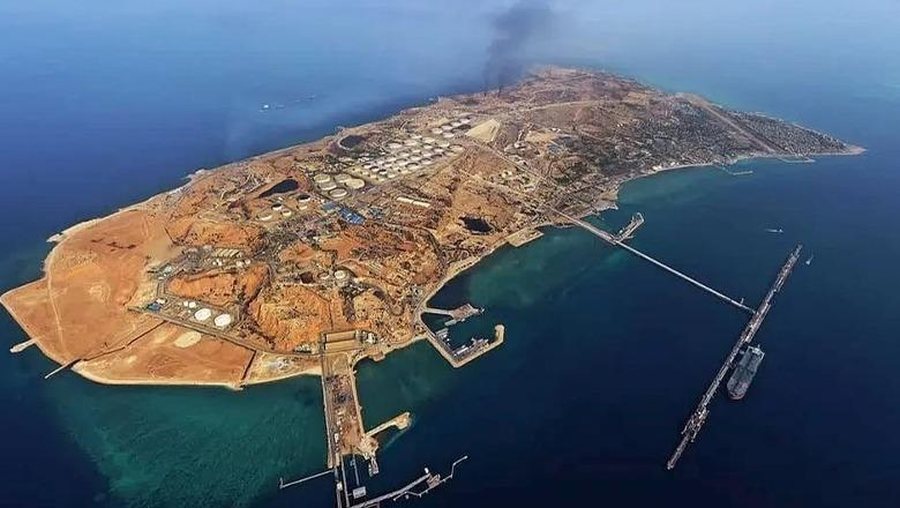
For years, Dubai has provided financial services to the Iranian oil industry without exercising strong control over the source of the funds. This role is further consolidated by the fact that the emirate functions as a financial center where capital can be deposited with minimal risk of seizure or sanctions and with limited levels of transparency.
In the current conditions of the conflict, this pattern has not fundamentally changed. However, some of Iran's financial flows are shifting to other centers such as Hong Kong or Chinese banks, which are considered more reliable by exporters.
One of the key developments in the early weeks of the war is the surge in oil revenues for Tehran. According to market data, even in the event of a strike or loss of Kharg Island – a key hub for exports – it is unlikely that the regime will face financial collapse.
The Importance of Kharg Island
Kharg Island remains one of the most important assets for the Iranian economy. Located about 500 kilometers from the Strait of Hormuz, it serves as a major terminal for oil exports, due to its sufficient depth to anchor supertankers.
According to satellite platform TankerTracker, about 1.56 million barrels per day were exported from Kharg last year, accounting for about 95% of Iran's total exports. The island's storage capacity and pipeline infrastructure make it a strategic point for Tehran.
Former US President Donald Trump has considered this island a key target, with the idea that striking it would significantly reduce Iranian revenues and put pressure on the regime.
Iran's alternatives
However, historical experience and current strategy show that Iran has built alternatives to avoid dependence on a single export point. During the Iran-Iraq war in the 1980s, the bombing of Kharg failed to stop exports.
Today, Iran has other terminals, including one at Kooh Mobarak south of Hormuz, connected by a pipeline about 1,000 kilometers long. There are also loading points on the islands of Lavan, Sirri, and Qeshm, as well as several coastal terminals for the export of liquefied gas.
Oil price and financial impact
Even if Iranian exports are reduced, revenues are not expected to fall significantly due to rising prices. According to TankerTracker estimates, Iran continues to export about 2 million barrels per day through Hormuz, roughly at levels similar to the pre-conflict period.
The price of Iranian oil has risen sharply, from less than $50 a barrel to over $100, offsetting any volume reduction. Meanwhile, the United States has allowed the release of over 150 million barrels of Iranian oil stored at sea, with an estimated value of over $10 billion.
In this context, despite military and economic pressure, Iran's financial resources remain stable, while alternative export infrastructure reduces the impact of any possible strike on key points such as Kharg Island./Corriere della Sera





Lini një Përgjigje