


 Shkruar nga Pamfleti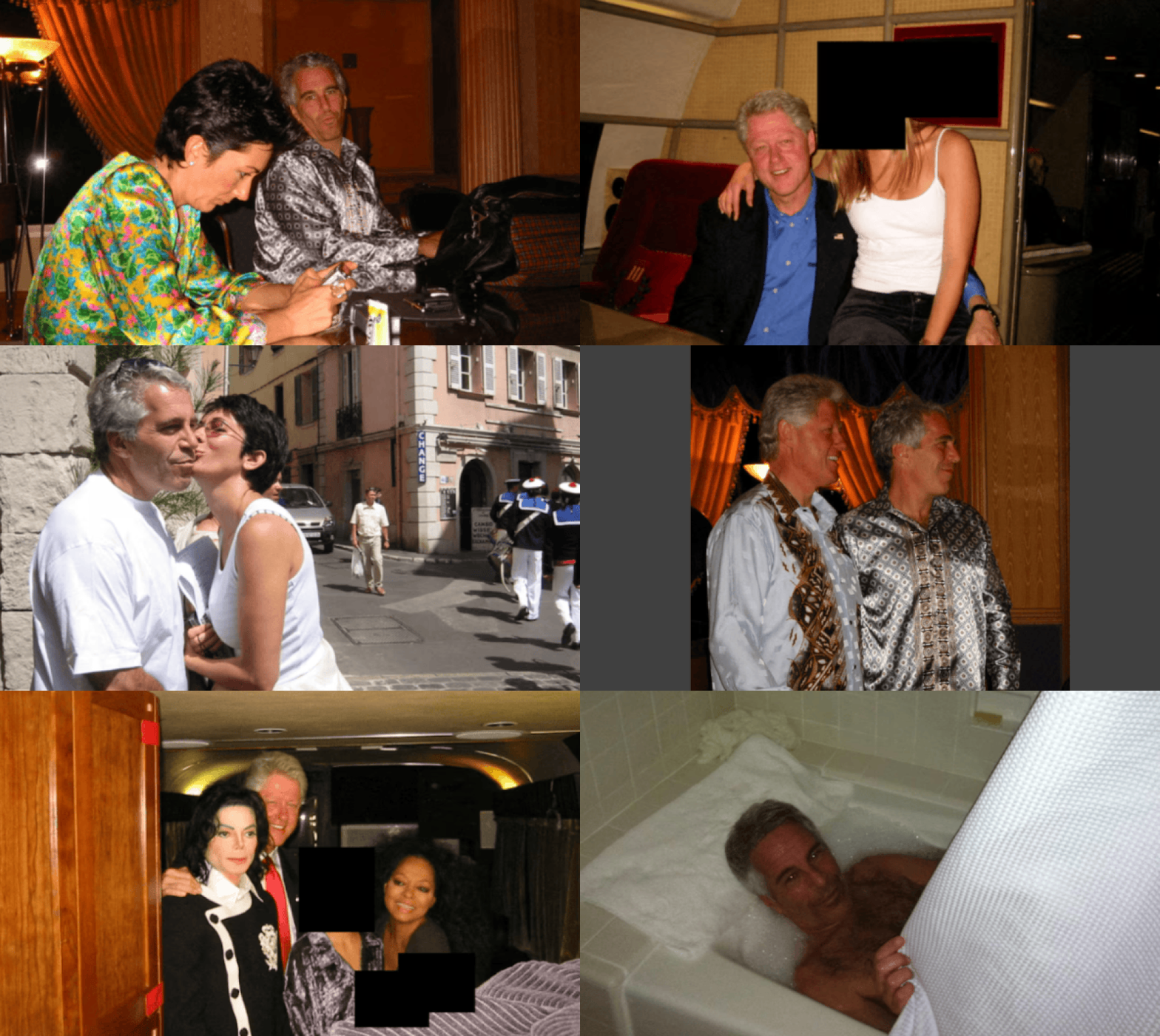
From Wall Street to royal palaces; the mechanism of power, money and influence that protected one of the biggest scandals of the 21st century
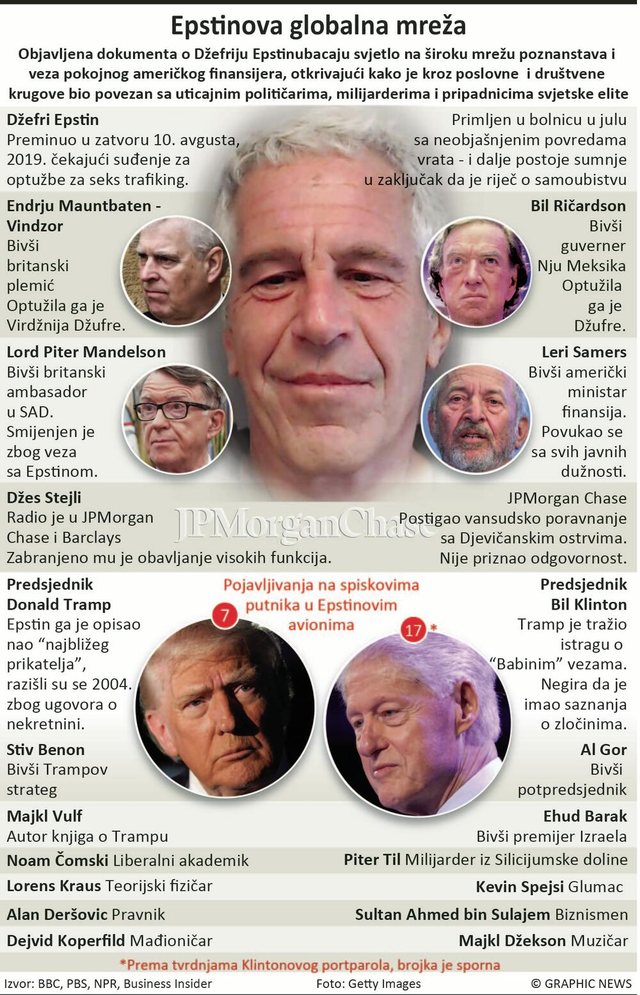
Jeffrey Epstein was not just a wealthy financier with strong connections in the American elite. He was the architect of a sophisticated global network that intertwined politics, business, academia, philanthropy, and informal diplomacy.
This network, carefully built over more than two decades, created a social and institutional shield that for a long time protected him from the legal consequences of his actions.
His case is not just a criminal story; it is a clear study of how power functions at the highest international levels.
Epstein understood early on that in the world of the elite, reputation is not built on money alone, but on access. He was not a traditional banker, nor a public-profile fund manager. He operated in a gray area of private finance, claiming to manage the wealth of billionaires.
His connection to American billionaire Leslie Wexner was crucial to his rise. Through this door he entered the most closed circles of American business and politics, transforming himself from a peripheral figure into a sought-after host of the elite.
His model was simple but effective: he created spaces where powerful people felt privileged. His luxury mansions in New York, Florida, New Mexico, and private islands in the Caribbean weren't just properties; they were platforms for building relationships. They hosted dinners, informal meetings, and discussions about science, technology, global politics, and strategic investments.
In these environments, formal barriers fell and a sense of select community was created.
In diplomacy, this is called “soft networking”; in Epstein’s reality, it was protective capital.
A key role in the international expansion of this network was played by Ghislaine Maxwell, who provided access to British aristocratic circles and other elite European settings. She served as a social intermediary, giving Epstein credentials that he would never have earned on his own.
Their network extended beyond the US, including figures from Europe, the Middle East and prestigious academic circles. This transformed Epstein from an American financier into an international hub.
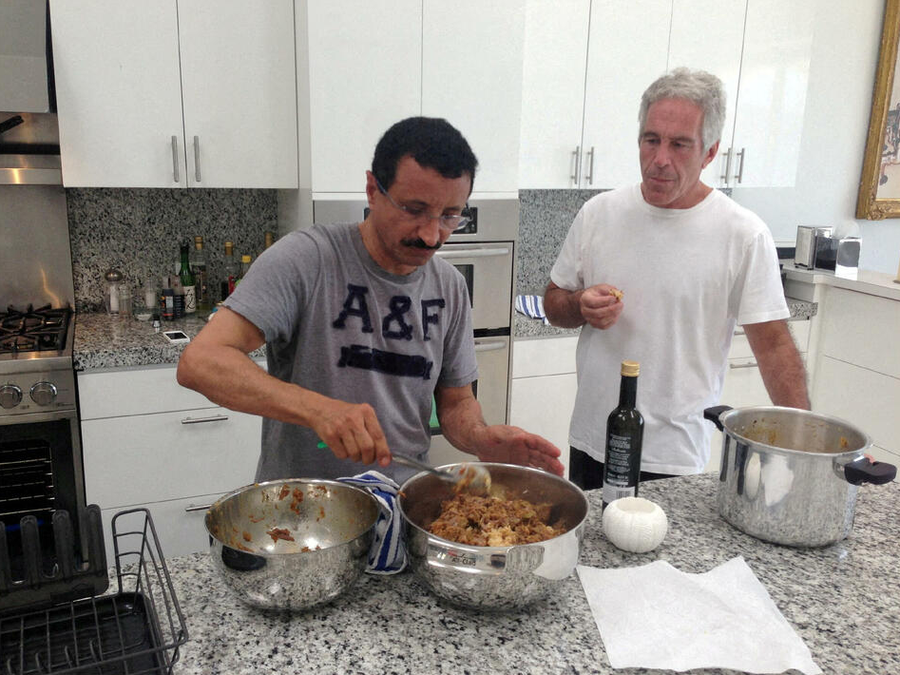
The most controversial point remains the fact that, even after his conviction in 2008 for serious violations, many of his contacts continued to maintain ties with him. This shows that a cold logic of interest operates at the highest levels of power: public distancing does not necessarily translate into real severance of relations. For some, he remained a channel of information, a potential intermediary or a gateway to other circles. For others, perhaps, there was a fear of mutual exposure.
In secret diplomacy and big business, information is as valuable a currency as financial capital.
The Epstein case exposes the weakness of institutional mechanisms in the face of the influence of internationally connected elites. The controversial 2008 plea deal with federal prosecutors in Florida, which gave him an unusually light sentence compared to the charges, was perceived as a clear example of a double standard system. The message that emerged was dangerous: powerful networks can subvert justice. Only after media pressure and the reopening of the case in 2019 did the system react differently, but the institutional damage had already been done.
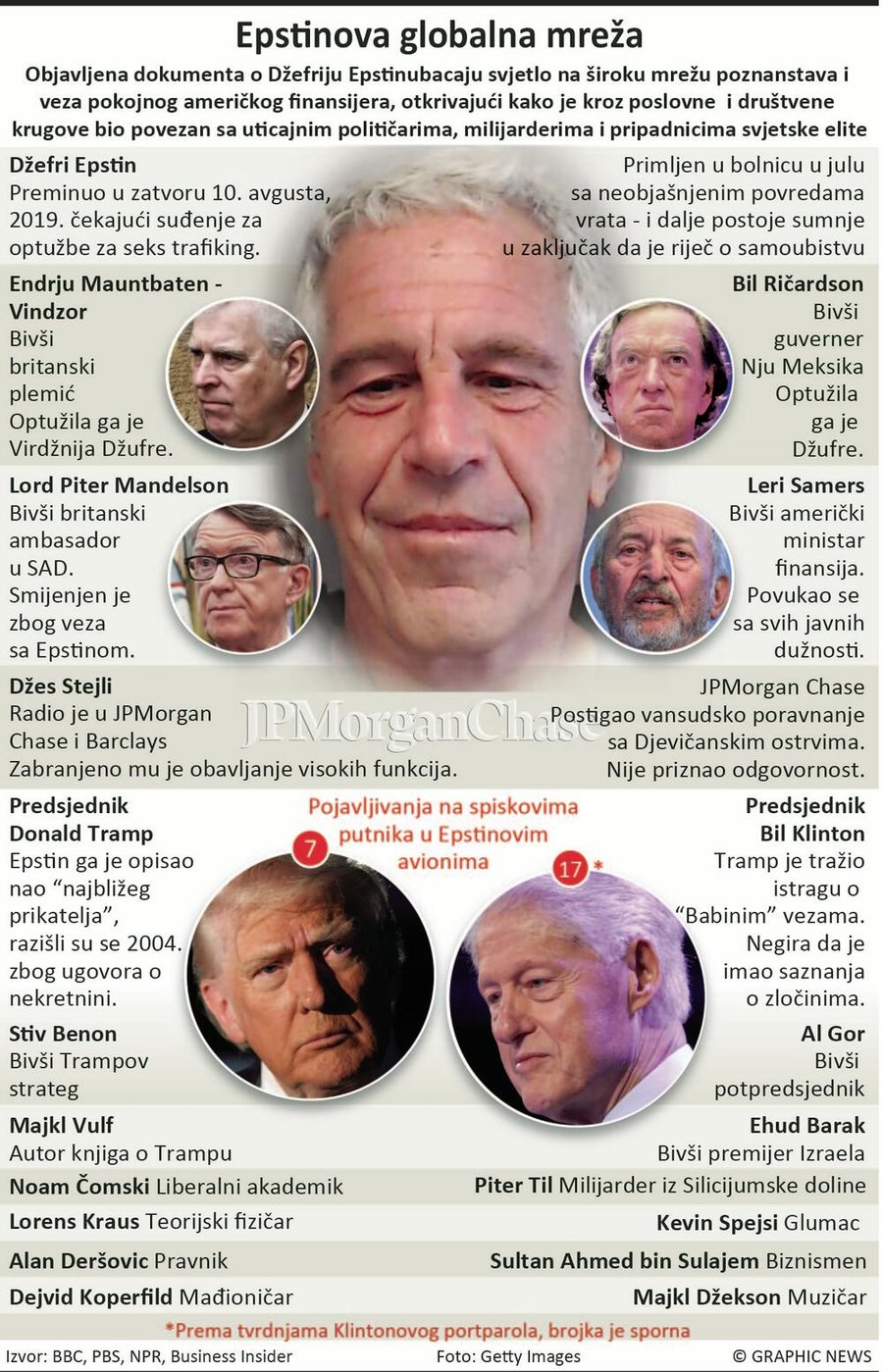
From a geopolitical perspective, the issue has deeper implications. It shows that global elites are interconnected across national borders, often through informal channels that bypass traditional diplomacy. When these networks are affected by scandals, the consequences are not only personal, but political. Any investigation into the connections of such a figure indirectly affects the reputation of institutions, foundations, universities, and even governments. For this reason, many actors prefer silence or discreet distancing, rather than full transparency.
For regions like the Balkans, the case is an important lesson. It demonstrates that integration into international networks of elites requires strong standards of transparency and institutional control. Otherwise, connections with questionable figures can turn into diplomatic costs. In an era where state reputation is strategic capital, any association with scandals of this magnitude could damage Euro-Atlantic ambitions and international credibility.
Ultimately, Epstein's story is not simply the story of an individual with criminal deviance. It is the story of how power is built through access, how money buys reputation, and how global networks create informal zones of immunity. His downfall showed that no shield is eternal, but it also left behind the most important question: how many other similar networks operate today in silence, protected by the same mechanisms of elite influence and silence? / Pamphlet
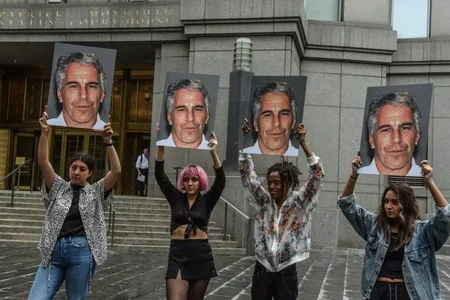






Si shume e keni zbut situaten sa po mundoheni ta kaloni ne normalitet perverserine dhe kriminalitetin a tij. Turp!