


 Shkruar nga Eric Posner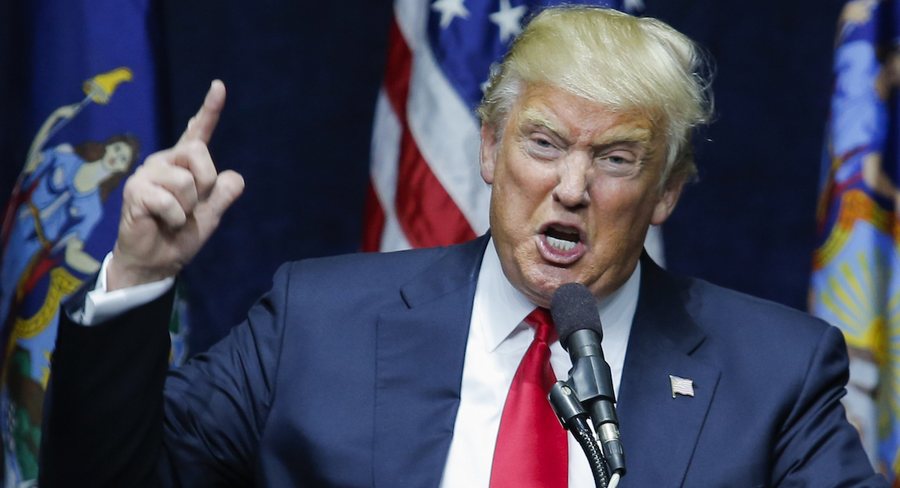
In the United States, Donald Trump won the 2024 presidential election, despite or perhaps because of his contempt for international law.
Over the past 2 weeks, Israel has repeatedly attacked Syria, destroying military facilities and occupying territory, in clear violation of the United Nations Charter, which prohibits the use of military force against foreign states except in self-defense or with authorization from the Security Council.
While some countries have condemned Israel, the United States and many others are reluctant to criticize it. Perhaps they fear that if they are not destroyed, Syrian weapons could fall into the hands of terrorist organizations. It is true that international law does not allow such exceptions.
In fact, he has become another victim of events. Israel’s attacks on Syria are not an isolated example. The ruins of international law are all around us. Russia invaded Ukraine in 2014 and again in 2022, illegally annexed Ukrainian territory, committed atrocities against Ukrainian soldiers and civilians, and now faces charges of genocide.
China has used violence to expand its control over the South China Sea, and now appears poised to invade Taiwan, a scenario that no one believes would be prevented by international law. Moreover, U.S. military interventions in Afghanistan, Iraq, Libya, Syria, and elsewhere over the past decades were all based on dubious legal theories.
International crimes are occurring around the world, in conflict-ridden countries like Israel and Gaza, Myanmar, Ethiopia, and Sudan, but also within authoritarian countries that are at peace.
Sadly, wars and violence are not the only indicators of the decline of international law. The same trend is also affecting the global economy.
With its inoperable appellate body, the World Trade Organization, the world is rapidly turning to protectionism. Likewise, the poor performance of the International Court of Justice and the International Criminal Court is laughable compared to the ambitions of their founders.
The ICJ was supposed to prevent war, while the ICC was supposed to provide justice for victims of war crimes. But neither court is doing much. A less visible, but equally important, development is that international investment law has provoked a backlash from its intended beneficiaries.
Bilateral investment treaties are supposed to promote economic development in poorer countries, while protecting foreign investors from expropriation. However, there is little evidence that the law has helped these countries do this. Instead, multinational corporations have used it to block the implementation of economic reforms and environmental regulations that could curtail their gains in developing countries.
Meanwhile, international law protecting migrants has fueled a nationalist backlash in many destination countries, especially those with large numbers of asylum seekers. As democracy erodes around the world, human rights laws are also being steadily weakened.
Many governments are stripping citizens of basic legal protections, and political repression is on the rise in countries once thought to be on the path to political freedom. Even the European Union, the most successful international organization, lost Great Britain, and has been forced to confront illiberal governments in Hungary and, until recently, Poland.
It is also facing new challenges as far-right Eurosceptic parties gain power in its member states. In the United States, Donald Trump won the 2024 presidential election despite, or perhaps because of, his disdain for international law.
During his first term, the US withdrew from more than a dozen international agreements and organizations related to security, human rights, climate change and migration. Now, Trump plans to withdraw the US from the World Health Organization, an international institution with its own pros and cons, on the first day of his next term.
But both Barack Obama and Joe Biden did little to promote international law during their respective terms. The US disregard has been bipartisan. But why has this happened? The simplest explanation is that international law is a victim of the backlash against globalization.
Once a promised path to freedom and wealth, globalization is now associated with uncontrolled migration, job losses, pandemics, financial crises, and conflict. The benefits it brought to global economic growth were not large enough, widespread, or visible enough to offset the real or perceived harms.
But international law was supposed to cement the liberal global order. In the 1990s, officials and analysts argued that international law enforces itself: as it spreads, it is internalized by states through their bureaucracies and further entrenched by public opinion.
In fact, international law exists only to the extent that states – that is, their leaders, elites, and publics – are willing and able to enforce it. Enforcing international law is costly for the enforcer, who must impose sanctions, sever diplomatic relations, or engage in other actions that can harm it as much as, or even more than, the violator.
As governments increasingly realized that the law was an obstacle to their objectives, which change in response to changes in domestic needs and international relations, the incentive to maintain it weakened.
And it didn't help at all that in the 1990s, it was common to claim that international law deeply interfered with the traditional jurisdictions of states, with provisions regulating family relations, religious norms, cultural values, and the organization of the economy.
Supporters of international law believed that this would encourage countries to adopt common moral and political values. There is no doubt that this has not happened.
They also believed that countries would bow to the Washington Consensus - free trade and investment, property rights, strong markets, low taxes - because in the 1990s, all of these things seemed to make sense in the US and the West.
But such policies turned out to be difficult to impose on other countries and - we now know - difficult to maintain. National development depends on stability, and the latter requires the broad distribution of economic benefits, respect for local cultures and norms, and a sense among citizens that their political leaders are accountable to them, not to foreign NGOs and international bureaucracies that have become political playgrounds.
Once, international law focused on protecting sovereignty, establishing basic forms of coordination (such as borders, time zones, maritime rules, and communication protocols) and, with more limited success, on limiting the most extreme forms of violence, especially in war.
Many states, not just China and Russia, have long urged the world to return to this modest but sustainable approach. By championing liberal internationalism, the US has stuck to this course. Under the new Trump presidency, it may join them. /Adapted from "Pamphlet", by "Project Syndicate"
Note: Eric Posner, professor at the University of Chicago Law School, USA.




Lini një Përgjigje