


 Shkruar nga Anna Matveeva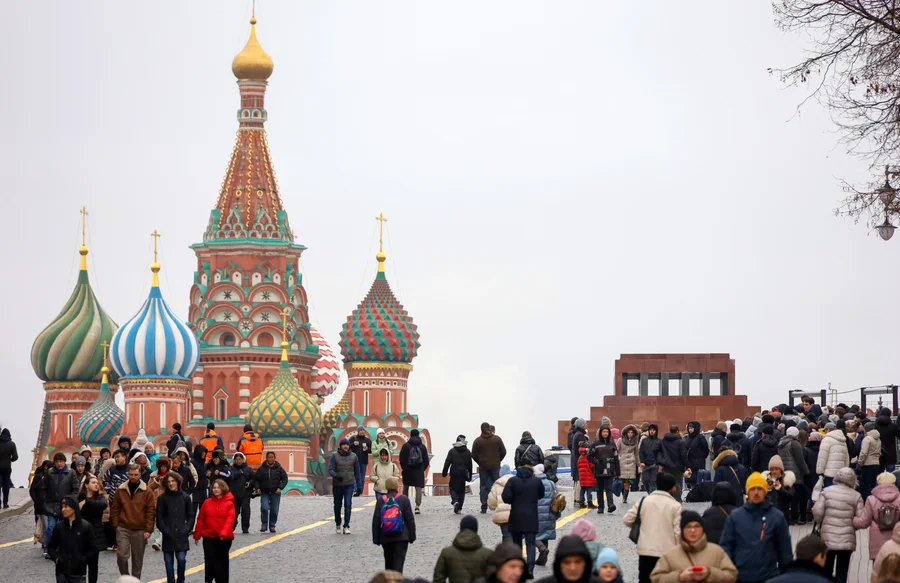
Inspired in part by state propaganda, many people in Russia have developed a strong anti-Western identity. They are convinced that the West seeks Russia's destruction, so supporting the state is seen as a patriotic duty...
After the collapse of the Soviet Union, the new Russia faced the complex challenge of creating a national identity that would reconcile the radical contradictions of the past with the goal of integration into the West, while preserving Russian uniqueness. But the war in Ukraine has fundamentally changed public attitudes, leading to a consolidation of the population around a set of national ideas.
This unity has contributed to Russia's resilience in the war and has dampened Western hopes that economic pressure or high casualties would undermine support for President Vladimir Putin. Given the evidence so far, it is unlikely that these Western goals will be achieved in the near future.
The Evolution of Identity: From Yeltsin to Putin
The first post-Soviet president, Boris Yeltsin, sought a radical break with communism, basing his rule on a denial of the past. This left Russia with a sense of “negative identity.” Upon taking office, Vladimir Putin presented a more positive vision, focused on integration with the West (on Russian terms and preserving independence).
But this project failed in the face of irreconcilable differences. Since then, the state has struggled to articulate a coherent concept of Russian distinctiveness. Only World War II has emerged as a successful unifier, becoming a narrative with an almost religious reverence under the current leadership.
Transformation after 4 years of war
At first, the war in Ukraine was met with confusion and distrust by the Russian public. However, after almost four years of conflict, the situation has changed. Fueled by propaganda, many Russians feel proud that their country survived in the face of Western sanctions and hostility.
This feeling is also fueled by the perception of Western “contempt” for Russian culture, a theme that is eagerly cited by state media. Today, patriotism is on the rise: military recruitment continues unabated (also fueled by high salaries) and volunteer movements to help the army are active. Speaking against the current in Russia is now considered not only dangerous, but also socially unacceptable.
War as "defense" and the anti-Western bloc
Despite the fact that it was Russia that invaded Ukraine, many Russians see the war as defensive and inevitable. The perception of an external threat has united the nation, making anti-Westernism a widespread norm.
Many citizens are convinced that the West seeks the destruction of Russia, so supporting the state is seen as a patriotic duty, even when it fails (as happened with the Ukrainian incursion into Kursk).
Economic dynamism and cultural “Renaissance”
The new Russian identity is not based only on war, but also on economic stability. Despite inflation, there is an optimism for the future and a technological boom stimulated by military necessity. In the cultural sphere, Russia is experiencing a kind of "self-sufficiency."
The cancellation of Russian culture in the West has forced Russians to turn to domestic sources. Domestic tourism has flourished, while the departure of famous figures such as Alla Pugacheva or Chulpan Khamatova, although initially worrying, has made room for young patriotic artists such as “Shaman”. The difficult situation of emigrant artists in the West now serves as material for ridicule at home.
A more compact nation
Russia has presented itself as the “true Europe,” as the defender of traditional 20th-century values, rejecting modern Western ideologies. This narrative also appeals to liberal Russians, who are pleased that Russia no longer needs to be culturally subservient to the West.
Today, Russia is a different country than it was in 2022: more cohesive, more closed, and more determined to continue on its path. In the short term, this means that the public’s willingness to support the war remains unwavering./ Adapted from “Pamphlet” by “Responsible Statecraft”






Lini një Përgjigje