


 Shkruar nga Pamfleti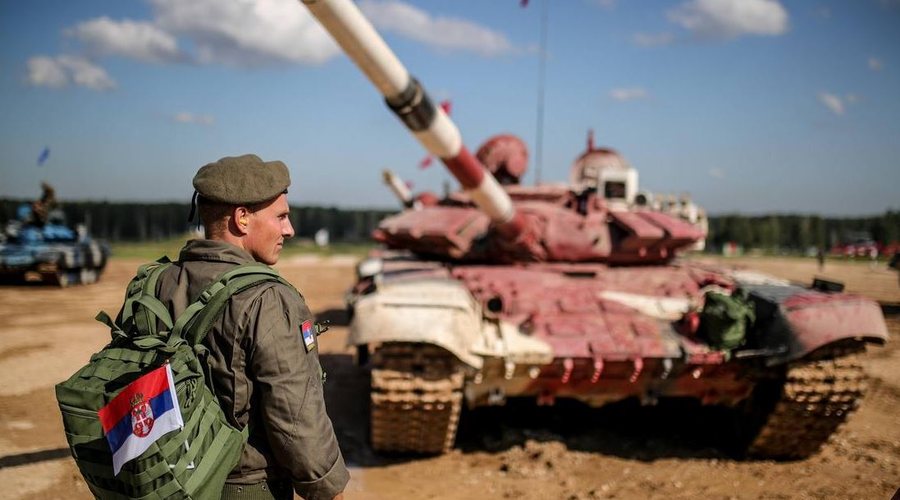
Serbia has been heavily armed in recent years, and is now the strongest militarily state in the Western Balkans. Neighboring countries are worried about Belgrade's expansionist intentions.
Is Serbia planning to destabilize or even militarily attack its neighboring states Kosovo and Bosnia-Herzegovina? The President of Kosovo, Vjosa Osmani, and her Bosnian counterpart, Denis Becirovic, recently warned of this scenario. Osmani said in a television interview in September that he hoped that the Western Balkans would join the EU and NATO, "but the prerequisite for this is to treat Serbia as it is: a satellite state of Russia, which deepens military, economic and political cooperation with Russia".
Becirovic's warning about Serbia's territorial aspirations before the United Nations General Assembly in New York was even stronger: "From the floor of the United Nations General Assembly I wish to warn the world public that the leadership of the Republic of Serbia threatens once to violate the sovereignty and territorial integrity of Bosnia-Herzegovina".
Belgrade is arming itself
In fact, Belgrade has been massively arming the country's army with modern weapon systems for years. Belgrade has bought French fighter jets and Russian attack helicopters, which Serbian President Aleksandar Vučić called "flying tanks". In addition, immediately after Russia attacked Ukraine, Beijing sent Chinese anti-aircraft systems to Serbia. There are also reports that Serbia has bought thousands of drones from Iran, of the type that Russia uses every day against Ukrainian cities.
"The Economist" magazine wrote in 2021 that "weapons purchases" from Belgrade are scaring neighboring countries. Meanwhile, the well-known Swedish Institute for Conflict Research SIPRI declared in 2022 that Belgrade's defense budget is 1.3 billion euros, i.e. ten times larger than Kosovo's.
Serbia's military superiority is also illustrated by its inventory of tanks. With around 250 tanks, Serbia has more tanks than all the other former Yugoslav republics combined – for comparison: the German army, the Bundeswehr, has 295 tanks. Croatia ranks second with 75, Bosnia third with 45, followed by North Macedonia with 31. And neither MaMali i Zili i Zi nor Kosovo have tanks.
This is probably one of the reasons why Kosovo's armed forces were equipped last year with Turkish Bayraktar drones and this year with 250 American Javelin anti-tank missiles.
Project for a Serbian world
The question arises why Belgrade has accumulated a large arsenal of weapons over the years without being threatened by its neighbors. Is President Vucic making plans to attack neighboring countries, as the President of Kosovo warned?
Të paktën kështu sugjerojnë deklaratat, kërcënimet dhe veprimet e udhëheqjes serbe në Beograd. Ajo propagandon projektin e “Botës Serbe”, një version pasardhës disi i zvogëluar i “Serbisë së Madhe” të ish-presidentit serb Slobodan Millosheviç, duke ndeshur kështu në rezonancë me serbët në vendet fqinje, në Kosovë dhe Bosnjë.
Kuvendi mbarëserb
Në fillim të qershorit 2024 Vuçiçi drejtoi një “kuvend mbarëserb” në Beograd me përfaqësues të serbëve nga të gjitha zonat e ish-Jugosllavisë, një takim strategjik që formuloi në thelb planin për zbatimin e “Botës Serbe”. Në “Deklaratën mbarëserbe” Kosova përmendet si pjesë e Serbisë dhe Republika Srpska, pjesa e dominuar nga serbët e Bosnjës dhe Hercegovinës, si “interes kombëtar i Serbisë”.
Një zëdhënës i Ministrisë së Jashtme në Berlin e dënoi këtë deklaratë në mënyrë jashtëzakonisht të ashpër. Qeveria gjermane e konsideron Deklaratën mbarë-serbe “shumë shqetësuese dhe të dëmshme për Bosnjën dhe Hercegovinën, për Serbinë dhe për të gjitha vendet e Ballkanit Perëndimor”.
Beciroviçi e komentoi takimin e Beogradit në fjalimin e tij në Kombet e Bashkuara si vijon: “Deklarata shkatërruese e të ashtuquajturit Kuvend mbarë-serb, e miratuar më 8 qershor të këtij viti në Beograd, nuk është vetëm një veprim deklarativ, por një dokument i rrezikshëm për një shtet të madh”.
Luftë në Ballkan?
Asnjë nga vendet fqinje që duket se janë në shënjestër të dëshirave territoriale të Beogradit nuk kanë forca të armatosura “të gatshme për luftë”. Pa mbrojtjen e dy misioneve paqeruajtëse perëndimore të NATO-s në Kosovë (KFOR) dhe BE-së në Bosnje (EUFOR/Althea), ata do të ishin pre e lehtë për ekspansionizmin agresiv të Beogradit.
Vitet e fundit bëri disa herë bujë dhe shkatoi trazira dislokimi i trupave serbe në kufirin me Kosovën dhe sulmi i një njësie paraushtarake serbe ndaj forcave të sigurisë së Kosovës. Kjo për shkakun se sulme të tilla të njësive paraushtarake serbe u kishin paraprirë luftës në Kroaci në vitin 1991 dhe asaj në Bosnje një vit më vonë.
Incidentet e fundit ushtarake mund të kenë qenë balona prove të Beogradit. Por meqenëse reagimet e SHBA-së dhe NATO-s ishin shumë të shpejta dhe të mprehta, Beogradi u tërhoq. Në gusht 2024 Uashingtoni ndërhyri sërish, këtë herë me drejtorin e CIA-s, William Burns, i cili shkoi në Bosnje dhe Hercegovinë posaçërisht për të ndaluar veprimet separatiste të liderit serb të Bosnjës, Millorad Dodik. Ai ka ndërmarrë vazhdimisht hapa për të shpallur pavarësinë e Republika Srpska dhe ka pajisur mijëra paraushtarakë. Politikanët në kryeqytetin Sarajevë po përgatiten për mundësinë që Republika Srpska mund të vazhdojë përpjekjet për shkëputjen. Në rast se do të lindë një konflikt i armatosur dhe serbët e Bosnjës do të vihen nën presion ushtarak, ka shumë të ngjarë që Beogradi të dërgojë tanket e tij në Bosnje për t’i shpëtuar ata.
A new war in the Balkans cannot be ruled out. And now that Donald Trump will again take power in Washington, it is completely unclear how the superpower USA will behave in such a case. A promising candidate for the post of foreign minister is the former US ambassador to Germany, Richard Grenell. Together with Trump's son-in-law, Jared Kushner, he has strong business interests in Serbia./DW






Lini një Përgjigje