


 Shkruar nga Pamfleti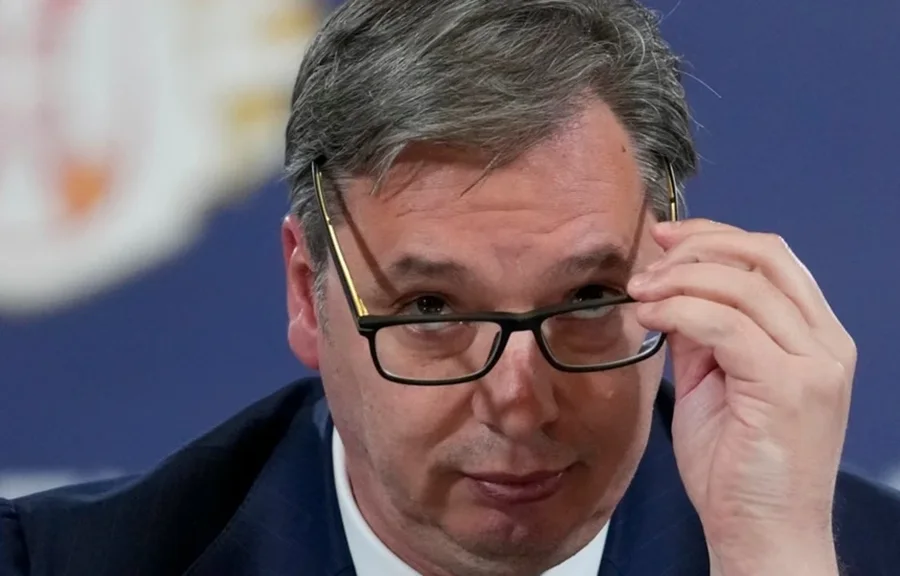
The US ambassador to Serbia should take a firm approach, warning Vučić and making it clear that he will be held accountable for any violent escalation.
In NATO's 75th anniversary, Vladimir Putin's grand strategic vision remains unchanged; break it up.
Encouraged by recent developments in Ukraine, the immediate risk to NATO members such as Poland and the Baltic states remains high. However, they are not alone. The often neglected Balkans are also a ripe prospect for Russia's aspirations and are becoming increasingly febrile and dangerous. Britain and its allies neglected the Balkans at risk over a century ago. We cannot afford to make the same mistake again.
The US ambassador to NATO took the unusual step of warning this week that Russia is using disinformation, cyber attacks and other nefarious tactics to "destabilize" the Western Balkans. Bosnia and Herzegovina is such a case. Three decades after war devastated that country, Serbia, backed by its friends in Moscow, is rekindling ethnic tensions, endangering European security. Europe and the US must put out the fire before it engulfs the region.
Bosnia and Herzegovina consists of two autonomous entities - the Federation of Bosnia and Herzegovina and Republika Srpska. The former is populated mainly by Muslims and Bosnian Croats, while Serbs dominate Republika Srpska, which is friendly with neighboring Serbia. These ethnic divisions produced a bloody war in 1992-1995 that left more than 100,000 people dead and millions homeless. The conflict ended only after NATO intervention that led to a US-brokered peace agreement, the implementation of which is overseen by a high representative appointed by an international council. An EU peacekeeping force, EUFOR, ensures order within the ALTHEA operation.
Today, the country remains deeply divided. The president of Republika Srpska, Milorad Dodik, an ally of Russia and Serbia, has pushed it to the brink of war by threatening to secede. In September, Dodik banned High Representative Christian Schmidt from attending official meetings at the presidential headquarters. Moscow and deliberately Belgrade are promoting these divisions.
On March 5, as such, the US Office of the Director of National Intelligence warned of a growing risk of inter-ethnic violence in the Western Balkans.
The warning highlighted Dodik's "provocative steps to neutralize international oversight in Bosnia and ensure de-facto secession for his Republika Srpska".
This could prompt the leaders of the Bosnian (Muslim Bosniak) population to strengthen their capacity to defend their interests and possibly lead to violent conflicts that could overwhelm the peacekeeping forces."
The situation worsened last month after Schmidt introduced a series of changes to the country's electoral law to guarantee free and fair elections. Dodik immediately rejected Schmidt's "integrity package" and again threatened to quit. Serbian President Aleksandar Vucic joined in by posting a cryptic message on Instagram, declaring that "difficult days are ahead for Serbia" due to "direct threats to the vital interests of Serbia and Republika Srpska".
" The battle will be tough, the toughest ever. We will fight. Serbia will win ," he added.
In January, most worryingly for our purposes, Dodik met with Vladimir Putin and reaffirmed the entity's refusal to join Western sanctions against Moscow for its full-scale invasion of Ukraine.
Is it any wonder, therefore, that Russia is fanning the flames, using information operations to push for "RSEXIT" (hinting at the secession of Republika Srpska)? In December, Putin even suggested that it would be possible to start broadcasting Russian state media RT in Bosnia.
By sowing chaos in the Balkans, Putin aims to strengthen Moscow's regional influence, distract Europe from supporting Ukraine and give Putin leverage over Western powers that do not want the violence to escalate. For Vucic, interfering in Bosnia-Herzegovina's bids helps strengthen his power in Serbia. He also has access to Dodik as a bargaining chip with the West, positioning himself as a peacemaker.
Western powers must deal with these threats now before it is too late. First, Washington must change the way it deals with Vucic. To date, the US has tried to calm the Serbian leader out of fear of escalation. Mitigation will not work.
Instead, the US ambassador to Serbia should take a firm approach, warning Vucic that he will be held accountable for any escalation of violence. Meanwhile, the European Union should join US and UK sanctions against Dodik and other actors who are destabilizing Western banks.
Furthermore, the United States and the United Kingdom should play a more active role in ensuring peace. They have entrusted the security of Bosnia-Herzegovina to the European Union, relying on the ALTHEA mission to maintain peace and security in the country. However, the EU's decision-making process is dysfunctional and slow to act, often held hostage by countries like Hungary that are seeking to extract concessions from Brussels.
In fact, a Hungarian general currently leads ALTHEA. The US and UK should therefore lead a coalition of the willing with key EU member states such as Germany, France and the Netherlands, signaling their willingness to respond to security threats from Belgrade and Moscow.
As Russia seeks to turn its war on Ukraine, the Kremlin would no doubt like to distract the West by opening a second front in the Balkans. Putin wants to show that his will to challenge the West is greater than the West's will to resist. It's time to show him he's wrong./ Adapted "Pamphlet" from "The Telegraph"



Lini një Përgjigje